
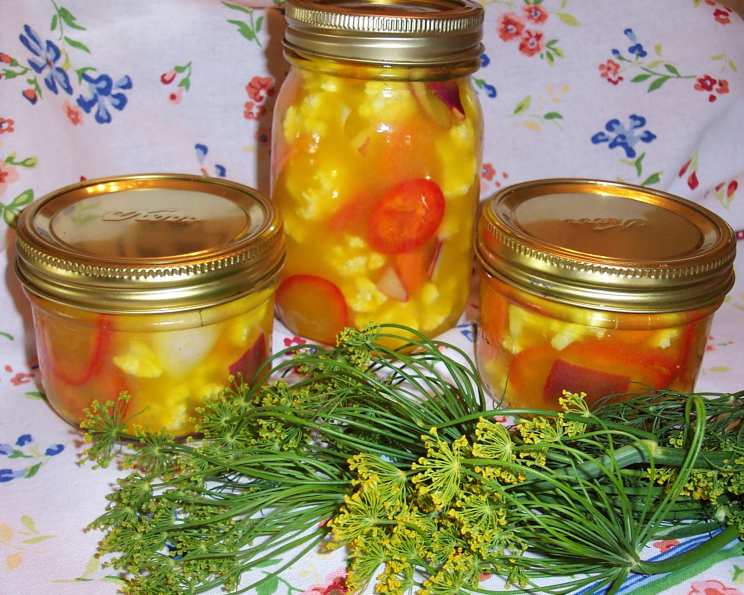
Zesty Garden Bounty: Mixed Vegetable Pickles
The sharp tang of vinegar, the subtle sweetness of carrots, the satisfying crunch of cauliflower – these flavors transport me back to my grandmother’s garden. Every summer, she’d transform the overflowing harvest into jars of vibrant pickles, a taste of sunshine preserved for the colder months. The entire house would fill with the pungent aroma of simmering vinegar and spices, a scent that promised delicious meals to come and filled me with joy. Even now, the first whiff of vinegar pickling on the stove brings back those happy childhood memories.
Recipe Overview
- Prep Time: 20 minutes
- Cook Time: 10 minutes
- Total Time: 30 minutes (plus 3 days chilling)
- Yields: 4 half pints
- Dietary Type: Vegan, Gluten-Free, Dairy-Free
Ingredients
- ¼ head cauliflower, broken into florets
- 2 carrots, peeled, thinly sliced
- 2 sprigs fresh dill
- 2 sprigs cilantro
- 6 cloves garlic, quartered
- 2 serrano chilies, quartered lengthwise
- 1 habanero pepper, halved
- 1 quart white wine vinegar
- 4 teaspoons sea salt
- 2 teaspoons dry mustard
- 2 teaspoons ground cumin
- 1 teaspoon turmeric
Equipment Needed
- 4 half-pint canning jars
- Saucepan
Instructions
-
Begin by preparing your vegetables. Divide the cauliflower florets and sliced carrots evenly among the four half-pint canning jars. Pack them in firmly, leaving a little space at the top. Add a sprig each of fresh dill and cilantro to each jar, as well as 1.5 cloves of quartered garlic, 0.5 of a habanero pepper, and 0.5 of a serrano chili pepper. The chilies will add a significant amount of heat, so adjust based on your spice preference, and consider using gloves when handling them.
-
In a medium saucepan, combine the white wine vinegar, sea salt, dry mustard, ground cumin, and turmeric. Bring the mixture to a boil over medium heat, stirring occasionally to ensure the salt and spices are fully dissolved.
-
Once the mixture is boiling, reduce the heat slightly and let it simmer for 10 minutes. This step allows the flavors of the spices to meld together and infuse the vinegar.
-
After simmering for 10 minutes, turn off the heat and let the mixture steep for 5 minutes. Steeping further enhances the flavor profile of the pickling liquid.
-
Carefully pour the hot vinegar mixture over the vegetables in the jars, ensuring they are completely submerged. Leave about ½ inch of headspace at the top of each jar. You might need to gently press the vegetables down to release any trapped air bubbles.
-
Once the jars are filled, cover them tightly with their lids. Allow the jars to cool to room temperature, which should take about 1 hour.
-
After cooling, refrigerate the jars for at least three days before serving. This allows the vegetables to fully absorb the pickling liquid and develop their characteristic tangy flavor. The longer they sit, the more flavorful they become.
Expert Tips & Tricks
-
Spice it up (or down): Adjust the amount of serrano and habanero peppers to control the heat level. For a milder pickle, remove the seeds and membranes from the peppers before adding them. For extra heat, add a pinch of red pepper flakes to the pickling liquid.
-
Vegetable variations: Feel free to substitute other vegetables based on your preference and availability. Cucumbers, broccoli florets, bell peppers (cut into strips), Brussels sprouts (halved), baby squash, or baby zucchini all work well in this recipe. Ensure you use a total equivalent amount of vegetables to maintain the proper ratio of vegetables to pickling liquid.
-
Don’t overcook the vegetables: The vegetables should retain some of their crunch even after pickling. Overcooking them will result in a softer, less appealing texture.
-
Sterilize your jars: For long-term storage, sterilize your canning jars and lids before filling them. This helps prevent spoilage and ensures the pickles will last longer.
-
Vinegar Variety: While white wine vinegar is traditional, feel free to experiment with other vinegars like apple cider vinegar for a slightly sweeter flavor.
Serving & Storage Suggestions
Serve these mixed vegetable pickles as a zesty side dish to grilled meats, sandwiches, or salads. They also make a great addition to cheese boards or charcuterie platters. They can also be chopped and added to potato salad or tuna salad for a flavorful twist.
Store the pickles in the refrigerator for up to several weeks. Once opened, keep them refrigerated and consume them within a week for the best quality. While technically safe to eat longer, the texture may soften over time. These pickles are not suitable for freezing, as the vegetables will become mushy when thawed.
Nutritional Information
| Nutrient | Amount per Serving | % Daily Value |
|---|---|---|
| Calories | 47.6 kcal | N/A |
| Calories from Fat | 8 g | 18% |
| Total Fat | 1 g | 1% |
| Saturated Fat | 0.1 g | 0% |
| Cholesterol | 0 mg | 0% |
| Sodium | 2362 mg | 98% |
| Total Carbohydrate | 9 g | 2% |
| Dietary Fiber | 2.6 g | 10% |
| Sugars | 3.2 g | 12% |
| Protein | 2.2 g | 4% |
Note: Nutritional information is an estimate and may vary based on specific ingredients and preparation methods.
Variations & Substitutions
-
Sweet Pickles: Add ½ cup of sugar to the pickling liquid for a sweeter pickle. Brown sugar or honey can also be used for a more complex flavor.
-
Herbal Infusion: Experiment with different herbs in addition to or instead of dill and cilantro. Thyme, rosemary, oregano, or bay leaves can all add unique flavor notes.
-
Spicy Garlic Dill Pickles: Increase the amount of garlic and add a teaspoon of dill seed to the pickling liquid for a more intense flavor.
-
Bread and Butter Pickles: Use sliced cucumbers and add 1 teaspoon of celery seed and ½ teaspoon of mustard seed to the pickling liquid for a classic bread and butter pickle flavor.
-
No-Heat Version: If you’re concerned about the heat, omit the habanero pepper altogether and reduce the amount of serrano chili. You can also use a milder chili pepper, such as a jalapeño.
FAQs (Frequently Asked Questions)
Q: Can I use regular table salt instead of sea salt?
A: While you can, sea salt is preferred for its purer flavor and lack of additives. Table salt might impart a slightly metallic taste to the pickles.
Q: How long do these pickles last in the refrigerator?
A: These pickles will last for several weeks in the refrigerator, but their quality (texture and flavor) is best within the first week or two.
Q: Can I process these pickles in a hot water bath for longer shelf life?
A: This recipe is designed for refrigerator pickles, not for canning. Processing them in a hot water bath might alter the texture of the vegetables.
Q: What if my vegetables are not fully submerged in the pickling liquid?
A: Make sure the vegetables are packed tightly in the jars and press them down gently to release any trapped air. If needed, prepare a little extra pickling liquid to top off the jars.
Q: Can I reuse the pickling liquid?
A: It’s not recommended to reuse pickling liquid, as it will have diluted flavors and may contain bacteria that could cause spoilage.
Final Thoughts
Now, go forth and pickle! This recipe is a delightful way to preserve the flavors of your garden or local farmers market. Don’t be afraid to experiment with different vegetables, herbs, and spices to create your own signature blend. And most importantly, enjoy the crisp, tangy goodness of homemade mixed vegetable pickles – a taste of sunshine in every bite. I encourage you to try this recipe and share your creations with friends and family. Let me know how it turns out, and what variations you discover along the way!