
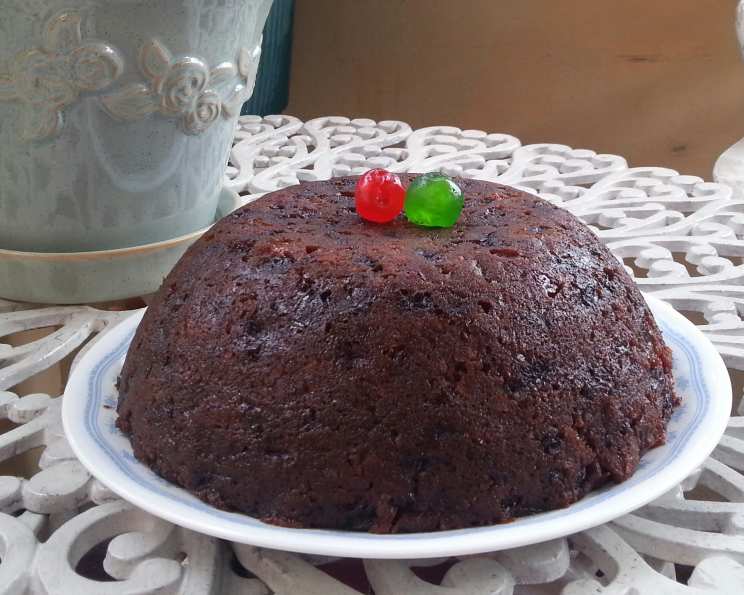
The Soul-Satisfying Secrets of Moist Plum Pudding
The scent alone transports me back to my grandmother’s kitchen. It wasn’t the neatest space, mind you, but it was always overflowing with warmth, love, and the unmistakable aroma of Christmas. While we didn’t have a white Christmas in sunny Singapore, the dark, rich scent of my Grandma’s “plum” pudding filled the house with a festive spirit every year. She’d let me help stir the mixture, and I felt so grown up, little knowing it was just the beginning of a culinary tradition I’d cherish for life. This recipe, while not identical to hers, evokes the same heartwarming feelings and delivers a profoundly satisfying pudding.
Recipe Overview
- Prep Time: 20 minutes
- Cook Time: 7 hours 30 minutes
- Total Time: 7 hours 50 minutes
- Servings: 12-16
- Yield: 1 Large (2 litre) Pudding
- Dietary Type: Not specified (contains eggs and butter)
Ingredients
The Mixed Fruits
- 250 g sultanas
- 250 g dark raisins
- 150 g dates (pitted & chopped coarsely)
- 100 g prunes (pitted & chopped coarsely)
- 100 g mixed peel (candied peels or freshly peeled from the real fruit)
- 100 g glace cherries
- 2 oranges (use both juices and rind)
- 1 lemon (use both juice and rind)
The Dry Ingredients
- 200 g breadcrumbs (ground from normal white bread slices)
- 100 g flour (sifted)
- 180 g brown sugar
- 70 g sliced almonds or 70 g cubed almonds
- 2-3 teaspoons mixed spice (depends on how aromatic you want it)
The Wet Ingredients
- 225 g soft salted butter (soft enough to be stirred in with the other ingredients)
- 4 eggs (slightly beaten, DO NOT overbeat or pudding will be spongy instead of compact or dense)
- 1 cup Coke (you can use any dark carbonated drink)
- 1 apple (grated or chopped)
- 1 carrot (grated or chopped)
Equipment Needed
- Large mixing bowl
- Wooden spoon
- Suitable heat-proof mould/basin (approximately 2-litre capacity)
- Greaseproof paper
- Aluminum foil
- String
- Large pot with lid (big enough to fit the mould/basin)
- Plate for unmoulding
Instructions
-
Begin by preparing the mixed fruits. Place the sultanas, dark raisins, dates, prunes, mixed peel, and glace cherries in a large bowl. Pour in the juices of the oranges and lemon. Add the orange and lemon rinds. Soak this mixture for at least 6 hours, or preferably overnight, to allow the flavors to meld and the fruits to plump up beautifully.
-
Thoroughly butter the chosen mould/basin all around. For added insurance against sticking, line the bottom of the mould with greaseproof paper. This will make unmoulding the pudding much easier later.
-
Bring a large pot of water to a boil. Make sure the pot is large enough to accommodate the mould/basin. Ideally, use a pot with a lid to help maintain a consistent temperature during the long cooking process.
-
In a large mixing bowl, combine all the dry ingredients: breadcrumbs, sifted flour, brown sugar, sliced or cubed almonds, and mixed spice. Use a wooden spoon to thoroughly mix these ingredients together until well combined.
-
Now, add the soaked mixed fruits to the dry ingredients. Mix everything together thoroughly, ensuring the fruits are evenly distributed throughout the dry mixture.
-
It’s time to incorporate the wet ingredients. Add the soft salted butter, slightly beaten eggs (be careful not to overbeat), Coke, grated or chopped apple, and grated or chopped carrot to the bowl. Mix everything together until you have a well-combined, slightly wet batter. The mixture should be rich and aromatic.
-
Pour the pudding mixture into the prepared mould/basin. Gently level the surface.
-
Cover the top of the mould/basin with a piece of greaseproof paper cut to fit the size of the top of the pudding.
-
Use a large piece of aluminum foil to completely cover the mould/basin. Before sealing the foil tightly, fold a pleat in the center of the foil. This pleat will allow the pudding to expand during cooking without bursting the foil.
-
Secure the foil tightly around the mould/basin with string. This will prevent water from seeping into the pudding during cooking.
-
Place the covered mould/basin into the pot of boiling water. The water should come about halfway up the sides of the mould/basin.
-
Boil the pudding on medium flame for the first half hour. After the initial boiling, turn down the heat to low and simmer gently for 7 hours. It is crucial to maintain a gentle simmer throughout the cooking process to ensure even cooking and prevent the pudding from drying out. Check the water level periodically and add more boiling water if necessary to maintain the water level.
-
After 7 hours of simmering, carefully remove the mould/basin from the pot. Leave the pudding to cool slightly before unwrapping and unmoulding.
-
Remove the foil and greaseproof paper. Place a plate over the top of the mould/basin and carefully invert the pudding onto the plate. The pudding will likely still feel soft as it is hot.
-
Once the pudding has totally cooled, wrap it tightly in cling film and then in foil. Refrigerate it for at least 2 weeks, or up to a month, before cutting and eating. This aging process allows the flavors to develop and deepen, resulting in a richer, more complex pudding.
Expert Tips & Tricks
- If you don’t have salted butter, simply add a pinch of salt to your unsalted butter.
- Don’t skip the pleat in the foil; it’s essential for even expansion.
- Consider adding a tablespoon of molasses for an even darker, richer color.
- For a more intense flavor, you can “feed” the pudding with a tablespoon of dark rum or brandy once a week during its aging period. Simply poke a few holes in the top and drizzle the alcohol over it.
- If your pudding basin doesn’t have a tight-fitting lid, create a secure seal using multiple layers of foil.
Serving & Storage Suggestions
To serve your plum pudding, consider flambéing it with warmed brandy for a dramatic presentation. Alternatively, serve it warm with a generous dollop of whipped cream, custard, or brandy butter. The pudding can be stored in the refrigerator, tightly wrapped, for up to a month. It can also be frozen for longer storage (up to 3 months). To reheat, steam it gently for an hour, or microwave individual slices until warmed through.
Nutritional Information
Note: The following nutritional information is an estimate and can vary based on specific ingredients and serving size.
| Nutrient | Amount per Serving | % Daily Value |
|---|---|---|
| Calories | 580 kcal | N/A |
| Calories from Fat | N/A | N/A |
| Total Fat | 20.9 g | 32% |
| Saturated Fat | 10.6 g | 53% |
| Cholesterol | 102.3 mg | 34% |
| Sodium | 301.9 mg | 12% |
| Total Carbohydrate | 96.6 g | 32% |
| Dietary Fiber | 6.2 g | 24% |
| Sugars | 64.2 g | N/A |
| Protein | 8.8 g | 17% |
Variations & Substitutions
- Gluten-Free: Substitute the breadcrumbs and flour with gluten-free alternatives. A blend of almond flour and gluten-free breadcrumbs works well.
- Vegan: Replace the butter with a vegan butter substitute. Use a flax egg or commercially available egg replacer in place of the eggs.
- Spice It Up: Add a pinch of chili flakes for a subtle kick.
- Citrus Variations: Experiment with different citrus fruits in addition to the orange and lemon, such as grapefruit or lime.
FAQs (Frequently Asked Questions)
Q: Why is it called plum pudding if there are no plums in it?
A: Historically, “plum” was a general term for dried fruit, particularly raisins. Hence, the name has stuck even though the recipe doesn’t contain fresh plums.
Q: Can I use a different type of carbonated drink instead of Coke?
A: Yes, you can use other dark carbonated drinks like Dr. Pepper or even a non-alcoholic stout. The key is to choose a beverage with a rich, caramel-like flavor.
Q: What happens if I overbeat the eggs?
A: Overbeating the eggs incorporates too much air into the mixture, resulting in a spongy texture rather than the desired dense and compact texture.
Q: Can I make this pudding in a slow cooker?
A: Yes, you can. Follow the recipe as instructed, but instead of boiling, place the covered mould/basin in a slow cooker with enough water to come halfway up the sides. Cook on low for approximately 10-12 hours, or until a skewer inserted into the center comes out clean.
Q: How do I know when the pudding is cooked through?
A: The pudding is done when it feels firm to the touch and a skewer inserted into the center comes out clean. The top should also be a deep, rich brown color.
Final Thoughts
Don’t be intimidated by the long cooking time – the results are well worth the effort! This Moist Plum Pudding is more than just a dessert; it’s an experience. It’s a taste of tradition, a warm embrace on a cold day, and a reminder of cherished memories. Gather your ingredients, embrace the process, and create a pudding that will delight your family and friends for years to come. Share your creations and experiences! I would love to hear about your personal touches and any variations you try. Perhaps a dollop of homemade brandy butter would be the perfect accompaniment to your freshly made masterpiece.