
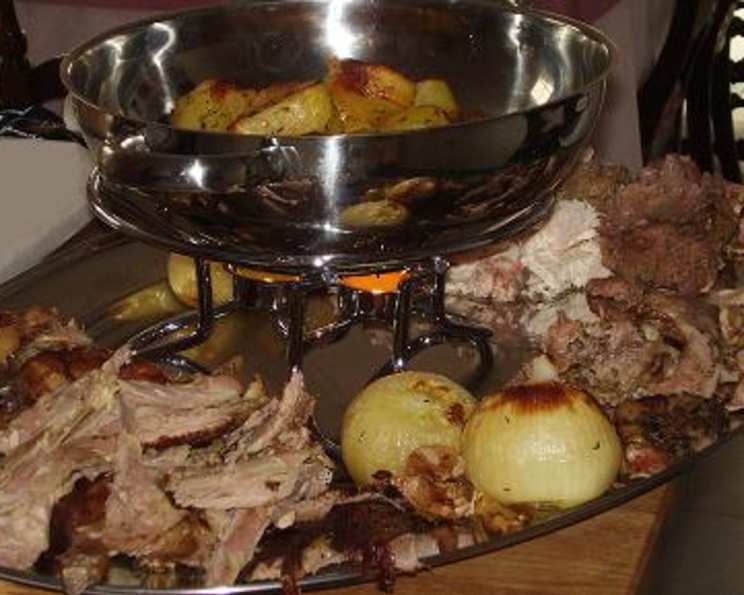
Moist Roast Turkey With a Port Gravy
The memory is etched in my mind: the scent of roasting turkey mingling with the sweet, heady aroma of port wine. It was Christmas Eve at my grandmother’s house, the air thick with anticipation. I was just a child, perched on a stool, watching her baste the enormous bird with a glistening, ruby-red glaze. The anticipation nearly drove me wild. That turkey, carved with such love and precision, was the centerpiece of a feast that represented family, warmth, and the pure joy of the season. I’ve spent years since chasing that feeling, and this recipe, born from her techniques and my own refinements, gets me closer every time.
Recipe Overview
- Prep Time: 20 minutes
- Cook Time: 4 hours 45 minutes
- Total Time: 5 hours 5 minutes
- Servings: 4-5
- Yield: Approx. 6-8 servings of turkey and gravy
- Dietary Type: Not specified
Ingredients
- 2 1⁄2 kg turkey
- ½ cup chicken stock
- ⅔ cup port wine
- 2 tablespoons brown sugar
- ¾ teaspoon cornflour
Equipment Needed
- Oven
- Oven-proof baking dish
- Aluminum foil
- Kitchen string
- Small saucepan
- Strainer
Instructions
- If your turkey contains giblets in the cavity, remove and discard them.
- Rinse the turkey thoroughly under cold running water, both inside and out.
- Pat the turkey completely dry with paper towels. This is crucial for achieving crispy skin later on.
- Spoon your favourite seasoning or stuffing into the cavity of the turkey. Pack it loosely to allow for even cooking.
- Using kitchen string, tie the turkey’s legs together securely. This helps maintain a more uniform shape during roasting and prevents the stuffing from spilling out.
- In an oven-proof baking dish, pour in the chicken stock and half of the port wine (approximately 1/3 cup).
- Place the turkey upside down in the baking dish, breast-side down. This allows the juices to baste the breast meat during the initial, longer cooking period, resulting in a more succulent final product.
- Tightly cover the baking dish with aluminum foil. Ensure there are no gaps to trap the steam effectively.
- Bake in a slow oven (130°C / 266°F) for 4 hours. The low temperature and covered environment ensure the turkey cooks gently and evenly, retaining moisture.
- After 4 hours, carefully remove the aluminum foil from the baking dish. Be cautious as steam will escape.
- Turn the turkey right side up, so the breast is facing upwards.
- In a small bowl, combine the remaining port wine (approximately 1/3 cup) with the brown sugar. Stir until the brown sugar is dissolved.
- Brush the port wine and brown sugar mixture generously over the entire surface of the turkey. This glaze will caramelize during the final roasting stage, creating a beautiful, flavorful crust.
- Increase the oven temperature to 180-190°C (356-374°F).
- Roast the turkey uncovered for a further 45 minutes, or until the turkey is browned and cooked through. The internal temperature of the thickest part of the thigh should reach 74°C (165°F) to ensure it is safe to eat. Use a meat thermometer for accurate results.
- Remove the turkey from the baking dish and transfer it to a carving board.
- Cover the turkey loosely with aluminum foil and let it rest for at least 20 minutes before carving. This allows the juices to redistribute throughout the meat, resulting in a more tender and flavorful turkey.
- While the turkey is resting, prepare the port gravy. Strain the juices from the baking dish into a small saucepan, removing any bits of meat and fat. A fat separator can be particularly useful for this step.
- Heat the strained juices over a medium heat.
- In a small bowl, mix the cornflour with a little cold water to form a slurry. This prevents lumps from forming when the cornflour is added to the hot liquid.
- Pour the cornflour slurry into the saucepan with the strained juices.
- Stir continuously until the mixture boils and thickens. This usually takes just a few minutes.
- Carve the turkey and serve immediately with the delicious port gravy.
Expert Tips & Tricks
- Brining: For an even moister turkey, consider brining it overnight before roasting. A simple brine consists of water, salt, sugar, and your favourite aromatics like herbs, citrus peels, and peppercorns.
- Aromatic Butter: Slide herb butter between the turkey skin and breast meat before cooking to add flavour.
- Resting: Don’t skip the resting time! This is crucial for a moist bird. Loosely tenting with foil allows it to stay warm without steaming and making the skin soggy.
- Gravy Consistency: If your gravy is too thick, add a little more chicken stock or water to thin it out. If it’s too thin, simmer it for a few more minutes to allow it to reduce and thicken. You can also add a touch more cornflour slurry, but be careful not to add too much, as it can make the gravy taste starchy.
- Preventing Over-Browning: If the turkey starts to brown too quickly during the final roasting stage, loosely tent it with aluminum foil.
Serving & Storage Suggestions
Serve the carved turkey hot, drizzled generously with the port gravy. Accompany with your favourite side dishes, such as roasted vegetables, mashed potatoes, cranberry sauce, and stuffing.
Leftover turkey should be stored in an airtight container in the refrigerator. It will keep for up to 3-4 days. The port gravy can also be stored in an airtight container in the refrigerator for up to 3-4 days.
To reheat leftover turkey, add a little chicken stock or gravy to keep it moist. You can reheat it in the oven, microwave, or in a skillet on the stovetop. The port gravy can be reheated in a saucepan over medium heat, stirring occasionally.
Freezing: Cooked turkey can also be frozen for longer storage (up to 2-3 months). Wrap it tightly in freezer-safe packaging to prevent freezer burn. Thaw the turkey in the refrigerator overnight before reheating. The port gravy can also be frozen, but its texture may change slightly upon thawing.
Nutritional Information
| Nutrient | Amount per Serving | % Daily Value |
|---|---|---|
| Calories | 1101.6 kcal | – |
| Calories from Fat | 454 g | 41% |
| Total Fat | 50.5 g | 77% |
| Saturated Fat | 14.2 g | 71% |
| Cholesterol | 425.9 mg | 141% |
| Sodium | 454.6 mg | 18% |
| Total Carbohydrate | 13.6 g | 4% |
| Dietary Fiber | 0 g | 0% |
| Sugars | 10.2 g | 40% |
| Protein | 128.5 g | 257% |
Note: These values are estimates and may vary depending on specific ingredients and portion sizes.
Variations & Substitutions
- Gluten-Free Gravy: Use a gluten-free cornflour or tapioca starch to thicken the gravy.
- Herb Variations: Experiment with different herbs to flavour the turkey. Rosemary, thyme, sage, and parsley all work well.
- Citrus Infusion: Add slices of lemon or orange to the cavity of the turkey for a bright, citrusy flavour.
- Wine Swap: If you don’t have port wine on hand, you can substitute with a dry red wine, such as Merlot or Cabernet Sauvignon. The flavour will be slightly different, but still delicious.
- Smoked Paprika: A dash of smoked paprika to the port wine and brown sugar glaze can add a delicious smoky note.
FAQs (Frequently Asked Questions)
Q: How do I ensure my turkey isn’t dry?
A: The key to a moist turkey is low and slow cooking, brining beforehand, not overcooking it, and letting it rest after roasting.
Q: Can I prepare the turkey ahead of time?
A: You can prep the turkey the day before by seasoning it and stuffing it (if using). However, wait until just before roasting to brush with the port wine glaze.
Q: How do I know when the turkey is cooked through?
A: Use a meat thermometer to check the internal temperature. It should reach 74°C (165°F) in the thickest part of the thigh.
Q: Can I use a different type of sugar?
A: While brown sugar adds a lovely caramel flavour to the glaze, you can substitute with granulated sugar or maple syrup if needed.
Q: What can I do with leftover turkey besides sandwiches?
A: Leftover turkey is fantastic in soups, salads, pot pies, and enchiladas.
Final Thoughts
This Moist Roast Turkey with Port Gravy is more than just a recipe; it’s a culinary journey, a chance to create your own memories around the table. Don’t be intimidated by the seemingly long cooking time – the hands-on preparation is minimal, and the reward is a truly unforgettable meal. I urge you to give this recipe a try, adapt it to your own tastes, and share it with the people you love. Perhaps you’ll discover, as I have, that the best meals are the ones that bring us together, one delicious bite at a time. Pair this lovely bird with a crisp Chardonnay or Pinot Noir. And don’t forget to share your cooking experiences!