
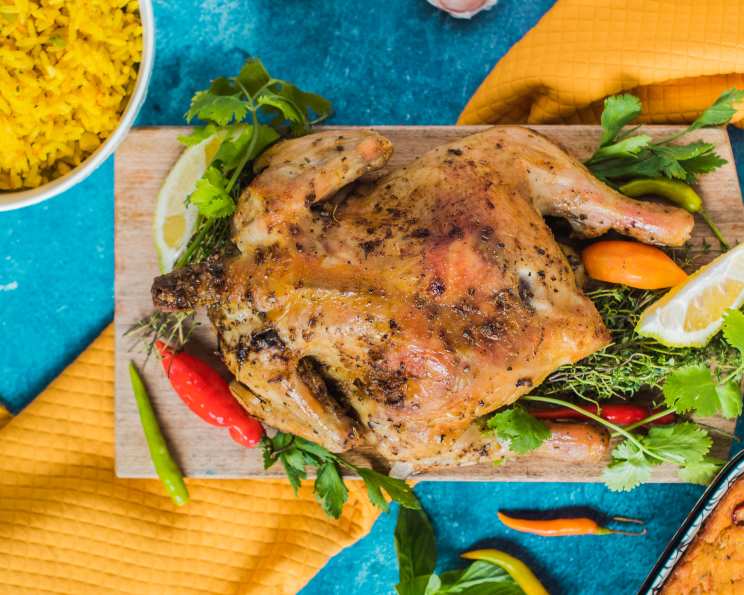
The Quintessential Moist Roasted Whole Chicken
My grandmother, bless her heart, made a roast chicken every Sunday. The aroma would fill the entire house, a savory symphony of herbs and roasting meat that signaled family time was near. We’d gather around the table, the golden-brown bird proudly presented as the centerpiece, and those Sunday lunches remain some of my most cherished memories. While her recipe was a closely guarded secret, I think I’ve come pretty close to replicating that comforting, moist, and deeply flavorful roast chicken that made her Sunday dinners so special.
Recipe Overview
- Prep Time: 15 minutes
- Cook Time: 1 hour – 1 hour 10 minutes
- Total Time: 1 hour 25 minutes
- Servings: 4-6
- Yields: 1 whole chicken
- Dietary Type: Gluten-Free, Dairy-Free
Ingredients
- 1 (3 lb) roasting chicken
- 1 1/2 tablespoons olive oil
- 1 teaspoon salt
- 1 teaspoon ground black pepper
- 1/2 teaspoon dried oregano
- 1 teaspoon dried basil
- 1 teaspoon paprika
Equipment Needed
- Medium-sized baking pan
Instructions
- Begin by preheating your oven to 450 degrees Fahrenheit (232 degrees Celsius). This initial blast of high heat is key to developing that beautiful, crispy skin.
- Place the whole chicken into a medium-sized baking pan. Make sure the pan is large enough to accommodate the bird comfortably without being overcrowded. A little space around the chicken will promote even browning.
- Rub the entire chicken thoroughly with the olive oil. This helps the seasonings adhere and contributes to the crispness of the skin. Ensure every nook and cranny is coated.
- In a small bowl, combine the salt, pepper, oregano, basil, and paprika. This simple spice blend provides a classic, savory flavor profile.
- Sprinkle the spice mixture evenly over the chicken, ensuring it’s well-seasoned. Gently press the spices into the skin so they don’t fall off during roasting.
- Place the baking pan with the seasoned chicken into the preheated oven and bake for 20 minutes. Watch the chicken closely; this initial high heat is all about getting that skin started.
- After 20 minutes, lower the oven temperature to 400 degrees Fahrenheit (200 degrees Celsius).
- Continue baking for 40-50 minutes, or until the chicken is golden brown and the juices run clear when you insert a knife or meat thermometer into the thickest part of the thigh. The internal temperature should reach 165 degrees Fahrenheit (74 degrees Celsius). Use a reliable meat thermometer for the most accurate reading.
- If the chicken appears to be browning too quickly, loosely tent a sheet of aluminum foil over the top. This will help prevent the skin from burning while allowing the inside to cook through.
- Once cooked, let the chicken rest in its juices for at least 10 minutes before carving and serving. This allows the juices to redistribute throughout the meat, resulting in a more moist and flavorful bird.
Expert Tips & Tricks
- Brining: For an even more succulent chicken, consider brining it for a few hours or overnight before roasting. A simple brine of salt, sugar, and water will work wonders.
- Aromatics: Stuff the cavity with aromatics like quartered onions, lemon wedges, garlic cloves, and fresh herbs (rosemary, thyme, sage) to infuse the chicken from the inside out.
- Pan Sauce: Don’t discard the pan drippings! Use them to make a delicious pan sauce or gravy. Simply deglaze the pan with some white wine or chicken broth, scrape up the browned bits, and simmer until thickened.
- Dry the Skin: Pat the chicken skin completely dry with paper towels before applying the oil and seasonings. This is crucial for achieving crispy skin.
- Elevate the Chicken: Roasting the chicken on a roasting rack or a bed of vegetables (like carrots, celery, and onions) will allow for better air circulation and more even cooking.
Serving & Storage Suggestions
Serve your beautifully roasted chicken hot, accompanied by your favorite side dishes. Roasted vegetables, mashed potatoes, stuffing, and cranberry sauce are classic pairings. To carve, carefully remove the legs and thighs, then slice the breast meat.
Leftover roasted chicken can be stored in an airtight container in the refrigerator for up to 3-4 days. For longer storage, shred the chicken and freeze it in freezer bags for up to 2-3 months.
To reheat, you can warm the chicken in the oven, microwave, or skillet. Add a little chicken broth or water to keep it moist. Shredded chicken is great in soups, salads, sandwiches, or casseroles.
Nutritional Information
| Nutrient | Amount per Serving | % Daily Value |
|---|---|---|
| Calories | 206.8 kcal | N/A |
| Calories from Fat | 151 g | 73% |
| Total Fat | 16.8 g | 25% |
| Saturated Fat | 4 g | 20% |
| Cholesterol | 53.5 mg | 17% |
| Sodium | 632 mg | 26% |
| Total Carbohydrate | 0.8 g | 0% |
| Dietary Fiber | 0.5 g | 1% |
| Sugars | 0.1 g | 0% |
| Protein | 12.8 g | 25% |
Note: Nutritional information is an estimate and may vary based on specific ingredients and portion sizes.
Variations & Substitutions
- Lemon Herb Chicken: Add lemon zest and chopped fresh herbs (like rosemary, thyme, and parsley) to the spice rub for a bright, fragrant flavor.
- Spicy Roasted Chicken: Add a pinch of cayenne pepper or red pepper flakes to the spice rub for a kick of heat.
- Mediterranean Roasted Chicken: Use a Mediterranean-inspired spice blend with ingredients like sumac, cumin, and coriander. Serve with a side of tzatziki sauce.
- Honey Garlic Glazed Chicken: Baste the chicken with a mixture of honey, soy sauce, and minced garlic during the last 15 minutes of roasting for a sweet and savory glaze.
- Root Vegetable Roast: Toss root vegetables like carrots, potatoes, and parsnips with olive oil, salt, and pepper and roast them alongside the chicken for a complete one-pan meal.
FAQs (Frequently Asked Questions)
Q: How do I know when the chicken is done?
A: The most reliable way to check for doneness is to use a meat thermometer. Insert it into the thickest part of the thigh, being careful not to touch the bone. The internal temperature should reach 165 degrees Fahrenheit (74 degrees Celsius). The juices should also run clear when you pierce the thigh with a knife.
Q: Why is it important to let the chicken rest before carving?
A: Resting allows the juices to redistribute throughout the meat, resulting in a more moist and flavorful bird. If you carve the chicken immediately after roasting, the juices will run out, leaving you with dry meat.
Q: Can I use this recipe for a larger chicken?
A: Yes, but you’ll need to adjust the cooking time accordingly. A larger chicken will require longer cooking. Use a meat thermometer to ensure it reaches the proper internal temperature.
Q: What can I do with the leftover chicken carcass?
A: Don’t throw it away! Use it to make a delicious and nutritious chicken stock. Simply simmer the carcass with vegetables, herbs, and water for several hours.
Q: My chicken skin isn’t crispy. What did I do wrong?
A: Several factors can contribute to soggy chicken skin. Make sure you pat the chicken dry before roasting, use enough oil, and don’t overcrowd the pan. Also, avoid opening the oven door too frequently, as this can lower the temperature and prevent the skin from crisping up.
Final Thoughts
This recipe is more than just a set of instructions; it’s a pathway to creating memories. The aroma of roasting chicken filling your kitchen, the satisfaction of a perfectly cooked bird, the joy of sharing a delicious meal with loved ones – these are the things that make cooking so rewarding. So, go ahead, embrace the process, experiment with variations, and make this Moist Roasted Whole Chicken your own. I guarantee it will become a cherished part of your culinary repertoire, just like it is for me. And please, don’t hesitate to share your experiences and feedback! I’m always eager to learn and improve.