
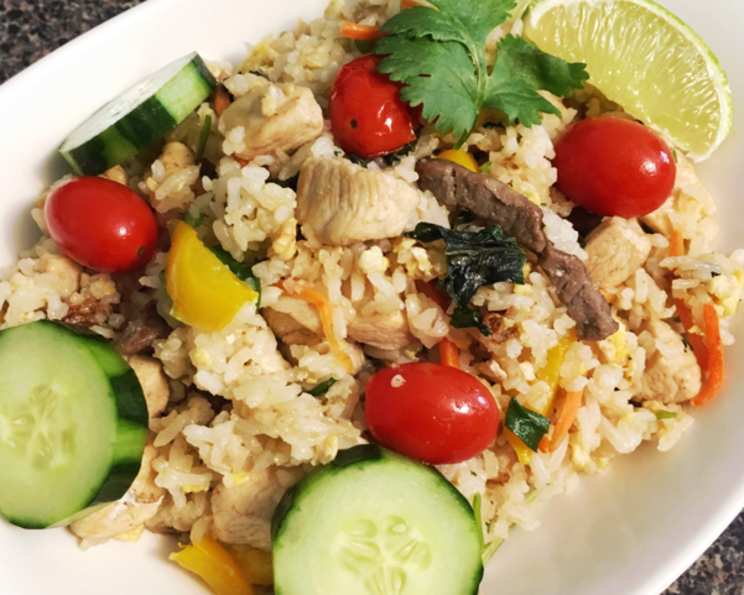
Mom’s Thai Fried Rice: A Taste of Home
The sizzle of garlic hitting hot oil, the sweet-salty aroma of fish sauce filling the air – these are the sense memories that transport me back to my childhood kitchen. My mother, a whirlwind of culinary expertise honed over years of running her own Thai restaurant, could whip up a batch of fried rice faster than you could say “sawasdee.” It wasn’t just food; it was comfort, a taste of home, and a testament to her incredible talent for transforming simple ingredients into something truly extraordinary. This recipe, painstakingly recreated from memory and her (reluctant) approximations, is my attempt to share that magic with you.
Recipe Overview
- Prep Time: 15 minutes
- Cook Time: 15 minutes
- Total Time: 30 minutes
- Servings: 4-6
- Yield: One large platter
- Dietary Type: Potentially Gluten-Free (depending on fish sauce and oyster sauce)
Ingredients
- 4 cups cooked cold jasmine rice (cold rice is essential so the grains will not stick together when stir frying)
- 3 tablespoons peanut oil
- 4 cloves freshly minced garlic
- 1 1/2 cups lean pork (its easiest to get thin slices if the meat is still partially frozen) or 1 1/2 cups beef, thinly sliced (its easiest to get thin slices if the meat is still partially frozen)
- 2 eggs
- 4 green onions, sliced thin
- 2 teaspoons palm sugar (table sugar is fine if you can’t find palm sugar)
- 3 tablespoons Thai fish sauce (no substitutes)
- 1 tablespoon oyster sauce
- 3/4 cup frozen peas (not traditional but I like to add them anyway)
- 1 cucumber, sliced
- 2 limes, cut into wedges
Equipment Needed
- Wok or large skillet
- Cutting board
- Knife
- Spatula or wok utensil
Instructions
- Heat peanut oil in a wok or large skillet over medium-high heat. A wok is ideal because of its shape and ability to distribute heat evenly, but a large skillet will work perfectly well. Make sure your pan is thoroughly heated before adding the next ingredient.
- While the pan is warming, gently toss the cold rice with your hands, carefully separating the grains from any clumps. This step is crucial; cold rice prevents the fried rice from becoming mushy. Use your fingers to break up any stubborn clumps for even cooking.
- Add the garlic to the heated wok and toss continuously until it becomes fragrant and slightly golden. This typically takes about 30 seconds. Be careful not to burn the garlic, as it will impart a bitter taste to the entire dish. Watch it carefully and reduce the heat slightly if needed.
- Add the sliced pork or beef to the wok and stir-fry for about 1 minute, or until the meat is mostly cooked through. If using frozen meat, ensure it’s thinly sliced, partially thawed, and patted dry before adding it to the wok. This helps it cook evenly and prevents sticking.
- Push the meat and garlic up the sides of the wok or skillet, creating a well in the center. Crack the eggs into the well.
- Scramble the eggs for about 1 minute in the middle of the pan, until they are lightly cooked but still slightly moist. Breaking them up into smaller pieces will ensure they incorporate well with the other ingredients.
- Add the sliced green onions and frozen peas to the pan, and incorporate all ingredients together, stir-frying for another minute. Make sure the ingredients are distributed evenly in the pan.
- Add the cold jasmine rice to the wok, turning the rice over with the pan ingredients several times to coat each grain. Stir-fry for 2-3 minutes. You want the rice to begin to have a slightly toasted smell, ensuring that all the ingredients are constantly being moved around the pan for even cooking.
- If your pan seems to have cooled down to the point where the ingredients are no longer sizzling, you may need to turn the heat up slightly. Maintaining a high heat is crucial for achieving the authentic “wok hei” – the slightly smoky, charred flavor that’s characteristic of good fried rice.
- Sprinkle in the palm sugar (or table sugar) and add the Thai fish sauce and oyster sauce.
- Stir-fry all ingredients together for one minute more, or until the sauces are absorbed and the mixture is completely combined. Ensure that the sauce coats the rice evenly for a consistent flavor in every bite.
- Transfer the fried rice to a serving platter.
- Garnish the plate edge with sliced cucumber, lime wedges, and additional whole green onions if desired. The cucumber provides a refreshing contrast to the savory rice, while the lime adds a burst of acidity.
Expert Tips & Tricks
- Day-old rice is a MUST: Freshly cooked rice is too moist and will result in sticky, clumpy fried rice. Using rice that has been refrigerated overnight allows the grains to dry out slightly, ensuring a better texture.
- High heat is key: Don’t be afraid to crank up the heat. High heat helps to create that signature smoky flavor and prevents the rice from steaming instead of frying.
- Prep all ingredients: Have all your ingredients prepped and ready to go before you start cooking. This ensures a smooth and efficient cooking process, preventing any ingredients from burning while you’re busy chopping.
- Taste as you go: Adjust the amount of fish sauce and sugar to your liking. The balance of sweet, salty, and savory is what makes Thai fried rice so delicious.
- Don’t overcrowd the pan: If you’re making a large batch, it’s best to cook the fried rice in two separate batches. Overcrowding the pan will lower the temperature and result in soggy rice.
Serving & Storage Suggestions
Serve the fried rice immediately while it’s hot and flavorful. The cucumber and lime wedges add a refreshing element, and a sprinkle of fresh cilantro can also enhance the presentation.
Leftover fried rice should be stored in an airtight container in the refrigerator. It will last for 3-4 days. To reheat, simply microwave it until heated through, or stir-fry it in a pan with a little bit of oil. You can also add a splash of water or broth to prevent it from drying out. Freezing is not recommended as the texture of the rice can change.
Nutritional Information
| Nutrient | Amount per Serving | % Daily Value |
|---|---|---|
| Calories | 476 kcal | 24% |
| Total Fat | 10.5g | 16% |
| Saturated Fat | 2g | 10% |
| Cholesterol | 62mg | 21% |
| Sodium | 637mg | 27% |
| Total Carbohydrate | 91g | 30% |
| Dietary Fiber | 4.6g | 18% |
| Sugars | 2.4g | 5% |
| Protein | 11.3g | 23% |
Note: Nutritional information is an estimate and may vary based on specific ingredients and portion sizes.
Variations & Substitutions
- Vegetarian: Substitute tofu or tempeh for the pork or beef. You can also add more vegetables, such as carrots, broccoli, or bell peppers. Be sure to use a vegetarian oyster sauce substitute.
- Spicy: Add a pinch of chili flakes or a drizzle of sriracha to the fried rice for a spicy kick.
- Shrimp: Replace the pork or beef with shrimp for a seafood version.
- Chicken: Use diced chicken breast or thigh instead of pork or beef.
- Gluten-Free: Ensure that the fish sauce and oyster sauce are gluten-free. Many brands offer gluten-free options.
- Pineapple Fried Rice: Add chunks of pineapple and cashews for a sweet and savory twist.
FAQs (Frequently Asked Questions)
Q: Why is cold rice so important for fried rice?
A: Cold rice has less moisture, which allows it to fry properly without becoming mushy. The grains stay separate and develop a slightly crispy texture.
Q: Can I use brown rice instead of jasmine rice?
A: While jasmine rice is traditional, you can use brown rice for a healthier option. However, brown rice tends to be drier, so you may need to add a little more oil.
Q: I can’t find palm sugar. What’s a good substitute?
A: Table sugar is a perfectly acceptable substitute for palm sugar. It provides the same sweetness.
Q: Can I make this recipe ahead of time?
A: While fried rice is best served immediately, you can prepare the ingredients ahead of time. Chop the vegetables, slice the meat, and cook the rice a day in advance.
Q: My fried rice is sticking to the pan. What am I doing wrong?
A: This is likely due to a pan that isn’t hot enough or too much moisture in the rice. Ensure your pan is screaming hot before adding the rice and use cold, day-old rice.
Final Thoughts
More than just a recipe, this is a story woven into every grain of rice, a memory simmering in the wok. I hope this recipe brings a taste of my home, and my mother’s love, into your kitchen. Don’t be afraid to experiment with your favorite ingredients and make it your own. And, if you’re feeling adventurous, try pairing it with a spicy Nam Prik Nam Pla sauce for an extra kick! Share your creations and let me know what you think! Enjoy!