
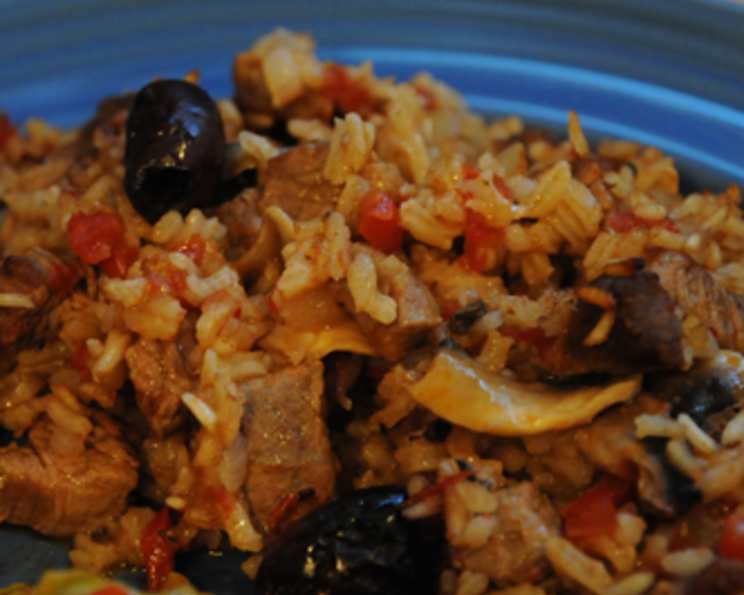
Monastery Gyuvetch: A Hearty Bulgarian Stew
The aroma still brings me back to that tiny family-run taverna nestled in the Rila Mountains. Snow-capped peaks loomed in the distance, a gentle breeze rustled through the pines, and the air was thick with the scent of woodsmoke and something wonderfully savory. It was my first taste of Gyuvetch, served bubbling hot in an earthenware pot, the flavors a symphony of tender beef, sweet tomatoes, and fragrant spices that warmed me from the inside out. Each bite was a reminder of the simple pleasures in life and the power of food to connect us to a place and its people.
Recipe Overview
- Prep Time: 20 minutes
- Cook Time: 45 minutes
- Total Time: 1 hour 5 minutes
- Servings: 8-12
- Yield: 1 large stew
- Dietary Type: Omnivore
Ingredients
- 2 lbs beef, cut into bite-sized pieces
- 4 tomatoes, chopped
- 1/2 lb mushrooms
- 1 cup rice
- 1 onion, chopped
- 15 olives, whole
- 1 bunch parsley, chopped
- 2 tablespoons vegetable oil
- 1 tablespoon butter
- 1 tablespoon sugar
- 2 1/2 cups beef stock
- Black pepper, to taste
- Paprika, to taste
- Salt, to taste
Equipment Needed
- Large skillet or Dutch oven
- Baking dish (approximately 9×13 inches)
Instructions
-
Begin by preparing the meat. Heat 2 tablespoons of vegetable oil in a large skillet or Dutch oven over medium-high heat. Add the beef in batches, ensuring not to overcrowd the pan. Sauté the beef until it begins to brown on all sides. Browning the meat adds depth and richness to the final dish.
-
Once the beef is browned, add the chopped onion to the skillet. Continue to sauté until the onion becomes translucent and softened, about 5 minutes.
-
Pour in the 2 1/2 cups of beef stock. Season generously with paprika and bring the mixture to a simmer. Reduce the heat to low, cover, and let it simmer for about 5 minutes. This allows the flavors to meld and the paprika to infuse the broth.
-
Stir in the 1 cup of rice and 1/2 lb of mushrooms. Ensure the rice is evenly distributed in the liquid. Cover the skillet and continue to simmer gently for approximately 15 minutes, or until most of the liquid is absorbed by the rice. Stir occasionally to prevent the rice from sticking to the bottom of the pan.
-
Preheat your oven to 400°F (200°C). This ensures the gyuvetch will bake evenly and develop a slightly crispy top.
-
Add the chopped tomatoes, 1 tablespoon of butter, 1 tablespoon of sugar, and 15 whole olives to the skillet. Stir well to combine all ingredients. The sugar helps to balance the acidity of the tomatoes and enhances their sweetness.
-
Simmer the mixture for another 5 minutes, allowing the tomatoes to soften and release their juices. Season with salt to taste.
-
Transfer the entire mixture from the skillet into a baking dish. Spread it evenly in the dish.
-
Bake in the preheated oven for 30 minutes, or until the top is lightly browned and the stew is bubbling hot. The baking process allows the flavors to fully combine and creates a delicious, hearty texture.
-
Remove the gyuvetch from the oven. Sprinkle generously with freshly chopped parsley and a grind of black pepper before serving. The fresh parsley adds a bright, herbaceous note that complements the richness of the stew.
Expert Tips & Tricks
- For an even richer flavor, use bone-in beef chuck and brown it well before braising. The bones release collagen, which adds body and depth to the stew.
- Don’t be afraid to experiment with different types of mushrooms. Cremini or shiitake mushrooms add an earthy, umami flavor.
- If you prefer a thicker stew, mix a tablespoon of cornstarch with two tablespoons of cold water to create a slurry. Stir the slurry into the simmering gyuvetch during the last 5 minutes of cooking to thicken the sauce.
- To save time, you can use canned diced tomatoes instead of fresh ones. Just be sure to drain off any excess liquid before adding them to the stew.
- For a spicier kick, add a pinch of dried chili flakes along with the paprika.
- Gyuvetch is also delicious made with lamb or pork instead of beef. Adjust the cooking time as needed depending on the cut of meat.
Serving & Storage Suggestions
Serve the Monastery Gyuvetch hot, straight from the baking dish. It’s wonderful on its own or with a side of crusty bread for soaking up the flavorful sauce. A dollop of sour cream or Bulgarian yogurt (kiselo mlyako) can add a cooling tang.
Leftovers can be stored in an airtight container in the refrigerator for up to 3 days. To reheat, simply microwave until heated through, or warm gently in a saucepan over low heat. You may need to add a splash of beef stock or water if the gyuvetch has become too thick.
Gyuvetch can also be frozen for longer storage. Allow it to cool completely before transferring it to a freezer-safe container. It will keep in the freezer for up to 2 months. Thaw overnight in the refrigerator before reheating.
Nutritional Information
| Nutrient | Amount per Serving | % Daily Value |
|---|---|---|
| Calories | 469.8 kcal | N/A |
| Total Fat | 43.35 g | 67% |
| Saturated Fat | 17.5 g | 88% |
| Cholesterol | 58.1 mg | 19% |
| Sodium | 193.9 mg | 8% |
| Total Carbohydrate | 13.05 g | 4% |
| Dietary Fiber | 0.95 g | 4% |
| Sugars | 2.15 g | N/A |
| Protein | 6.75 g | 13% |
Note: Nutritional information is an estimate and may vary based on specific ingredients and portion sizes.
Variations & Substitutions
- Vegetarian Gyuvetch: Substitute the beef with hearty vegetables like eggplant, zucchini, and bell peppers. Use vegetable stock instead of beef stock.
- Vegan Gyuvetch: Follow the vegetarian adaptation and replace the butter with olive oil.
- Gluten-Free Gyuvetch: Ensure your beef stock is gluten-free. Gyuvetch is naturally gluten-free if prepared as directed.
- Spicy Gyuvetch: Add a pinch of red pepper flakes or a chopped chili pepper to the dish for an extra kick.
- Herby Gyuvetch: Experiment with different herbs, such as thyme, rosemary, or oregano, to add a unique flavor profile.
FAQs (Frequently Asked Questions)
Q: Can I make Gyuvetch ahead of time?
A: Yes, you can prepare the Gyuvetch a day in advance up to the baking stage. Store it covered in the refrigerator and bake just before serving.
Q: Can I use brown rice instead of white rice?
A: Yes, but you’ll need to adjust the cooking time as brown rice takes longer to cook. Add more beef stock if necessary to ensure the rice is fully cooked.
Q: What kind of olives should I use?
A: Kalamata olives or other brined olives work well. You can use pitted or unpitted olives, depending on your preference.
Q: Can I add other vegetables to the Gyuvetch?
A: Absolutely! Feel free to add other vegetables like carrots, peas, or green beans.
Q: How do I prevent the rice from sticking to the bottom of the pan during simmering?
A: Stir the rice occasionally to prevent it from sticking. Also, ensure that the heat is low and the mixture is simmering gently, not boiling vigorously.
Final Thoughts
Monastery Gyuvetch is more than just a stew; it’s a culinary journey to the heart of Bulgaria. It’s a dish that embodies warmth, comfort, and the simple pleasures of sharing a delicious meal with loved ones. I encourage you to try this recipe and experience the authentic flavors of Bulgaria for yourself. Don’t hesitate to experiment with different variations and substitutions to create your own unique version. Enjoy, and happy cooking!