
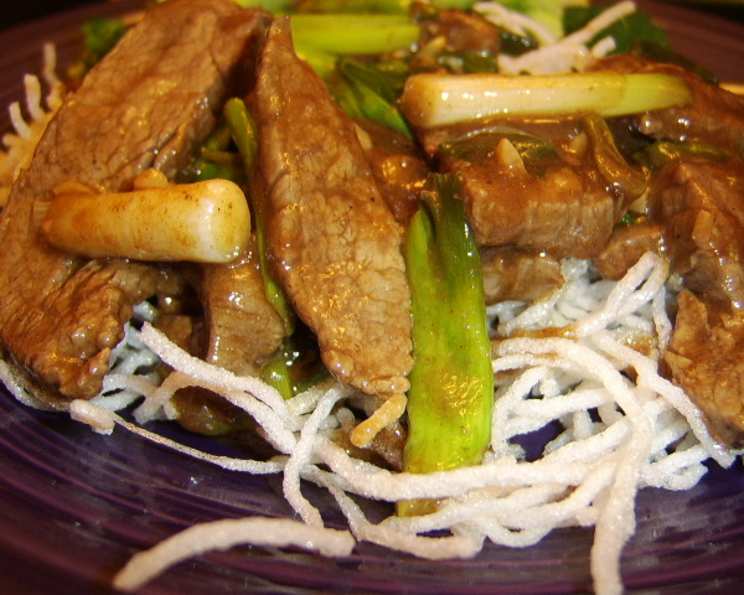
Unleashing the Dragon: Mastering Mongolian Beef at Home
The first time I tasted Mongolian Beef, it was a revelation. The sizzle of the wok, the intoxicating aroma of garlic and ginger, the perfect balance of sweet and savory dancing on my tongue – it was an experience that transcended mere sustenance. I was a young apprentice, intimidated by the fiery heat and rapid pace of the kitchen, but that dish, with its crispy noodles and tender, sauce-laden beef, gave me the courage to embrace the flames and strive for culinary excellence. The memory of that first bite, and the inspiration it provided, remains a guiding star in my kitchen to this day.
Recipe Overview
- Prep Time: 20 minutes
- Cook Time: 15 minutes
- Total Time: 35 minutes
- Servings: 3-4
- Dietary Type: Not Gluten-Free
Ingredients
- 1 lb beef flank steak, partially frozen
- 1/3 cup water
- 2 tablespoons rice wine
- 1 tablespoon hoisin sauce
- 1 tablespoon spicy brown bean sauce
- 1 tablespoon soy sauce
- 2 teaspoons cornstarch
- 1 teaspoon sesame oil
- Peanut oil (or other preferred oil)
- 4 garlic cloves, minced
- 2 cups green onions, cut into 1 inch pieces on the diagonal
- 3-4 ounces bean thread noodles (Sai Fun)
- Hot cooked rice (optional, if desired)
Equipment Needed
- Cutting board
- Sharp knife
- Small bowl
- Wok or large skillet
- Fryer or deep pot (for noodles)
- Paper towels
Instructions
-
Begin by preparing the flank steak. It’s essential that the beef is partially frozen. This makes it much easier to slice thinly. Trim any excess fat, then slice the partially frozen beef thinly across the grain into strips about 1/8 inch thick. Slicing against the grain ensures the beef is tender and easy to chew.
-
Next, prepare the luscious sauce that will coat the beef. In a small bowl, combine 1/3 cup water, 2 tablespoons rice wine, 1 tablespoon hoisin sauce, 1 tablespoon spicy brown bean sauce, 1 tablespoon soy sauce, 2 teaspoons cornstarch, and 1 teaspoon sesame oil. Whisk well until the cornstarch is fully dissolved and the mixture is smooth. Set the sauce aside.
-
Now for the dramatic part: preparing the Sai Fun (bean thread noodles). This is where things get exciting, so be cautious. Heat several inches of peanut oil (or another preferred oil with a high smoke point) in a wok, fryer, or deep pot. The oil should be hot enough to quickly puff up the noodles, but not so hot that it burns them.
-
Before frying, gently pull the bean thread noodles apart slightly. This helps them puff up individually. Carefully drop a small handful of noodles into the hot oil. Be prepared to stand back, as they will almost immediately puff up enormously.
-
As soon as the bean thread noodles have puffed up and turned golden brown (this happens almost instantly), use a slotted spoon or wire skimmer to lift them from the oil. Transfer the fried noodles to a plate lined with paper towels to drain excess oil. Repeat until all the noodles are fried. Remember to work in small batches to prevent overcrowding the oil.
-
Now it’s time to stir-fry. Pour 1 tablespoon of peanut oil into the wok and heat it until it is hot but not smoking. Add the minced garlic and stir-fry briefly until fragrant (about 15-20 seconds), being careful not to burn it.
-
Add the green onions to the wok and stir-fry until they are tender-crisp, about 1-2 minutes. Remove the garlic and green onions from the wok and set aside.
-
If needed, add more peanut oil to the wok. Add the sliced beef and stir-fry for about 2-3 minutes, or until it is browned on all sides. Do not overcrowd the wok; if necessary, cook the beef in batches.
-
Pour the prepared sauce into the wok with the beef. Stir constantly, and cook until the sauce thickens and becomes bubbly, about 1-2 minutes. The cornstarch in the sauce will act as a thickening agent, creating a glossy coating on the beef.
-
Add the cooked garlic and green onions back to the wok and stir everything together to combine. Ensure the beef and vegetables are evenly coated in the sauce.
-
To serve, place some of the crispy Sai Fun (fried bean thread noodles) on a plate and cover with a portion of the Mongolian Beef stir-fry.
-
Serve this dish immediately, as the noodles will start to get soggy if they sit for too long. Serve with hot cooked rice on the side, if desired.
Expert Tips & Tricks
- Partially freezing the flank steak is absolutely crucial for achieving those paper-thin slices. This makes it easier to handle and prevents the beef from tearing.
- Don’t be tempted to overcrowd the wok. Cooking the beef in batches ensures even browning and prevents the temperature of the wok from dropping too low.
- Watch the garlic carefully. It can burn quickly, which will impart a bitter flavor to the dish.
- If you can’t find spicy brown bean sauce, you can substitute with regular brown bean sauce and a pinch of red pepper flakes or a dash of sriracha to add heat.
- For a richer flavor, try using a combination of soy sauce and dark soy sauce. The dark soy sauce adds color and depth to the sauce.
Serving & Storage Suggestions
Mongolian Beef is best served immediately after cooking to preserve the crispiness of the noodles. Arrange the crispy Sai Fun on the plate and generously spoon the beef and sauce over the top. Garnish with extra chopped green onions for a pop of color and freshness.
Leftovers can be stored in an airtight container in the refrigerator for up to 3 days. However, the noodles will lose their crispness over time. To reheat, gently stir-fry the beef in a wok or skillet until heated through. You can re-crisp the noodles slightly by spreading them on a baking sheet and warming them in a low oven (around 200°F) for a few minutes. It is not recommended to freeze Mongolian Beef, as the texture of the beef and noodles will be affected.
Nutritional Information
| Nutrient | Amount per Serving | % Daily Value |
|---|---|---|
| Calories | 480.5 kcal | N/A |
| Calories from Fat | 143 g | 30% |
| Total Fat | 15.9 g | 24% |
| Saturated Fat | 6.1 g | 30% |
| Cholesterol | 77.2 mg | 25% |
| Sodium | 516.5 mg | 21% |
| Total Carbohydrate | 35.4 g | 11% |
| Dietary Fiber | 2.2 g | 8% |
| Sugars | 3.1 g | 12% |
| Protein | 44 g | 88% |
Variations & Substitutions
- Gluten-Free: Substitute the soy sauce with tamari, a gluten-free soy sauce alternative. Ensure the hoisin sauce and spicy brown bean sauce are also gluten-free.
- Vegetarian/Vegan: Replace the beef with firm tofu or seitan. Press the tofu to remove excess water before stir-frying.
- Spicier: Add more spicy brown bean sauce, red pepper flakes, or a chopped chili pepper to the sauce for an extra kick.
- Different Vegetables: Feel free to add other vegetables to the stir-fry, such as sliced bell peppers, broccoli florets, or snap peas.
- Noodle Alternatives: If you can’t find Sai Fun, you can substitute with crispy rice noodles or even crushed wonton chips.
FAQs (Frequently Asked Questions)
Q: Can I use a different cut of beef?
A: While flank steak is recommended for its authentic flavor and texture, you can use sirloin or skirt steak as alternatives. Just be sure to slice it thinly against the grain.
Q: How do I prevent the noodles from becoming soggy?
A: Serve the Mongolian Beef immediately after cooking. The noodles will absorb the sauce and lose their crispness over time.
Q: Can I make the sauce ahead of time?
A: Yes, the sauce can be prepared ahead of time and stored in an airtight container in the refrigerator for up to 2 days. Just whisk it well before using.
Q: What’s the best oil for frying the noodles?
A: Use an oil with a high smoke point, such as peanut oil, vegetable oil, or canola oil.
Q: How do I know when the oil is hot enough for frying the noodles?
A: The oil is ready when a small piece of noodle dropped into the oil immediately puffs up. Be careful not to overheat the oil, as this can cause it to smoke and burn.
Final Thoughts
Mongolian Beef is more than just a dish; it’s a celebration of flavor and texture. The combination of tender beef, savory-sweet sauce, and crispy noodles is an irresistible symphony that will transport your taste buds to the heart of Asian cuisine. So, gather your ingredients, fire up your wok, and unleash your inner chef. Don’t be afraid to experiment with variations and substitutions to create your own signature version of this classic dish. And most importantly, savor every bite! Serve with a crisp, dry Riesling to cut through the richness of the dish and enhance the flavors even further. Enjoy the journey, and happy cooking!