
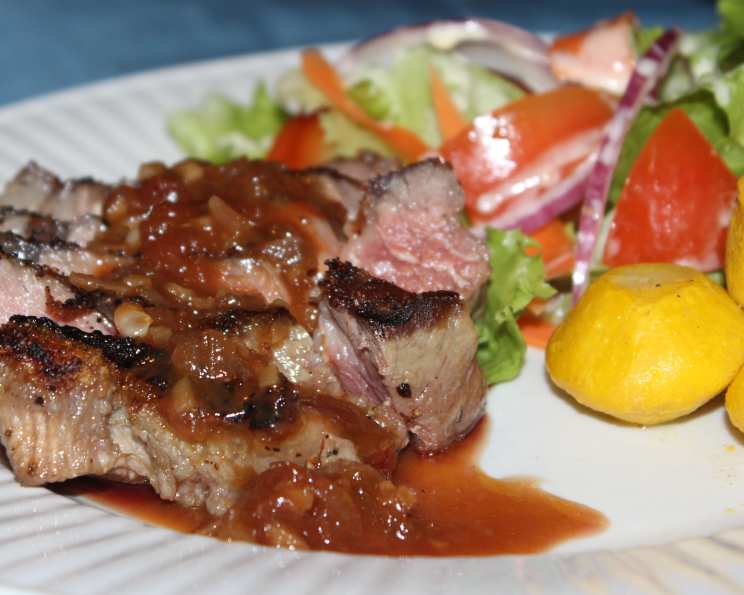
Monkey Gland Sauce: A South African Steakhouse Secret
The first time I encountered Monkey Gland Sauce, I was backpacking through South Africa, wide-eyed and eager to taste everything. I remember sitting at a bustling steakhouse in Johannesburg, the aroma of sizzling meat thick in the air. The waiter, with a knowing smile, suggested I try their signature sauce. Skeptical but adventurous, I agreed. One bite, and I was hooked. The complex blend of sweet, savory, and tangy flavors was unlike anything I’d ever tasted, transforming a perfectly cooked steak into an unforgettable experience. Ever since then, I’ve been trying to recreate that magic in my own kitchen.
Recipe Overview
- Prep Time: 15 minutes
- Cook Time: 10 minutes
- Total Time: 25 minutes
- Servings: Approximately 2 1/2 cups
- Yield: 2 1/2 cups
- Dietary Type: Not specified
Ingredients
- 1 large onion, finely chopped
- 4 garlic cloves, chopped and crushed
- 1 tablespoon fresh ginger, grated
- 3-4 tablespoons oil
- 1/2 cup chutney (fruity)
- 1/2 cup tomato puree
- 1 tablespoon soy sauce
- 2 tablespoons mild prepared mustard
- 2 tablespoons Worcestershire sauce
- 3 tablespoons ketchup
- 5 tablespoons port wine or 5 tablespoons muscadel wine
- 1/3 cup chicken broth (chicken stock or meat stock)
- 2 tablespoons red wine
- Salt
- Black pepper
Equipment Needed
- Large skillet or saucepan
- Grater
- Knife
- Cutting board
- Measuring cups and spoons
- Stirring spoon
Instructions
-
Begin by preparing your ingredients. Finely chop the onion, crush and chop the garlic, and grate the fresh ginger. Having everything ready to go will ensure a smooth cooking process.
-
Heat the oil in a large skillet or saucepan over medium heat. Once the oil is hot, add the chopped onion, garlic, and grated ginger.
-
Fry the onions, garlic, and ginger in the oil until the onions become translucent. This usually takes about 5-7 minutes. Stir frequently to prevent burning.
-
Add the remaining ingredients to the skillet: chutney, tomato puree, soy sauce, mustard, Worcestershire sauce, ketchup, port wine (or muscadel wine), chicken broth, and red wine.
-
Stir well to combine all the ingredients. Bring the sauce to a simmer over fairly high heat.
-
Let the sauce cook for about 7-10 minutes, stirring often. This allows the flavors to meld together and the sauce to thicken slightly.
-
Taste the sauce and adjust the seasoning as needed. You might want to add about 1/2 teaspoon of sugar if you prefer a slightly sweeter sauce. Add salt and freshly ground black pepper to taste. Remember that the soy sauce, Worcestershire sauce, and chutney already contain salt, so add it gradually.
-
Serve the Monkey Gland Sauce hot or cold with any roasted or grilled beef. It’s also delicious with chicken or pork.
Expert Tips & Tricks
- Spice it up: For a spicier version, add a pinch of cayenne pepper or a few drops of hot sauce to the sauce while it’s simmering.
- Chutney choice: The type of chutney you use will significantly affect the flavor of the sauce. A fruity chutney, like mango or apricot, works best.
- Wine selection: If you don’t have port or muscadel wine, you can substitute with a dry sherry or even a bit more red wine.
- Thickening: If the sauce is too thin, simmer it for a few more minutes to allow it to reduce. Alternatively, you can whisk in a cornstarch slurry (1 tablespoon cornstarch mixed with 2 tablespoons cold water) during the last few minutes of cooking.
- Flavor development: For a richer flavor, prepare the sauce a day in advance and let it sit in the refrigerator overnight. This allows the flavors to meld and deepen.
Serving & Storage Suggestions
Monkey Gland Sauce is traditionally served with grilled or roasted beef, especially steak. It can also be used as a dipping sauce for fries, onion rings, or other appetizers. To serve, simply spoon the sauce over the cooked meat or place it in a small bowl for dipping.
Leftover sauce can be stored in an airtight container in the refrigerator for up to 2 weeks. It can also be frozen for up to 3 months. Thaw the sauce in the refrigerator overnight before reheating. To reheat, simply warm the sauce in a saucepan over low heat, stirring occasionally.
Nutritional Information
| Nutrient | Amount per Serving | % Daily Value |
|---|---|---|
| Calories | 299 kcal | N/A |
| Calories from Fat | 155 g | 52% |
| Total Fat | 17.3 g | 26% |
| Saturated Fat | 2.2 g | 11% |
| Cholesterol | 0 mg | 0% |
| Sodium | 992.3 mg | 41% |
| Total Carbohydrate | 24.8 g | 8% |
| Dietary Fiber | 2.6 g | 10% |
| Sugars | 13.2 g | 52% |
| Protein | 4.2 g | 8% |
Note: Nutritional information is an estimate and may vary based on specific ingredients and preparation methods.
Variations & Substitutions
- Vegetarian/Vegan: Substitute the chicken broth with vegetable broth. Ensure the Worcestershire sauce is vegan as some brands contain anchovies.
- Gluten-Free: Use a gluten-free soy sauce and ensure that the chutney and Worcestershire sauce are also gluten-free.
- Spicy Monkey Gland Sauce: Add a finely chopped chili or a dash of chili flakes during the onion frying stage.
- Smoked Monkey Gland Sauce: Add a teaspoon of smoked paprika or a splash of liquid smoke for a smoky flavor.
- Herbaceous Monkey Gland Sauce: Incorporate fresh herbs like thyme or rosemary into the sauce during the simmering process.
FAQs (Frequently Asked Questions)
Q: What is Monkey Gland Sauce, and why is it called that?
A: Monkey Gland Sauce is a South African sauce typically served with grilled or roasted meats. The name’s origin is debated but supposedly comes from a doctor who used monkey gland extract in anti-aging treatments and a chef who named the sauce after him.
Q: Can I make this sauce ahead of time?
A: Absolutely! In fact, making it a day in advance allows the flavors to meld together even more, resulting in a richer and more complex sauce.
Q: What kind of chutney should I use?
A: A fruity chutney, like mango or apricot, is traditionally used and provides a lovely sweetness. However, you can experiment with other chutneys to find your favorite flavor profile.
Q: How long does Monkey Gland Sauce last?
A: It can be stored in an airtight container in the refrigerator for up to 2 weeks or frozen for up to 3 months.
Q: Can I use a different type of wine?
A: If you don’t have port or muscadel wine, you can substitute with a dry sherry or even a bit more red wine.
Final Thoughts
Now it’s your turn to experience the unique and delicious flavors of Monkey Gland Sauce! Don’t let the unusual name deter you; this South African staple is a true culinary gem. Whether you’re grilling steaks, roasting beef, or simply looking for a flavorful dipping sauce, this recipe is sure to impress. Give it a try, experiment with different variations, and let me know what you think! And don’t forget to share your culinary creations with friends and family – they’ll thank you for it. Pair this wonderful sauce with a crisp Pinotage from Stellenbosch for a truly authentic South African experience.