
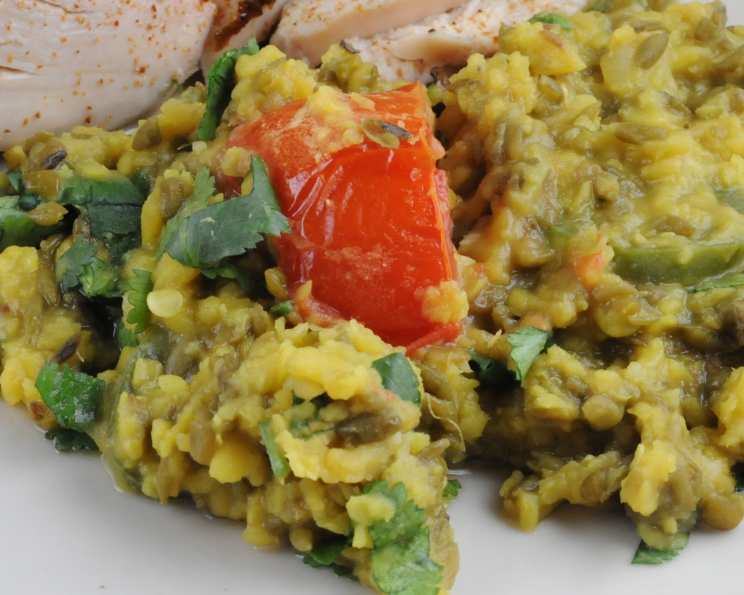
Balochistan Moong Dal: A Hearty and Aromatic Lentil Stew
The scent of cumin and ginger frying in ghee always brings me back to my travels through India. One particularly chilly evening in Rajasthan, a roadside vendor offered me a steaming bowl of lentil stew, thick with spices and the earthy aroma of the open fire. It was a humble dish, served in a simple clay bowl, but the warmth it spread through me was profound. It wasn’t just the heat, but the feeling of connection, of sharing a meal rooted in tradition, that made it so memorable. This Balochistan Moong Dal, while hailing from a different region, evokes that same feeling of comfort and culinary adventure.
Recipe Overview
- Prep Time: 20 minutes
- Cook Time: 20 minutes
- Total Time: 40 minutes
- Servings: 4-6
- Dietary Type: Vegan, Gluten-Free
Ingredients
- 1 cup mung dal (split yellow lentils)
- 3 cups water
- ½ teaspoon turmeric powder
- Salt to taste
- ½ lemon, juice of
- 2-3 green chilies, sliced
- ½ tablespoon ghee (can substitute with vegetable oil for a vegan option)
- ½ teaspoon cumin seeds
- 2-3 whole cloves
- ½ inch cinnamon stick
- 3-4 garlic cloves, finely diced
- 1 teaspoon grated ginger
- 1 small tomato, quartered
- 1 tablespoon cilantro, chopped
Equipment Needed
- Medium-sized pot
- Skimmer or spoon
- Small frying pan or tadka pan
Instructions
-
Begin by soaking the moong dal in cold water for about 20 minutes. This helps to soften the lentils and reduces cooking time.
-
After soaking, drain the moong dal thoroughly.
-
Transfer the drained moong dal to a medium-sized pot. Add the water, turmeric powder, and salt.
-
Bring the mixture to a boil over medium-high heat. As the water boils, you’ll notice foam forming on the surface. Use a skimmer or spoon to carefully skim off the foam. This process removes impurities and contributes to a cleaner flavor.
-
Once skimmed, reduce the heat to low and simmer the dal gently until the moong dal is soft and easily mashed. This should take approximately 20 minutes.
-
During simmering, check the water level periodically. If the water is being absorbed too quickly and the dal is becoming dry, add about half a cup of water at a time as necessary to maintain a soupy consistency.
-
The dal is finished when you can successfully moosh it up a little on the side of the pan with a spoon. It should be thick without any visible pools of liquid.
-
Stir in the lemon juice and sliced green chilies into the cooked dal. The lemon juice adds a bright tang, while the green chilies provide a welcome kick.
-
While the dal is cooking, prepare the tempering. In a small frying pan or tadka pan, heat the ghee over medium heat.
-
Once the ghee is hot, add the cumin seeds, cloves, and cinnamon stick. Cook, stirring constantly, until the cumin seeds start to sputter and become fragrant. This step infuses the ghee with aromatic spices.
-
Add the finely diced garlic and grated ginger to the pan. Continue cooking and stirring until the garlic turns light golden brown and the ginger releases its pungent aroma. Be careful not to burn the garlic, as it will impart a bitter taste.
-
Add the quartered tomatoes to the tempering. Sauté for one or two minutes, until the tomatoes soften slightly.
-
Pour the entire contents of the frying pan, including the spiced ghee and tomatoes, over the cooked dal. This is known as the tempering, and it adds a burst of flavor and aroma to the dish.
-
Cover the pot for five minutes or so to allow the flavors to meld together.
-
Garnish with the chopped cilantro just before serving.
Expert Tips & Tricks
- Soaking the dal is crucial. It significantly reduces cooking time and makes the lentils more digestible. If you’re short on time, even a 10-minute soak is better than none.
- Don’t skip the skimming step. Removing the foam results in a cleaner-tasting dal.
- Adjust the chilies to your spice preference. If you prefer a milder flavor, use fewer chilies or remove the seeds before slicing.
- Use a heavy-bottomed pot to prevent the dal from sticking and burning.
- For a richer flavor, use homemade ghee if possible. You can also add a pinch of asafoetida (hing) to the tempering for a more complex flavor profile, but be cautious as it can be quite potent. A tiny pinch is all you need.
- To make ahead, cook the dal up to the point of adding the tempering. Store it in the refrigerator, and prepare the tempering just before serving.
Serving & Storage Suggestions
Serve Balochistan Moong Dal hot, garnished with fresh cilantro. It pairs beautifully with steamed rice, roti, or naan bread. A dollop of plain yogurt or a side of pickled vegetables can further enhance the meal.
Leftovers can be stored in an airtight container in the refrigerator for up to 3 days. To reheat, gently warm on the stovetop over low heat, adding a splash of water if necessary to loosen the consistency. You can also microwave it, but be sure to stir it occasionally to ensure even heating. While freezing is possible, the texture of the dal may change slightly upon thawing. It’s best consumed fresh or within a few days.
Nutritional Information
| Nutrient | Amount per Serving | % Daily Value |
|---|---|---|
| Calories | 208 kcal | N/A |
| Calories from Fat | 22g | 11% |
| Total Fat | 2.5g | 3% |
| Saturated Fat | 1.2g | 5% |
| Cholesterol | 4.1mg | 1% |
| Sodium | 14.7mg | 0% |
| Total Carbohydrate | 34.3g | 11% |
| Dietary Fiber | 15.8g | 63% |
| Sugars | 3g | N/A |
| Protein | 13.4g | 26% |
Variations & Substitutions
- Vegan: Substitute vegetable oil for ghee. Ensure that no animal products are used in the preparation.
- Spice Level: Adjust the amount of green chilies to suit your taste. You can also add a pinch of red chili powder for extra heat.
- Vegetables: Feel free to add other vegetables to the dal, such as spinach, carrots, or potatoes. Add them along with the moong dal at the beginning of the cooking process.
- Herbs: Try adding other fresh herbs, such as mint or parsley, for a different flavor profile.
- Lentil Type: While this recipe specifically calls for moong dal, you can experiment with other types of lentils, such as masoor dal (red lentils) or toor dal (yellow split peas). Keep in mind that cooking times may vary.
FAQs (Frequently Asked Questions)
Q: Can I use pre-soaked moong dal?
A: Yes, if you’ve pre-soaked the moong dal for longer than 20 minutes, you may need to reduce the cooking time slightly. Keep an eye on the consistency and adjust as needed.
Q: What can I substitute for ghee if I don’t have it?
A: You can use any neutral-flavored vegetable oil, such as canola or sunflower oil, as a substitute for ghee.
Q: Can I make this recipe in a pressure cooker?
A: Yes, you can cook the dal in a pressure cooker. Reduce the cooking time to about 2-3 whistles, then release the pressure naturally.
Q: The dal is too thick. How can I thin it out?
A: Simply add a little bit of hot water to the dal and stir well until you reach your desired consistency.
Q: Can I add other spices to this recipe?
A: Absolutely! Feel free to experiment with other spices, such as coriander powder, cumin powder, or garam masala, to customize the flavor to your liking.
Final Thoughts
This Balochistan Moong Dal is more than just a recipe; it’s an invitation to explore the vibrant flavors of South Asian cuisine. Its simplicity and heartwarming taste make it a perfect dish for a cozy weeknight meal or a comforting weekend gathering. Don’t be afraid to experiment with the spices and vegetables to create your own unique version. I encourage you to try this recipe and share your experience, and pair it with a refreshing glass of lassi. Happy cooking!