
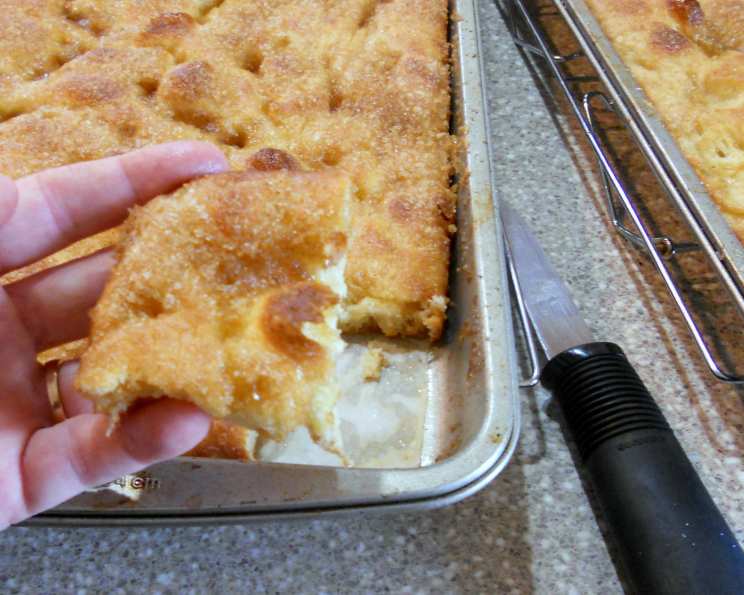
The Soulful Comfort of Moravian Sugar Cake
The scent alone transports me. It’s a damp North Carolina morning, the kind where the fog clings to the fields and the air is heavy with the promise of rain. My grandmother, a woman of few words but boundless love, is in her kitchen, humming a hymn as she pulls a golden-brown cake from the oven. The rich, buttery aroma laced with brown sugar and a hint of cinnamon fills the room, wrapping me in a warmth that has nothing to do with the weather. It’s the smell of home, of heritage, of Moravian Sugar Cake. Each bite was a melt-in-your-mouth explosion of sweet goodness, a memory I cherish and a tradition I’m honored to share.
Recipe Overview
- Prep Time: 4 hours 15 minutes (includes rising time)
- Cook Time: 20 minutes
- Total Time: 4 hours 35 minutes
- Yields: 2 large sheet cakes
- Dietary Type: Vegetarian
Ingredients
- 1 (1 tablespoon) package dry yeast, dissolved in ½ cup lukewarm water
- ½ cup sugar
- 2 eggs
- 1 ½ teaspoons salt
- ⅔ cup shortening
- 1 cup hot mashed potatoes (if using instant, use water for liquid & do not add salt)
- 1 cup scalded milk, cooled to warm
- 6 – 7 cups flour
- ½ cup melted butter
Topping:
- ½ cup flour
- 1 lb light brown sugar
- 4 tablespoons butter
- 1 dash cinnamon
Equipment Needed
- Large mixing bowl
- Measuring cups and spoons
- Baking sheets or pie pans
- Damp towel
- Warm place for rising
- Oven
Instructions
-
First, proof the yeast. Add a pinch of sugar to the yeast in lukewarm water. The water should be warm to the touch, not hot, as hot water will kill the yeast. If it foams after a few minutes, it’s good to go. This step is essential to ensure your dough rises properly.
-
In a large mixing bowl, cream together the eggs, salt, sugar, and shortening until the mixture is smooth and well combined. This creates the base of your cake and incorporates air for a lighter texture.
-
Gradually add the warm milk and mashed potatoes to the creamed mixture, stirring gently to combine. Ensure the milk is warm, not hot, to avoid cooking the eggs. The mashed potatoes add moisture and a subtle sweetness to the cake.
-
Add the yeast mixture to the bowl, mixing everything well. The yeast will activate and begin to work its magic, creating the airy texture that is characteristic of Moravian Sugar Cake.
-
Now, it’s time to add the flour. Add the flour one cup at a time, mixing well after each addition, until the dough is stiff enough to turn out onto a floured board. The amount of flour may vary depending on the humidity and the type of flour you use, so adjust accordingly.
-
Knead the dough until it is soft and spongy. This can take about 10-15 minutes by hand, or if you’re using a food processor, mix until it forms a ball. Kneading develops the gluten in the flour, which gives the cake its structure.
-
Place the dough in a large, greased bowl in a draft-free, warm place, and cover it with a damp towel. Let the dough double in size, which will take approximately 2-3 hours. Patience is key here, as the rising time is crucial for a light and airy cake.
-
Once the dough has doubled, punch it down to release the air. This prevents the cake from becoming too dense.
-
Divide the dough into two equal portions.
-
Place each portion of dough in a greased pie pan or large cookie sheet. Cover and let the dough double in size again, which will take approximately 1 ½ hours. This second rise is just as important as the first.
-
After the second rise, spread the melted butter evenly on top of each cake.
-
Using your fingers, punch holes in the dough about 1 inch apart. Be careful not to punch all the way down to the bottom of the pan, but only about halfway. These holes will hold the delicious brown sugar topping.
-
In a separate bowl, mix the topping thoroughly. Combine the flour, brown sugar, and butter until it forms a crumbly mixture.
-
Pour the topping into the holes in the dough, filling each one generously.
-
Sprinkle any remaining crumbs over the top of the cake and then sprinkle with cinnamon.
-
Bake in a preheated oven at 350°F (175°C) for 20 minutes, or until the cake is golden brown and fully baked on the bottom. To check for doneness, insert a toothpick into the center of the cake; it should come out clean.
-
Serve warm and enjoy!
Expert Tips & Tricks
- Use room temperature eggs: Room temperature eggs incorporate more easily into the batter, resulting in a smoother texture.
- Don’t overmix the dough: Overmixing can develop too much gluten, leading to a tough cake. Mix until just combined.
- Adjust sweetness to taste: Moravian Sugar Cake is known for its sweetness, but you can adjust the amount of brown sugar in the topping to your liking.
- Add a touch of vanilla extract: A teaspoon of vanilla extract can enhance the flavor of the cake.
- Make the dough ahead of time: You can prepare the dough a day in advance and store it in the refrigerator. Just be sure to bring it to room temperature before baking.
Serving & Storage Suggestions
Moravian Sugar Cake is best served warm, fresh from the oven. The buttery, brown sugar topping melts into the cake, creating a symphony of flavors and textures. It’s delicious on its own, but also pairs well with a cup of coffee or tea.
Leftovers can be stored at room temperature for up to 2 days, or in the refrigerator for up to 5 days. To reheat, simply warm in the oven at 350°F (175°C) for a few minutes, or microwave for a few seconds until heated through.
For longer storage, you can freeze the cake for up to 2 months. Wrap it tightly in plastic wrap and then foil to prevent freezer burn. Thaw overnight in the refrigerator before reheating.
Nutritional Information
Please note that these are estimates and can vary based on specific ingredients and portion sizes.
| Nutrient | Amount per Serving | % Daily Value |
|---|---|---|
| Calories | 2002.7 kcal | N/A |
| Calories from Fat | 682.5 g | N/A |
| Total Fat | 75.85 g | 116.5% |
| Saturated Fat | 33.1 g | 165% |
| Cholesterol | 194.1 mg | 64.5% |
| Sodium | 1438.45 mg | 59.5% |
| Total Carbohydrate | 304.75 g | 101.5% |
| Dietary Fiber | 7.1 g | 28% |
| Sugars | 136.45 g | N/A |
| Protein | 28.85 g | 57.5% |
Variations & Substitutions
- Gluten-Free: Substitute the all-purpose flour with a gluten-free blend. You may need to adjust the amount of liquid to achieve the right dough consistency.
- Dairy-Free: Use a plant-based milk alternative, such as almond milk or soy milk, in place of the scalded milk. Substitute the butter with a dairy-free butter alternative or coconut oil.
- Spiced Sugar Cake: Add a pinch of ground nutmeg or cloves to the topping for a warmer, more complex flavor.
- Fruit Filling: Incorporate chopped apples, berries, or other fruits into the holes before adding the brown sugar topping for a fruity twist.
FAQs (Frequently Asked Questions)
Q: Can I use active dry yeast instead of instant yeast?
A: Yes, you can. Make sure to proof it in lukewarm water with a pinch of sugar before adding it to the rest of the ingredients.
Q: What if my dough doesn’t rise?
A: Ensure your yeast is fresh and that the water you used to proof it wasn’t too hot. Also, make sure the dough is in a warm, draft-free place.
Q: Can I freeze the unbaked dough?
A: Yes, you can freeze the unbaked dough after the first rise. Wrap it tightly in plastic wrap and thaw it overnight in the refrigerator before proceeding with the recipe.
Q: My topping is too dry. What can I do?
A: Add a tablespoon or two of melted butter to the topping until it reaches a crumbly consistency.
Q: Can I use granulated sugar instead of brown sugar for the topping?
A: While brown sugar is traditional, you can use granulated sugar in a pinch. However, the flavor will be slightly different, lacking the caramel notes of brown sugar.
Final Thoughts
Moravian Sugar Cake is more than just a recipe; it’s a connection to the past, a taste of tradition, and a symbol of warmth and hospitality. It’s a labor of love, but the reward is a cake that is both comforting and unforgettable. I encourage you to try this recipe, share it with your loved ones, and create your own memories around this timeless treat. Don’t be afraid to experiment with variations and make it your own. And if you do, I’d love to hear about your experience! Share your feedback and let me know how it turned out. Happy baking!