
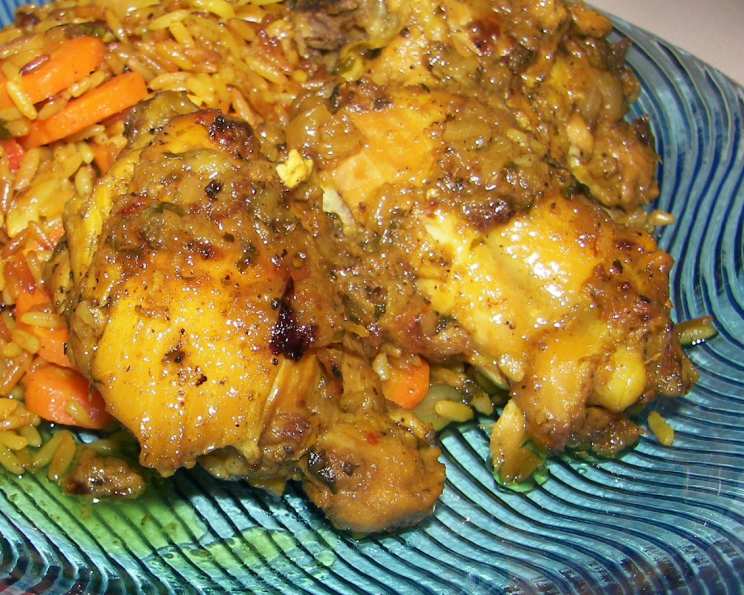
Moroccan Saffron Chicken: A Culinary Journey to the Souks
The scent of saffron always transports me back to a bustling Marrakech marketplace. I remember the first time I tasted Moroccan Saffron Chicken, the aroma of warm spices clinging to the air, mingling with the shouts of vendors and the vibrant colors of hand-woven carpets. Each bite was an explosion of flavor—tender chicken infused with ginger, cinnamon, and the unmistakable, luxurious notes of saffron. It was more than just a meal; it was an experience, a taste of Moroccan soul that I’ve been chasing ever since.
Recipe Overview
- Prep Time: 20 minutes
- Cook Time: 1 hour
- Total Time: 1 hour 20 minutes
- Servings: 4
- Yield: 4 servings
- Dietary Type: Gluten-Free, Dairy-Free
Ingredients
- 1 whole chicken, cut into pieces and skin removed
- 2 large sweet onions, chopped medium
- 1 tablespoon ground ginger
- 1 teaspoon white pepper
- 1/2 teaspoon black pepper
- 2 cinnamon sticks
- 1 teaspoon saffron thread, crumbled
- 1 teaspoon turmeric
- 1 1/2 – 2 teaspoons salt
- 1/4 cup butter
- 1/4 cup olive oil
- 1/4 cup fresh cilantro, chopped
Equipment Needed
- Dutch oven or heavy-bottomed pot
- Sharp knife
- Cutting board
- Measuring spoons
- Measuring cups
Instructions
-
In a Dutch oven or heavy-bottomed pot, combine all the ingredients: the chicken pieces, chopped onions, ground ginger, white pepper, black pepper, cinnamon sticks, crumbled saffron threads, turmeric, and salt.
-
Add the butter, olive oil, and fresh cilantro to the pot.
-
Cover the pot tightly.
-
Cook over medium to medium-high heat, stirring occasionally to prevent sticking, for about 1 hour. The goal is for the chicken to become very tender and easily pull away from the bone.
-
Important: Do not add water. The chicken and onions will release their own liquids during cooking. Be vigilant to prevent the chicken from burning; reduce the heat if necessary.
-
After about an hour, check the chicken for tenderness. If it’s not quite there, continue cooking for another 15-20 minutes, checking periodically.
-
Once the chicken is very tender, increase the heat slightly to reduce the liquids. The sauce should thicken and transform into a rich, flavorful oil.
-
Continue cooking until most of the liquid has evaporated, leaving behind a concentrated sauce of infused oil.
-
Discard the cinnamon sticks before serving.
-
Taste the sauce for seasoning. It should have a slightly salty and peppery kick. Adjust the salt and pepper as needed to suit your preference.
Expert Tips & Tricks
- Blooming the Saffron: For maximum flavor and color, lightly toast the saffron threads in a dry pan for a minute or two before crumbling them. Then, soak the crumbled threads in a tablespoon of warm water for about 15 minutes. This releases the saffron’s compounds, resulting in a more potent and vibrant dish. Add the saffron and the water to the pot during cooking.
- Skin On or Off?: While the traditional recipe calls for removing the chicken skin, you can leave it on for extra richness. However, be aware that the skin will render a significant amount of fat, so you may need to skim off some of the excess oil after cooking.
- Make-Ahead Magic: This dish is fantastic for making ahead! The flavors meld and deepen beautifully overnight. Prepare the chicken up to the point of reducing the sauce, then cool it completely and refrigerate. The next day, skim off any solidified fat from the surface and continue with the recipe.
- Dealing with Burning: If the chicken starts to stick or burn, immediately reduce the heat to low. You can also add a tablespoon or two of water or broth to deglaze the pot, but be careful not to add too much liquid, as it will dilute the flavor.
- Onion Variety: While the recipe calls for sweet onions, you can also use yellow onions. If using yellow onions, consider adding a pinch of sugar to balance the acidity.
- Spice it Up: For a touch of heat, add a pinch of cayenne pepper or a small piece of finely chopped chili pepper to the pot along with the other spices.
Serving & Storage Suggestions
Moroccan Saffron Chicken is traditionally served on a bed of fluffy couscous or rice. Garnish with extra fresh cilantro and a drizzle of the flavorful oil from the pot. It also pairs well with crusty bread for soaking up the delicious sauce.
Storage: Leftover chicken can be stored in an airtight container in the refrigerator for up to 3-4 days. For longer storage, freeze in an airtight container for up to 2 months.
Reheating: Reheat the chicken in a saucepan over medium heat, adding a splash of water or broth if needed to prevent it from drying out. You can also reheat it in the microwave, but be sure to cover it to prevent splattering.
Nutritional Information
| Nutrient | Amount per Serving | % Daily Value |
|---|---|---|
| Calories | 491 kcal | 25% |
| Total Fat | 39g | 60% |
| Saturated Fat | 13g | 65% |
| Cholesterol | 137mg | 46% |
| Sodium | 603mg | 25% |
| Total Carbohydrate | 4.6g | 2% |
| Dietary Fiber | 0.9g | 4% |
| Sugars | 1.7g | 7% |
| Protein | 29g | 58% |
Nutritional information is an estimate and may vary based on specific ingredients and portion sizes.
Variations & Substitutions
- Vegetarian Option: Replace the chicken with chickpeas and firm tofu for a vegetarian version. Adjust cooking time accordingly.
- Lemon Preserved Chicken: Add 1/4 of a preserved lemon (rind only, rinsed and chopped) to the pot along with the other ingredients for a bright, citrusy twist.
- Almonds and Olives: Add 1/2 cup of blanched almonds and 1/4 cup of green olives to the pot during the last 15 minutes of cooking for added texture and flavor.
- Sweet Potato Version: Add chunks of sweet potato alongside the chicken to create a hearty and flavorful one-pot meal.
- Spice Level: Adjust the amount of ginger, white pepper, and black pepper to control the spice level to your preference. You can also add a pinch of cayenne pepper for extra heat.
FAQs (Frequently Asked Questions)
Q: Can I use chicken breasts instead of a whole chicken?
A: Yes, you can substitute chicken breasts, but be mindful of the cooking time. Chicken breasts tend to dry out faster than other parts of the chicken, so reduce the cooking time accordingly. Check for doneness frequently.
Q: Can I use powdered saffron instead of saffron threads?
A: While you can use powdered saffron, the flavor and color will not be as intense as saffron threads. If using powdered saffron, use about 1/4 teaspoon and add it to the pot along with the other spices.
Q: How do I know when the chicken is cooked through?
A: The chicken is cooked through when the internal temperature reaches 165°F (74°C). Use a meat thermometer to check the temperature in the thickest part of the chicken. Also, the juices should run clear when pierced with a fork.
Q: Can I freeze this dish?
A: Yes, Moroccan Saffron Chicken freezes well. Allow it to cool completely before transferring it to an airtight container and freezing for up to 2 months.
Q: What can I serve with Moroccan Saffron Chicken besides couscous?
A: It pairs well with rice, quinoa, or roasted vegetables like carrots, zucchini, or bell peppers.
Final Thoughts
Moroccan Saffron Chicken is more than just a recipe; it’s an invitation to experience the vibrant flavors and aromas of Morocco. Don’t be intimidated by the list of ingredients—the process is simple, and the results are truly rewarding. So, gather your spices, embrace the exotic, and prepare to transport yourself to a sun-drenched souk with every delicious bite. I encourage you to try this recipe and share your own variations and experiences. Consider serving it with a refreshing mint tea for the perfect Moroccan feast!