
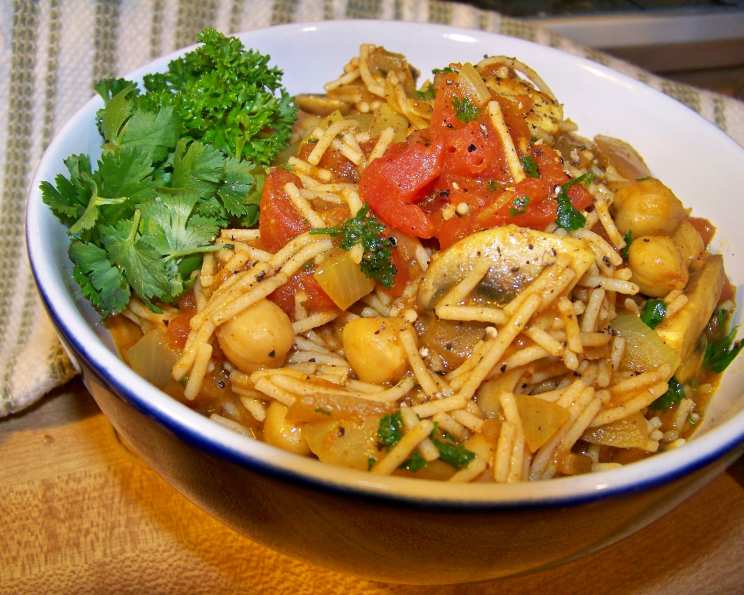
Moroccan Spaghetti: A Flavorful, Low-Fat Delight
The scent of cinnamon always transports me back to my travels in Marrakech, haggling for spices in the bustling souks. One evening, a generous family invited me to share their meal, a vibrant spaghetti dish infused with the warm spices and earthy flavors of Morocco. It was unlike any pasta I’d ever tasted – healthy, hearty, and bursting with aromatic complexity. I knew I had to recreate it when I got home, and this recipe is my tribute to that unforgettable experience.
Recipe Overview
- Prep Time: 10 minutes
- Cook Time: 20 minutes
- Total Time: 30 minutes
- Servings: 4
- Dietary Type: Vegan, Low-Fat
Ingredients
- 11 ounces whole wheat spaghetti
- 1 red onion, chopped finely
- 3 garlic cloves, crushed
- 1 cup mushroom, sliced
- 28 ounces chopped tomatoes, from a can
- 2 teaspoons cinnamon
- 2 teaspoons ground cumin
- 1 teaspoon turmeric
- 1 pinch salt
- 1 pinch black pepper
- 10 ounces chickpeas, from a can, drained and rinsed
- ¾ cup fresh parsley, roughly chopped
- ¾ cup fresh cilantro, roughly chopped
Equipment Needed
- Large pot
- Non-stick pan
- Wooden spoon or spatula
Instructions
-
Begin by cooking the spaghetti. Fill a large pot with water and bring to a rapid boil. Add the whole wheat spaghetti and cook according to the package directions. Most whole wheat spaghetti varieties require around 10 minutes to reach al dente.
-
While the pasta is cooking, prepare the Moroccan-inspired sauce. Place a non-stick pan over medium heat. Spray the pan generously with low-fat cooking spray.
-
Add the finely chopped red onion, crushed garlic cloves, and sliced mushrooms to the heated pan. Sauté the mixture until the vegetables begin to soften, which should take approximately 5 minutes. If the vegetables start to stick to the pan, add a splash of water to deglaze and prevent burning. This technique allows you to “fry” the ingredients without the need for added fats.
-
Pour in the chopped tomatoes, followed by the cinnamon, ground cumin, turmeric, salt, and black pepper. Reduce the heat to low and allow the sauce to gently simmer for about 8 minutes, stirring frequently to prevent sticking. This allows the flavors to meld together beautifully.
-
Incorporate the drained and rinsed chickpeas into the simmering sauce. Heat through for approximately 3 minutes, ensuring they are thoroughly warmed.
-
Stir in the roughly chopped fresh parsley and fresh cilantro. Mix the herbs into the sauce until they just begin to wilt, releasing their aromatic oils.
-
Once the spaghetti is cooked, drain it thoroughly. Add the cooked spaghetti to the pan with the sauce and stir well, ensuring that every strand of pasta is evenly coated.
-
Serve immediately, garnishing with extra fresh herbs if desired.
Expert Tips & Tricks
- Spice Level Adjustment: Adjust the amounts of cinnamon, cumin, and turmeric to suit your personal taste preferences. For a spicier dish, add a pinch of red pepper flakes or a finely chopped chili pepper to the sauce.
- Mushroom Variety: Feel free to experiment with different types of mushrooms. Cremini or shiitake mushrooms will add a deeper, more earthy flavor to the sauce.
- Make-Ahead Tip: The sauce can be prepared ahead of time and stored in the refrigerator for up to 3 days. Simply reheat the sauce and add the cooked spaghetti just before serving.
- Herb Infusion: For a more intense herb flavor, add the parsley and cilantro stems (finely chopped) along with the leaves.
- Thickening the Sauce: If the sauce is too thin, simmer it for a few more minutes uncovered to allow some of the liquid to evaporate. Alternatively, you can stir in a tablespoon of tomato paste for a richer, thicker consistency.
- Enhance the Flavors: A squeeze of fresh lemon juice just before serving can brighten the flavors and add a touch of acidity.
Serving & Storage Suggestions
Serve this Moroccan spaghetti hot, garnished with a sprinkle of fresh herbs and a drizzle of olive oil (optional, if you’re not strictly adhering to a low-fat diet). This dish pairs well with a simple side salad or a crusty bread for soaking up the flavorful sauce.
Leftovers can be stored in an airtight container in the refrigerator for up to 3 days. To reheat, simply microwave or warm in a pan over medium heat, adding a splash of water if necessary to prevent sticking. While freezing is possible, the texture of the spaghetti may change slightly upon thawing. If freezing, store in an airtight container for up to 2 months and thaw overnight in the refrigerator before reheating.
Nutritional Information
| Nutrient | Amount per Serving | % Daily Value* |
|---|---|---|
| Calories | 426.7 kcal | N/A |
| Calories from Fat | 25 kcal | N/A |
| Total Fat | 2.8 g | 4% |
| Saturated Fat | 0.4 g | 2% |
| Cholesterol | 0 mg | 0% |
| Sodium | 279.2 mg | 11% |
| Total Carbohydrate | 89.6 g | 29% |
| Dietary Fiber | 7.8 g | 31% |
| Sugars | 7 g | N/A |
| Protein | 18.5 g | 36% |
*Percent Daily Values are based on a 2,000 calorie diet.
Variations & Substitutions
- Gluten-Free Option: Substitute the whole wheat spaghetti with gluten-free spaghetti made from brown rice or quinoa.
- Spicier Version: Add a pinch of red pepper flakes or a finely chopped chili pepper to the sauce for a spicier kick.
- Vegetable Variations: Incorporate other vegetables such as bell peppers, zucchini, or eggplant into the sauce for added nutrients and flavor.
- Protein Boost: Add a can of lentils or cooked white beans for an extra boost of protein.
- Nutty Flavor: Sprinkle toasted almonds or walnuts on top of the dish for added texture and flavor.
- Sweetness: Add a teaspoon of honey or maple syrup.
- Herbs: You can use other fresh herbs or dried herb mixes.
FAQs (Frequently Asked Questions)
Q: Can I use regular spaghetti instead of whole wheat?
A: Yes, you can use regular spaghetti. However, whole wheat spaghetti provides more fiber and nutrients, making it a healthier choice.
Q: How can I make this dish spicier?
A: Add a pinch of red pepper flakes or a finely chopped chili pepper to the sauce. You can also add a dash of your favorite hot sauce.
Q: Can I add meat to this recipe?
A: While this recipe is designed to be vegetarian and vegan, you can certainly add cooked chicken, lamb, or sausage if desired. Simply incorporate the cooked meat into the sauce during the last few minutes of cooking.
Q: Is it necessary to use fresh herbs?
A: While fresh herbs provide the best flavor, you can substitute dried herbs if needed. Use about 1 teaspoon of dried parsley and 1 teaspoon of dried cilantro in place of the fresh herbs.
Q: How do I prevent the spaghetti from sticking together?
A: Cook the spaghetti in plenty of boiling water, and stir it occasionally while cooking. Drain it immediately after cooking and add it to the sauce right away. If the spaghetti starts to stick, add a splash of pasta water to the sauce to help loosen it.
Final Thoughts
This Moroccan Spaghetti recipe is a testament to the fact that healthy eating can be both flavorful and satisfying. With its vibrant spices, hearty chickpeas, and wholesome whole wheat pasta, this dish is a delicious and nutritious meal that is sure to become a family favorite. I encourage you to try this recipe and experience the taste of Morocco in your own kitchen. Feel free to adapt the recipe to your liking and share your feedback. Enjoy!