
Mastering Muffuletta: The Quintessential New Orleans Bread
The first time I tasted a muffuletta, I was lost in the vibrant chaos of New Orleans’ French Quarter. The aroma of olives, cured meats, and that distinct, slightly sweet bread wafted from Central Grocery, drawing me in like a culinary siren song. That first bite – the perfect marriage of textures and flavors – transported me. It wasn’t just a sandwich; it was an edible embodiment of the city’s soul. I knew then that I needed to learn the secrets of that incredible bread, the foundation of the muffuletta experience.
Recipe Overview
- Prep Time: 2 hours
- Cook Time: 35 minutes
- Total Time: 3 hours 25 minutes
- Yields: 1 loaf
- Dietary Type: Vegetarian (if made without shortening)
Ingredients
- 1 cup warm water (110°F)
- 1 tablespoon sugar
- 1 (1/4 ounce) package active dry yeast (about 1 tablespoon)
- 3 cups bread flour, approximately
- 1 1/2 teaspoons salt
- 2 tablespoons vegetable shortening (can substitute with olive oil for a vegetarian version)
- Sesame seeds
Equipment Needed
- 2-cup glass measuring cup
- Food processor fitted with steel blade
- Large bowl
- Plastic wrap
- Baking sheet
- Cooling rack
Instructions
-
In a 2-cup glass measuring cup, combine the warm water and sugar.
-
Stir in the yeast. Let stand until foamy, about 5-10 minutes. This step is crucial; if the yeast doesn’t foam, it’s likely inactive, and your bread won’t rise properly. Discard and start again with fresh yeast.
-
In a food processor fitted with the steel blade, combine 3 cups of the bread flour, salt, and shortening. Process briefly to combine.
-
Add the yeast mixture to the food processor.
-
Process until the dough forms a ball, about 5 seconds. Stop the machine and check the consistency of the dough. It should be smooth and satiny.
-
If the dough is too dry, add more warm water, 1 tablespoon at a time, processing just until blended. Be careful not to add too much water at once, as this can make the dough sticky.
-
If the dough is too sticky, add more flour, 1 or 2 tablespoons at a time, processing just until blended. Process for about 20 seconds to knead the dough. The food processor does most of the work!
-
Lightly oil a large bowl, swirling to coat the bottom and sides.
-
Place the dough in the oiled bowl, and turn the dough to coat all sides. This prevents the dough from drying out during the rising process.
-
Cover the bowl with plastic wrap. Let rise in a warm, draft-free place until doubled in bulk, about 1 1/2 hours. A slightly warm oven (turned off!) is an excellent place for this.
-
Lightly grease a baking sheet.
-
When the dough has doubled in bulk, punch down the dough and turn it out onto a lightly floured surface. Punching down releases the excess gas and prepares the dough for shaping.
-
Form the dough into a round loaf about 10 inches in diameter, and place it on the greased baking sheet.
-
Sprinkle the top of the loaf generously with sesame seeds.
-
Press the seeds gently into the surface of the loaf. This will help them adhere during baking.
-
Cover very loosely with plastic wrap, and let rise until almost doubled in bulk, about 1 hour. This second rise is crucial for a light and airy crumb.
-
Place the rack in the center of the oven.
-
Preheat the oven to 425°F (220°C). Make sure your oven is fully preheated before baking for optimal results.
-
Remove the plastic wrap.
-
Bake the loaf in the center of the preheated oven for 10 minutes.
-
Reduce the heat to 375°F (190°C) and bake for another 25 minutes.
-
The loaf is done when it sounds hollow when tapped on the bottom. An internal temperature of around 200-210°F (93-99°C) using a thermometer is also a good indicator of doneness.
-
Cool completely on a rack before slicing. This allows the bread to finish cooking and prevents a gummy texture.
Expert Tips & Tricks
- Yeast Proofing is Key: Always proof your yeast before starting the recipe. If it doesn’t foam, your bread won’t rise.
- Temperature Matters: Use a thermometer to ensure your water is at the right temperature for activating the yeast (110°F). Too hot, and you’ll kill the yeast; too cold, and it won’t activate.
- Don’t Over-Knead: Over-kneading can result in a tough loaf. The food processor should do the work in just a few seconds.
- Perfect Rise: Find a consistently warm spot for rising. A slightly warmed (then turned off!) oven works wonders, especially in colder climates.
- Crispy Crust: For an extra-crispy crust, brush the loaf with an egg wash (1 egg beaten with 1 tablespoon of water) before sprinkling with sesame seeds.
- Make Ahead: You can prepare the dough up to the point of shaping it into a loaf, then refrigerate it overnight. Let it come to room temperature before shaping and continuing with the recipe.
Serving & Storage Suggestions
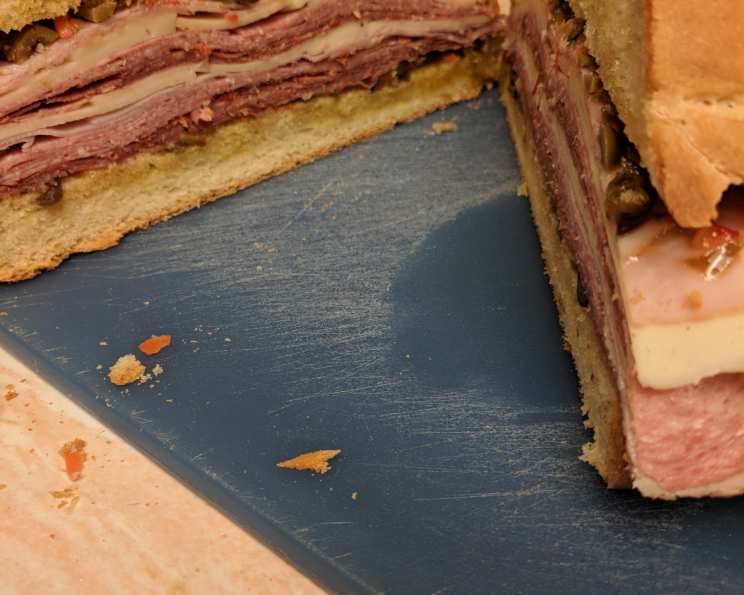
This muffuletta bread is, of course, best enjoyed as part of a classic muffuletta sandwich, generously filled with marinated olive salad, salami, ham, mortadella, and provolone. Slice the loaf horizontally and layer the fillings inside.
To store the bread, wrap it tightly in plastic wrap or place it in an airtight container. It will stay fresh at room temperature for 2-3 days. For longer storage, freeze the loaf (whole or sliced) for up to 2 months. Thaw completely at room temperature before using. Reheat slices briefly in a toaster or oven to refresh the crust.
Nutritional Information
| Nutrient | Amount per Serving | % Daily Value |
|---|---|---|
| Calories | 208 kcal | 10% |
| Total Fat | 4.9g | 6% |
| Saturated Fat | 1.2g | 6% |
| Cholesterol | 0mg | 0% |
| Sodium | 234mg | 10% |
| Total Carbohydrate | 35.4g | 12% |
| Dietary Fiber | 1.4g | 5% |
| Sugars | 1.9g | 4% |
| Protein | 6.3g | 13% |
Note: Nutritional information is an estimate and may vary based on specific ingredients and serving sizes.
Variations & Substitutions
- Vegetarian/Vegan: Replace the vegetable shortening with olive oil. While traditional, the shortening doesn’t impart significant flavor.
- Whole Wheat Muffuletta: Substitute up to half of the bread flour with whole wheat flour for a nuttier flavor and added fiber. You may need to adjust the amount of water slightly.
- Garlic Herb Muffuletta: Add 1-2 cloves of minced garlic and 1 tablespoon of chopped fresh herbs (such as rosemary or thyme) to the dough during the initial mixing.
- Spicy Muffuletta: Add a pinch of red pepper flakes to the dough for a little heat.
FAQs (Frequently Asked Questions)
Q: Can I make this bread without a food processor?
A: Yes, you can! Knead the dough by hand for 8-10 minutes until it becomes smooth and elastic.
Q: My dough isn’t rising. What could be the problem?
A: The most common reasons are inactive yeast (check the expiration date and proof it!) or a rising environment that is too cold.
Q: Can I use all-purpose flour instead of bread flour?
A: Bread flour has a higher protein content, which results in a chewier texture. While you can use all-purpose flour, the texture will be slightly different.
Q: How do I know when the bread is done baking?
A: The bread should sound hollow when tapped on the bottom and have an internal temperature of around 200-210°F (93-99°C).
Q: Can I freeze the muffuletta bread?
A: Yes, you can freeze the loaf whole or sliced. Wrap it tightly in plastic wrap and then in foil or place it in a freezer bag. It will keep for up to 2 months.
Final Thoughts
Making this muffuletta bread at home allows you to capture a little piece of New Orleans magic, no matter where you are. The process is wonderfully simple and rewarding, and the aroma that fills your kitchen will transport you to the heart of the French Quarter. Don’t be intimidated; embrace the experience, and I encourage you to experiment with your own flavor variations. Share your creations and let the spirit of the muffuletta bring people together. Bon appétit!