
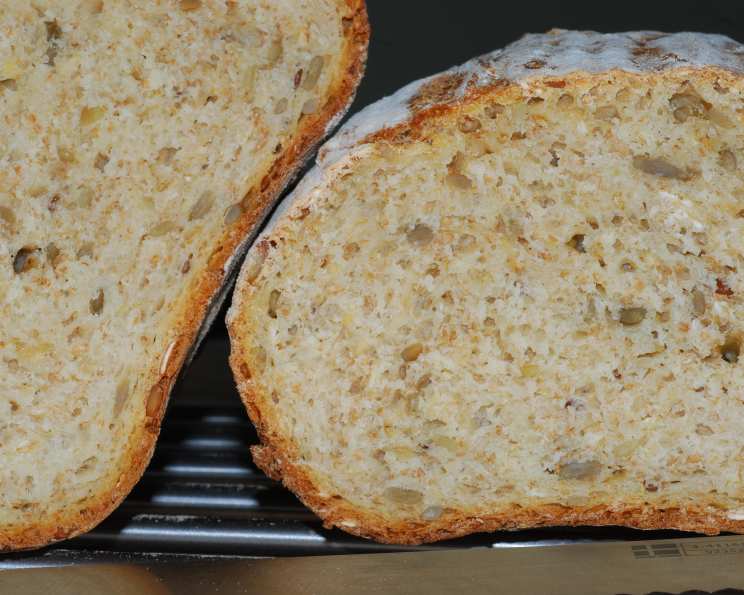
Multigrain Sourdough Bread: A Taste of Home
The scent of sourdough baking always transports me back to my grandmother’s kitchen. I can almost feel the warmth of the oven on my face, hear the gentle bubbling of the starter, and see her flour-dusted hands kneading with generations of knowledge. This multigrain sourdough, with its hearty texture and subtle tang, is my humble attempt to capture that magic and share it with you. It’s a bread that nourishes the body and soul, perfect for a simple weekday lunch or a comforting weekend brunch.
Recipe Overview
- Prep Time: 20 minutes (plus sourdough proofing)
- Cook Time: 40-50 minutes
- Total Time: Several hours (including proofing)
- Servings: 12
- Yield: 1 Loaf
- Dietary Type: Vegetarian
Ingredients
- 2 cups proofed sourdough starter
- 2 tablespoons butter or 2 tablespoons olive oil
- ½ cup milk
- 1 teaspoon salt
- ¼ cup honey
- ½ cup sunflower seeds
- ½ cup amaranth or ½ cup quinoa
- 3 ½ cups multi-grain flour (like Robin Hood Best for Multigrain)
Equipment Needed
- Bread machine (optional, for kneading)
- Lightly floured surface
- Loaf pan (greased), or cornmeal-coated cookie sheet
- Mixing bowl (if not using a bread machine)
- Covering (e.g., clean kitchen towel or plastic wrap)
- Wire rack
Instructions
-
If using a bread machine: Measure all ingredients into the bread machine pan, in the order they are listed. Set the machine for the dough cycle and start.
-
If kneading by hand: In a large mixing bowl, combine the proofed sourdough starter, butter (or olive oil), milk, salt, and honey. Mix well.
-
Gradually add the sunflower seeds, amaranth (or quinoa), and multi-grain flour, mixing until a shaggy dough forms.
-
Turn the dough out onto a lightly floured surface and knead for 8-10 minutes, until smooth and elastic. If the dough is too sticky, add a little more flour, one tablespoon at a time.
-
At the end of the dough cycle (or after kneading), remove the dough to a lightly floured surface and shape into a loaf.
-
Place the dough in a greased loaf pan, cover, and let rise until the bread is 1 to 2 inches above the edges of the pan. Alternatively, form into one or two round loaves and place on a cornmeal-coated cookie sheet.
-
Be patient! Sourdough without the addition of commercial yeast can take up to several hours to rise, depending on the strength of your starter and the ambient temperature. A warm environment will encourage faster rising.
-
Preheat your oven to 375 degrees F (190 degrees C).
-
Bake for 40 to 50 minutes.
-
Remove from the pan and cool on a wire rack.
-
The top can be brushed with butter for a soft crust, if desired.
NOTE: To proof your starter, feed it with equal parts of flour and lukewarm water, then let it sit overnight or up to 12 hours, covered. This is what develops the characteristic sour flavor, and the longer the proof, the sourer it will be. If you start with 1 cup of starter and feed it 1 cup each of water and flour, you should have enough to make your bread and save the rest to start your next batch. The ideal consistency of the proofed starter will be bubbly and roughly doubled in size.
Expert Tips & Tricks
- For a deeper, more complex flavor, try using a blend of different multi-grain flours. Rye, spelt, and whole wheat flour can all add interesting nuances.
- Scoring the top of the loaf before baking will help it rise evenly and prevent cracking. Use a sharp knife or lame to make a single long slash or a decorative pattern.
- If you find that your bread is browning too quickly, tent it with foil during the last 15-20 minutes of baking.
- A Dutch oven can be used for baking round loaves on the cookie sheet. Preheat the Dutch oven during preheating, and bake covered for the first half of baking time, uncovered for the second half.
Serving & Storage Suggestions
This multigrain sourdough bread is delicious served warm with butter, jam, or cheese. It also makes excellent toast or sandwiches. Store leftovers in an airtight container at room temperature for up to 3 days, in the refrigerator for up to a week, or in the freezer for up to 3 months. To reheat, wrap the bread in foil and bake in a preheated oven at 350 degrees F (175 degrees C) for 10-15 minutes, or until warmed through. Frozen bread can be thawed overnight in the refrigerator before reheating. It also makes a superb accompaniment to soups and stews, providing a hearty counterpoint to lighter fare.
Nutritional Information
| Nutrient | Amount per Serving | % Daily Value |
|---|---|---|
| Calories | 110.7 kcal | N/A |
| Calories from Fat | N/A | N/A |
| Total Fat | 5.6 g | 8% |
| Saturated Fat | 1.8 g | 9% |
| Cholesterol | 6.5 mg | 2% |
| Sodium | 213.3 mg | 8% |
| Total Carbohydrate | 13.5 g | 4% |
| Dietary Fiber | 1.4 g | 5% |
| Sugars | 6 g | 23% |
| Protein | 2.7 g | 5% |
Note: Nutritional information is an estimate and may vary depending on specific ingredients and preparation methods.
Variations & Substitutions
- Seed Sensations: Feel free to change the sunflower seeds for other seeds or nuts, such as pumpkin seeds, flax seeds, walnuts, or pecans.
- Grain Game: Substitute the amaranth (or quinoa) for millet or other grains. Cooked barley or oats can also add a pleasant chewiness.
- Sweetness Level: Adjust the amount of honey to your liking, or use maple syrup or agave nectar as alternatives.
- Dairy-Free Delight: Use almond milk, soy milk, or oat milk in place of regular milk. Ensure the butter is a plant-based variety.
- Herbaceous Haven: Add fresh or dried herbs, such as rosemary, thyme, or oregano, to the dough for a savory twist.
FAQs (Frequently Asked Questions)
Q: My sourdough starter isn’t very active. What can I do?
A: Ensure you are feeding it regularly with equal parts flour and water. A warmer environment will also encourage activity. You can also try using whole wheat flour for feeding, as it contains more nutrients for the yeast.
Q: How do I know when the bread is fully baked?
A: The bread should be golden brown and sound hollow when tapped on the bottom. An internal temperature of 200-210°F (93-99°C) indicates doneness.
Q: Can I make this bread without a bread machine?
A: Absolutely! Simply follow the instructions for kneading by hand.
Q: My bread is too dense. What went wrong?
A: This could be due to several factors, including an inactive starter, not enough rising time, or too much flour. Make sure your starter is bubbly and active, and allow the dough to rise sufficiently. Measure flour accurately.
Q: Can I freeze this bread?
A: Yes, this bread freezes well. Wrap it tightly in plastic wrap and then in foil, or place it in a freezer-safe bag. Thaw overnight in the refrigerator before reheating.
Final Thoughts
This multigrain sourdough bread is more than just a recipe; it’s an invitation to slow down, connect with the simple pleasure of baking, and nourish yourself and your loved ones with wholesome, homemade goodness. Don’t be intimidated by the sourdough process – with a little patience and practice, you’ll be rewarded with a loaf that’s bursting with flavor and character. I encourage you to try this recipe, experiment with different variations, and share your creations with friends and family. The aroma alone is enough to bring joy to any kitchen, and the taste… well, that’s an experience worth savoring. Enjoy!