
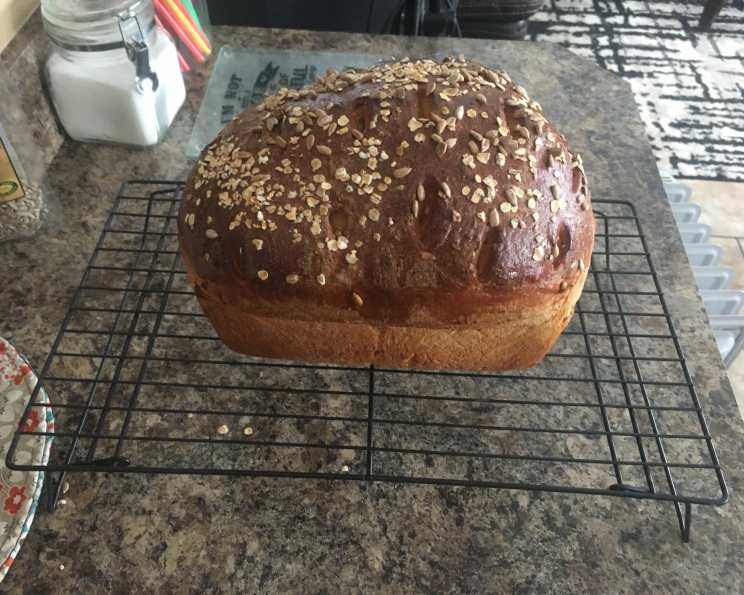
The Soulful Slice: Baking a Perfect Multigrain Yeast Bread
There’s something truly magical about the smell of bread baking in the oven. For me, it’s a sensory time machine, instantly transporting me back to my grandmother’s kitchen. I remember her flour-dusted hands, the rhythmic kneading, and the way the entire house would fill with that warm, comforting aroma. This multigrain bread, with its hearty texture and nutty flavor, is my attempt to recapture a bit of that magic, to share a slice of that cherished memory with every bite. It is a wonderful loaf that is both crusty and soft!
Recipe Overview
- Prep Time: 2 hours
- Cook Time: 45 minutes
- Total Time: 2 hours 45 minutes
- Servings: 16
- Yield: 1 loaf
- Dietary Type: Vegetarian
Ingredients
- 1 1/2 cups nonfat milk
- 1/4 cup dark molasses
- 2 1/2 teaspoons active dry yeast
- 2 cups all-purpose flour, plus additional all-purpose flour, as needed
- 1 cup whole wheat flour
- 1/2 cup rolled oats, plus 1 tablespoon rolled oats
- 1 1/2 teaspoons kosher salt
- 1 large egg, separated
- 1/3 cup hulled unsalted roasted sunflower seeds, plus 1 tablespoon hulled unsalted roasted sunflower seeds
Equipment Needed
- Small saucepan
- Measuring cups and spoons
- Stand mixer with paddle attachment
- Stand mixer with dough hook attachment
- Lightly oiled bowl
- Kitchen towel
- 9 x 5 inch loaf pan
- Small bowl
- Wire cooling rack
Instructions
-
Begin by gently warming the liquids. In a small saucepan over low heat, combine the milk and molasses. Heat the mixture to approximately 105 degrees Fahrenheit. This temperature is crucial for activating the yeast without damaging it.
-
Activate the yeast. Remove the saucepan from the heat and sprinkle the active dry yeast over the warm milk mixture. Allow it to stand undisturbed for about 10 minutes, or until the yeast becomes foamy. This indicates that the yeast is alive and ready to work its magic.
-
Combine dry ingredients. In the bowl of your stand mixer, fitted with the paddle attachment, stir together 2 cups of all-purpose flour, the whole wheat flour, 1/2 cup of rolled oats, and the kosher salt. Ensure the ingredients are evenly distributed.
-
Incorporate wet ingredients. Whisk the egg yolk into the yeast mixture. This adds richness and color to the bread. Add the yeast mixture to the bowl containing the dry ingredients.
-
Form the dough. Beat on medium speed until a sticky dough forms. This initial mixing helps to develop the gluten structure.
-
Knead the dough. Continue to beat, adding small amounts of all-purpose flour as needed, until the dough comes together into a smooth ball. Be careful not to add too much flour, as this can result in a dry loaf.
-
Switch to the dough hook. Fit the mixer with the dough hook attachment. Knead on medium speed until the dough is smooth and elastic, about 6 to 8 minutes. Add additional all-purpose flour as needed to reduce stickiness, but maintain a slightly tacky texture. The dough should pull away from the sides of the bowl.
-
First rise. Form the dough into a ball and place it in a lightly oiled bowl, turning to coat it evenly with oil. This prevents the dough from drying out during the rising process. Cover the bowl with a clean kitchen towel and allow it to rise in a warm place until doubled in size, approximately 1 hour. The warmth encourages the yeast to ferment, creating the air pockets that give bread its light and airy texture.
-
Prepare the loaf pan. Lightly oil a 9 x 5 inch loaf pan. This will ensure that the bread releases easily after baking.
-
Punch down the dough. Once the dough has doubled in size, gently punch it down to release the accumulated gases. Let it rest for 10 minutes. This resting period allows the gluten to relax, making the dough easier to handle.
-
Add sunflower seeds. Turn the dough onto a lightly floured work surface and sprinkle it with 1/3 cup of the sunflower seeds. Knead the dough until the seeds are evenly distributed throughout.
-
Shape the loaf. Roll the dough into a 12 by 7 inch rectangle. Beginning on the short side, roll up the dough loosely and pinch the seam to seal. This creates a tight spiral that will help the bread rise evenly.
-
Second rise. Place the loaf, seam side down, in the prepared loaf pan. Cover it with a towel and allow it to rise until doubled in size, approximately 30 minutes.
-
Preheat the oven. While the dough is rising for the second time, preheat the oven to 350 degrees Fahrenheit. Ensure the oven is fully preheated before baking to ensure even cooking.
-
Prepare the egg wash. In a small bowl, lightly beat the egg white with 2 tablespoons of water. This egg wash will give the bread a beautiful golden-brown crust.
-
Glaze and garnish. Brush the top of the loaf with the egg white mixture and sprinkle with the remaining tablespoon of rolled oats and sunflower seeds. This adds texture and visual appeal to the finished loaf.
-
Bake the bread. Bake in the preheated oven until the top is golden brown and the loaf sounds hollow when tapped, about 40 to 45 minutes. If the top begins to brown too quickly, tent it loosely with aluminum foil to prevent burning.
-
Cool and slice. Cool the bread in the pan for 5 minutes, then turn it out onto a wire cooling rack and let it cool completely before slicing. Slicing the bread while it’s still warm can result in a gummy texture.
Expert Tips & Tricks
- For a richer flavor, try using honey instead of molasses.
- If you don’t have sunflower seeds, other seeds like pumpkin or flax seeds would work well.
- To ensure even baking, rotate the loaf halfway through the baking time.
- If your kitchen is cold, place the dough in a slightly warmed (turned off) oven to rise.
- For a softer crust, brush the loaf with melted butter immediately after baking.
Serving & Storage Suggestions
This multigrain bread is incredibly versatile. It’s delicious toasted and served with butter, jam, or avocado. It also makes a fantastic sandwich bread for everything from classic deli meats to grilled vegetables.
Store the bread in an airtight container at room temperature for up to 3 days. For longer storage, slice the bread and freeze it in a freezer-safe bag for up to 2 months. Reheat frozen slices in the toaster or oven.
Nutritional Information
| Nutrient | Amount per Serving | % Daily Value |
|---|---|---|
| Calories | 141.2 kcal | N/A |
| Calories from Fat | 22 g | 16% |
| Total Fat | 2.5 g | 3% |
| Saturated Fat | 0.4 g | 1% |
| Cholesterol | 12.1 mg | 4% |
| Sodium | 235.1 mg | 9% |
| Total Carbohydrate | 25.4 g | 8% |
| Dietary Fiber | 2 g | 8% |
| Sugars | 4.3 g | N/A |
| Protein | 5 g | 10% |
Note: Nutritional information is an estimate and may vary based on specific ingredients and serving sizes.
Variations & Substitutions
- Gluten-Free: Substitute the all-purpose and whole wheat flours with a gluten-free bread flour blend. You may need to add a binding agent like xanthan gum.
- Vegan: Replace the egg yolk with 2 tablespoons of applesauce in the yeast mixture and omit the egg white wash, brushing with a little olive oil instead.
- Different Grains: Experiment with different types of grains, such as quinoa, flaxseed, or cracked wheat.
- Sweet Bread: Add a bit more molasses or honey for a sweeter loaf. You could also incorporate dried fruit like raisins or cranberries.
FAQs (Frequently Asked Questions)
Q: Why is my bread dense and not rising properly?
A: This could be due to several factors, including old or inactive yeast, not enough kneading, or a kitchen that is too cold for the dough to rise properly. Make sure your yeast is fresh and store properly.
Q: How do I know when the bread is fully baked?
A: The bread is done when the top is golden brown and the loaf sounds hollow when tapped on the bottom. An internal temperature of 200-210°F (93-99°C) is also a good indicator.
Q: Can I use a different type of milk?
A: Yes, you can use any type of milk you prefer, including almond milk, soy milk, or whole milk. The fat content may slightly affect the texture of the bread.
Q: Can I make this bread without a stand mixer?
A: Yes, you can knead the dough by hand on a lightly floured surface. It will take a bit longer, about 10-12 minutes, until the dough is smooth and elastic.
Q: What can I do if my bread is browning too quickly in the oven?
A: If the top of the bread is browning too quickly, you can tent it loosely with aluminum foil to protect it from the heat.
Final Thoughts
I sincerely hope you’ll give this multigrain bread recipe a try. It’s more than just a loaf of bread; it’s an experience, a journey back to simpler times, and a celebration of wholesome ingredients. Whether you enjoy it toasted for breakfast, as part of a hearty sandwich, or simply as a comforting snack, I’m confident that this bread will become a staple in your kitchen. Don’t hesitate to experiment with different variations and substitutions to create your own signature loaf. And, most importantly, share your creations and feedback – I’d love to hear how it turns out! Pair a slice with a warm bowl of soup on a cold evening or with your morning coffee for a satisfying start to the day. Happy baking!