
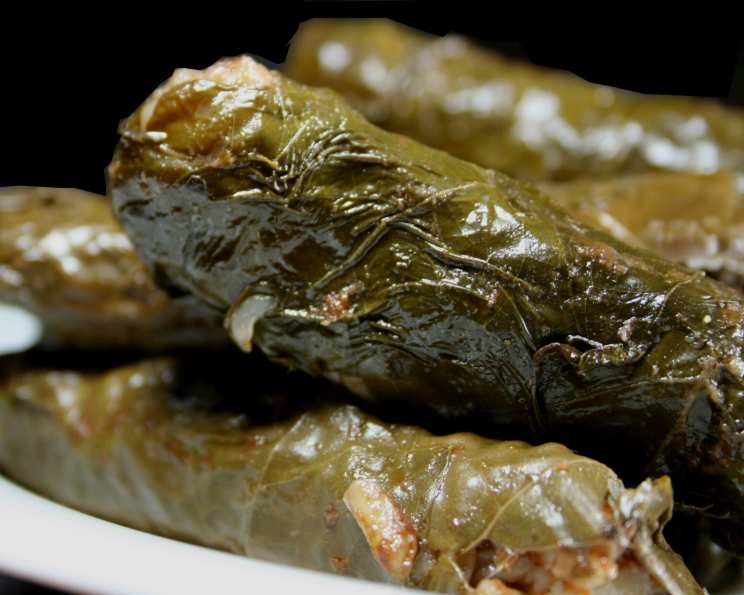
Mum’s Dolmathes (Stuffed Grape Leaves)
The aroma still lingers in my memory: sun-drenched grape leaves, earthy dill, and the bright tang of lemon, all melding together in the kitchen of my childhood home. My mum, a whirlwind of energy and love, would spend hours meticulously rolling these delicate bundles. Each dolma was a small testament to her dedication and a delicious representation of our family’s heritage – a taste of sunshine in every bite.
Recipe Overview
- Prep Time: 45 minutes
- Cook Time: 40 minutes
- Total Time: 1 hour 25 minutes
- Servings: 50
- Yield: Approximately 50 dolmathes
- Dietary Type: Vegan
Ingredients
- 1 lb grape leaves
- ½ cup olive oil, plus extra for drizzling
- 2 large onions, chopped
- 4 green onions, chopped
- 1 ½ cups long-grain rice
- 3 tablespoons fresh dill, chopped
- 1 tablespoon fresh spearmint, chopped
- 1 lemon, juice of
- Salt to taste
- Pepper to taste
Equipment Needed
- Large bowl
- Colander
- Large saucepan with lid
- Measuring cups and spoons
- Cutting board
- Sharp knife
Instructions
- Start by preparing the onions. Place the chopped onions in a large bowl filled with water. Let them stand for 10 minutes to mellow their flavor. This also helps to prevent tearing when chopping. After 10 minutes, wash the onions thoroughly and drain them in a colander.
- Wash and drain the long-grain rice. It’s important to rinse the rice until the water runs clear to remove excess starch, which will prevent the dolmathes from becoming gummy.
- In a large bowl, combine the rice, drained onions, chopped green onions, fresh dill, and fresh spearmint. Add salt and pepper to taste, and drizzle with 1 tablespoon of olive oil. Mix all ingredients together thoroughly until well combined. This is your delicious dolmathes filling.
- Prepare the grape leaves. Rinse the grape leaves thoroughly under running water to remove any dirt or debris.
- Blanching the leaves: Bring a pot of water to a rolling boil. Gently place the grape leaves into the boiling water for about 2 minutes. This will soften the leaves, making them easier to roll. Remove the blanched leaves from the boiling water and set them aside to cool slightly.
- Now it’s time to roll the dolmathes! Place one grape leaf on a clean counter or cutting board, with the shiny side facing down and the stem end towards you.
- Place approximately 1 teaspoon of the rice filling onto the base of the grape leaf. The exact amount will depend on the size of the leaf.
- Fold the sides of the grape leaf inward, over the filling. Then, roll the leaf up from the base to the tip, creating a tight but not overly firm roll. Remember to leave some room for the rice to expand during cooking. Aim for a loose roll.
- Repeat steps 6-8 with the remaining grape leaves and rice filling.
- Arrange the rolled dolmathes in a single layer in a large saucepan. Pack them snugly together to prevent them from unrolling during cooking.
- Add 2 cups of warm water to the saucepan, ensuring the dolmathes are mostly covered. Add a pinch of salt and drizzle the remaining olive oil over the dolmathes.
- Bring the water to a boil over medium-high heat. Once boiling, reduce the heat to low, cover the saucepan, and simmer for 10 minutes.
- After 10 minutes, add ½ cup of water and the juice of one lemon to the saucepan. Cover and continue to simmer for another 30 minutes, or until the rice is cooked through and the grape leaves are tender. Check occasionally to ensure there is enough liquid in the pan, adding more water if necessary.
- Once cooked, remove the saucepan from the heat and let the dolmathes cool completely in the cooking liquid. This allows the flavors to meld together.
Expert Tips & Tricks
- Leaf Selection: If using jarred grape leaves, choose a good quality brand that uses young, tender leaves. Avoid leaves that are overly tough or have a strong briny flavor.
- Rice Prep: Ensure the rice is well-rinsed to remove excess starch. This will prevent the dolmathes from becoming sticky and gummy.
- Rolling Technique: Don’t overfill the grape leaves. The rice will expand during cooking, so it’s better to err on the side of caution. Also, avoid rolling the leaves too tightly, as this can prevent the rice from cooking evenly.
- Preventing Sticking: To prevent the dolmathes from sticking to the bottom of the saucepan, you can line the bottom of the pan with a few extra grape leaves before arranging the rolled dolmathes.
- Cooking Liquid: Adjust the amount of water as needed during cooking to ensure the dolmathes are submerged but not swimming. You may need to add more water if the liquid evaporates too quickly.
- A small plate placed upside down on top of the dolmathes while simmering will help prevent them from unraveling.
- For a richer flavour, try adding a pinch of cinnamon or allspice to the rice filling.
Serving & Storage Suggestions
Dolmathes are best served cold or at room temperature as an appetizer or light meal. They can be served on their own or with a dollop of plain Greek yogurt for a tangy contrast. A fresh salad makes a lovely accompaniment.
To store leftover dolmathes, transfer them to an airtight container and refrigerate. They will keep in the refrigerator for up to 3-4 days. You can also freeze dolmathes for longer storage. Place them in a freezer-safe container or bag and freeze for up to 2-3 months. Thaw overnight in the refrigerator before serving.
Reheating is not usually necessary, as dolmathes are traditionally served cold. However, if you prefer to serve them warm, you can gently reheat them in a saucepan over low heat or in the microwave.
Nutritional Information
| Nutrient | Amount per Serving | % Daily Value |
|---|---|---|
| Calories | 48.8 kcal | N/A |
| Calories from Fat | 21 kcal | N/A |
| Total Fat | 2.4 g | 3% |
| Saturated Fat | 0.3 g | 1% |
| Cholesterol | 0 mg | 0% |
| Sodium | 259.8 mg | 10% |
| Total Carbohydrate | 6.3 g | 2% |
| Dietary Fiber | 0.2 g | 0% |
| Sugars | 0.3 g | 1% |
| Protein | 0.9 g | 1% |
Note: Nutritional information is an estimate and may vary based on specific ingredients and cooking methods.
Variations & Substitutions
- Meat Filling: For a non-vegan version, you can add ground meat (beef or lamb) to the rice filling. Brown the meat before adding it to the other filling ingredients.
- Herb Variations: Experiment with different herbs, such as parsley, oregano, or mint, to customize the flavor of the filling.
- Spice It Up: Add a pinch of red pepper flakes or a dash of hot sauce to the filling for a little heat.
- Grain Alternatives: You can use other grains instead of rice, such as quinoa or bulgur wheat.
FAQs (Frequently Asked Questions)
Q: Can I use jarred grape leaves instead of fresh?
A: Yes, jarred grape leaves are a convenient alternative to fresh leaves. Just be sure to rinse them thoroughly before using to remove any excess brine.
Q: How do I prevent the dolmathes from unraveling during cooking?
A: Pack the dolmathes snugly together in the saucepan and place a small plate upside down on top of them while they simmer. This will help to keep them in place.
Q: Can I make dolmathes ahead of time?
A: Yes, dolmathes can be made ahead of time and stored in the refrigerator for up to 24 hours before cooking. This allows the flavors to meld together even more.
Q: How do I know when the dolmathes are cooked through?
A: The dolmathes are cooked through when the rice is tender and the grape leaves are easily pierced with a fork.
Q: Can I freeze dolmathes?
A: Yes, dolmathes freeze well. Place them in a freezer-safe container or bag and freeze for up to 2-3 months. Thaw overnight in the refrigerator before serving.
Final Thoughts
Dolmathes are more than just a dish; they’re a celebration of fresh ingredients and a testament to the love and care that goes into traditional cooking. I encourage you to try this recipe and experience the flavors of my mum’s kitchen. Don’t be afraid to experiment with different herbs and spices to make it your own. And most importantly, share your creation with loved ones and savor the joy of homemade food.