
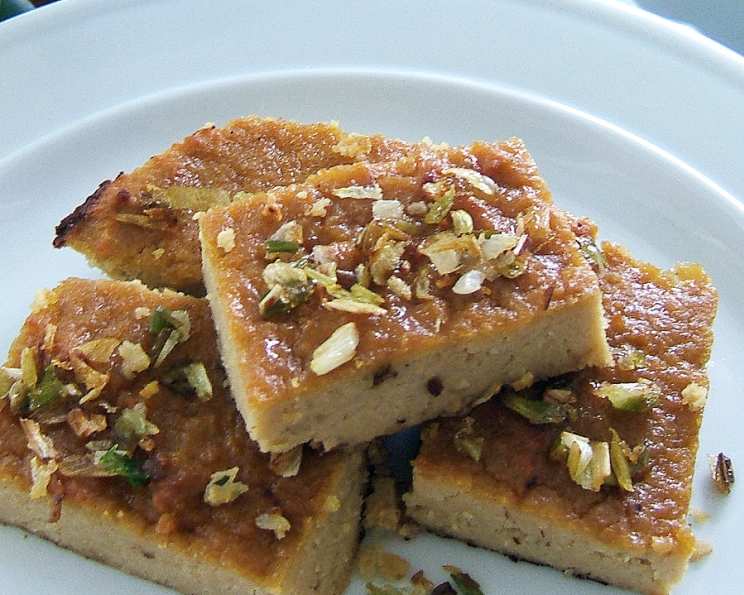
Mung Bean Cake With Coconut Milk: A Taste of Southeast Asian Comfort
The aroma still transports me back to that tiny street stall in Bangkok. The air was thick with humidity and the scent of jasmine, exhaust, and countless sizzling street foods. But above it all, a sweet, almost nutty fragrance lingered, drawing me in like a moth to a flame. It was my first encounter with Mung Bean Cake, and one bite was enough to hook me. The subtly sweet, dense, and incredibly moist texture, paired with the crunch of browned shallots, was a revelation. This recipe, though found many years ago, attempts to recreate that beautiful memory.
Recipe Overview
- Prep Time: 25 minutes
- Cook Time: 45-50 minutes
- Total Time: 1 hour 15 minutes
- Servings: 9
- Yield: 1 (8-inch) cake
- Dietary Type: Vegetarian
Ingredients
- 1 cup mung beans (yellow, split)
- 1 1/2 cups coconut milk
- 1 1/2 cups light brown sugar (or 1/2 cup Thai palm sugar, grated)
- 6 large eggs
- 1/2 cup shallot, finely chopped
- 3 tablespoons canola oil
Equipment Needed
- Medium pot
- Blender or food processor
- Large mixing bowl
- Saucepan
- 8-inch square cake pan (metal or unbreakable glass)
- Small frying pan
- Measuring cups and spoons
Instructions
-
Prepare the Mung Beans: In a medium pot, combine the mung beans with 2 cups of water. Bring the mixture to a boil over high heat. Once boiling, reduce the heat to low, cover, and simmer for about 20 minutes, or until the mung beans are very soft and easily mashed. The beans should absorb most of the water. If there’s excess water, drain it carefully.
-
Puree the Beans: Transfer the cooked mung beans to a blender or food processor. Puree until smooth. You may need to add a tablespoon or two of water or coconut milk to help the blending process, but aim for a thick, paste-like consistency. Set aside.
-
Combine Coconut Milk and Sugar: In a large mixing bowl, whisk together the coconut milk and light brown sugar (or Thai palm sugar) until the sugar is mostly dissolved. The mixture should become slightly frothy.
-
Add Eggs: Beat in the eggs one at a time, ensuring each is fully incorporated before adding the next. Continue beating until the mixture is well combined and light.
-
Incorporate the Bean Puree: Add the pureed mung beans to the coconut milk and egg mixture. Mix thoroughly until a homogenous batter forms. Ensure there are no lumps of mung bean paste remaining.
-
Thicken the Mixture: Transfer the batter to a saucepan. Cook over medium heat, stirring constantly with a heat-resistant spatula or wooden spoon. Continue stirring until the mixture begins to noticeably thicken, resembling a loose pudding. This will take about 5-7 minutes. Be careful not to let the mixture scorch on the bottom of the pan; consistent stirring is key.
-
Preheat the Oven: While the mixture is thickening, preheat your oven to 350°F (175°C). Grease an 8-inch square cake pan thoroughly with canola oil or cooking spray. Ensure the bottom and sides are well-coated to prevent sticking.
-
Pour and Bake: Pour the thickened mung bean mixture into the prepared cake pan, spreading it evenly. Bake at 350°F (175°C) for 20 minutes.
-
Increase Heat and Brown: After 20 minutes, increase the oven temperature to 450°F (230°C) and continue baking for another 25 to 30 minutes, or until the cake turns a deep amber color on top. The cake should be set around the edges, but may still have a slight jiggle in the center. Watch it carefully to prevent burning.
-
Cool in Water Bath: Remove the cake from the oven and immediately immerse the bottom of the pan in about 1/2 inch of cold water. Let it sit in the cold water bath for 10 minutes. This helps to stop the cooking process and prevents the cake from shrinking or cracking. After 10 minutes, change the water to ensure it remains cold, and leave the pan in the water bath for another 15 minutes.
-
Prepare Shallots: While the cake is cooling, prepare the shallots. In a small frying pan, heat the remaining canola oil over medium heat. Add the finely chopped shallots and sauté, stirring frequently, until they are light brown and crispy. This should take about 5-7 minutes. Be careful not to burn them, as they can become bitter.
-
Drain and Top: Remove the shallots from the pan and drain them on a paper towel to remove any excess oil. Once the cake has cooled slightly, spread the sautéed shallots evenly over the top.
-
Cut and Serve: Cut the cake into 9 equal squares. Serve warm or cold.
Expert Tips & Tricks
- Palm Sugar Boost: Using Thai palm sugar adds a richer, more complex flavor than regular brown sugar. Grate it finely before using for easier dissolving.
- Smooth Puree: For an ultra-smooth puree, consider using a high-powered blender like a Vitamix. If using a regular blender, you might need to scrape down the sides frequently.
- Doneness Test: A slight jiggle in the center is okay, as the cake will continue to set as it cools. However, if the cake is overly jiggly, it may need a few more minutes in the oven.
- Shallot Alert: Keep a close eye on the shallots while sautéing. They can go from perfectly browned to burnt very quickly. Stir frequently to ensure even cooking.
- Make Ahead: The mung bean cake can be made a day or two in advance. Store it in the refrigerator, well-covered, and add the shallot topping just before serving to maintain their crispness.
Serving & Storage Suggestions
This Mung Bean Cake is delicious served warm or cold. It makes a delightful dessert on its own or as part of a larger Southeast Asian-inspired meal. It pairs well with a cup of strong black coffee or a refreshing glass of iced tea.
Leftovers can be stored in an airtight container in the refrigerator for up to 1 week. To reheat, you can microwave individual squares for a few seconds, or gently warm them in a low oven. The texture may change slightly upon reheating, but the flavor will remain delicious. The cake is best enjoyed within a few days of making it to maintain its moisture. I do not recommend freezing the cake, as it can alter the texture significantly.
Nutritional Information
Note: Nutritional information is an estimate and may vary based on specific ingredients and portion sizes.
| Nutrient | Amount per Serving | % Daily Value |
|---|---|---|
| Calories | 408 kcal | 20% |
| Total Fat | 17.1 g | 26% |
| Saturated Fat | 9.1 g | 45% |
| Cholesterol | 141 mg | 47% |
| Sodium | 95.4 mg | 4% |
| Total Carbohydrate | 55.1 g | 20% |
| Dietary Fiber | 5.3 g | 21% |
| Sugars | 38.6 g | 77% |
| Protein | 11.5 g | 23% |
Variations & Substitutions
- Gluten-Free: This recipe is naturally gluten-free.
- Sweetness Adjustment: Adjust the amount of sugar to your preference. If using Thai palm sugar, start with a smaller amount, as it can be quite sweet.
- Coconut Cream: For an even richer cake, substitute half of the coconut milk with coconut cream.
- Flavor Infusion: Infuse the coconut milk with pandan leaves or a vanilla bean while heating for an added layer of flavor. Remove the leaves/bean before adding the eggs.
- Nut Addition: Add a handful of chopped nuts such as peanuts or cashews to the batter or as a topping for extra texture.
FAQs (Frequently Asked Questions)
Q: Can I use a different type of bean?
A: While other beans might work, mung beans provide the unique flavor and texture that are characteristic of this cake. Using other beans will change the taste and consistency considerably.
Q: What if I don’t have an 8-inch square pan?
A: You can use a round 8-inch cake pan or a similar-sized baking dish. The baking time might need to be adjusted slightly.
Q: Can I make this vegan?
A: Substituting the eggs is tricky. Aquafaba (chickpea brine) might work, but the texture will change. Unfortunately, this recipe relies heavily on eggs for its structure.
Q: Why do I need to put the cake in a water bath after baking?
A: The water bath helps to equalize the temperature and prevent the cake from shrinking or cracking as it cools. It also contributes to the cake’s moist texture.
Q: The top of my cake is browning too quickly. What should I do?
A: If the top of the cake is browning too quickly, tent it loosely with aluminum foil during the last part of the baking time.
Final Thoughts
Mung Bean Cake with Coconut Milk is more than just a recipe; it’s an invitation to experience a little slice of Southeast Asian comfort. The unique combination of flavors and textures makes it a truly special dessert. I encourage you to give this recipe a try. Don’t be intimidated by the ingredients or steps – it’s easier than it looks! And don’t forget to share your experiences and variations. Happy baking!