
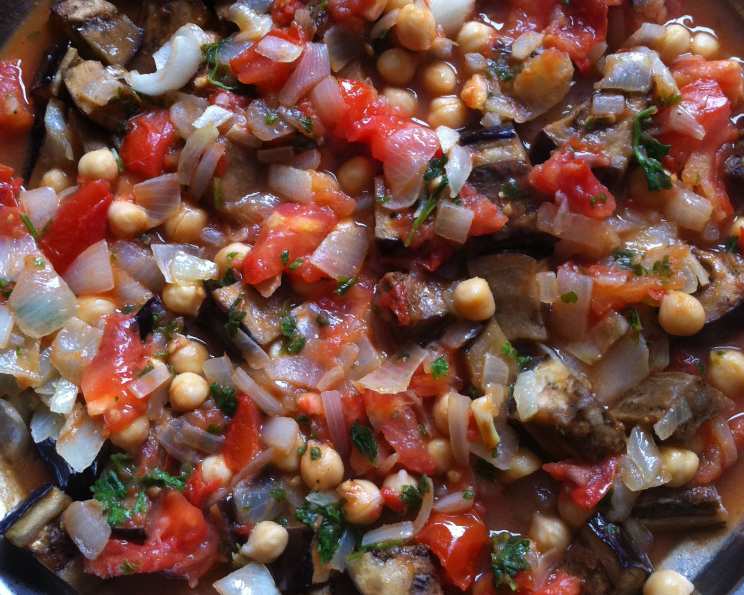
Musaka’a: A Taste of Palestinian Comfort
The scent of my Teta’s kitchen always filled me with a sense of profound comfort. I remember standing on a wobbly stool, watching her hands, weathered with time, expertly chop vegetables. Her Musaka’a wasn’t just a dish; it was a story woven with generations of love, resilience, and the simple beauty of the Palestinian land. The simmering tomatoes, fragrant with olive oil and speckled with vibrant parsley, always promised a warm, nourishing embrace. That memory, and the taste of her Musaka’a, is something I carry with me always.
Recipe Overview
- Prep Time: 20 minutes
- Cook Time: 55 minutes
- Total Time: 1 hour 15 minutes
- Servings: 4
- Dietary Type: Vegan
Ingredients
- 1 large organic eggplant, cubed
- 3 tablespoons and ¼ cup organic light tasting extra virgin olive oil, separated
- Sea salt & freshly ground black pepper, to taste
- 1 organic onion, chopped
- 3 organic fresh tomatoes, chopped (not canned)
- 1 ½ cups organic chickpeas, cooked and rinsed (or canned)
- 1 cup water
- 2 tablespoons organic tomato paste
- ⅓ cup organic parsley, chopped fine
Equipment Needed
- Large bowl
- Roasting pan
- Large skillet
- Casserole dish
- Oven
Instructions
-
Preheat your oven to 400°F (200°C).
-
In a large bowl, combine the cubed organic eggplant with 3 tablespoons of the organic light tasting extra virgin olive oil. Season generously with sea salt and freshly ground black pepper. Ensure the eggplant is evenly coated with the oil and seasonings.
-
Spread the seasoned eggplant in a single layer on a roasting pan. This is crucial for even cooking and browning. If necessary, use two roasting pans to avoid overcrowding.
-
Roast the eggplant in the preheated oven for 15 to 20 minutes, or until it is lightly browned and softened. Keep a close eye on it to prevent burning, especially if your oven runs hot. You’re looking for a tender texture and a slightly caramelized exterior.
-
While the eggplant is roasting, prepare the tomato-onion mixture. Heat the remaining ¼ cup of organic light tasting extra virgin olive oil in a large skillet over medium heat.
-
Add the chopped organic onion to the skillet and sauté until it becomes translucent, stirring occasionally. This usually takes about 5-7 minutes. Don’t rush this step; allowing the onions to soften properly will enhance the flavor of the dish.
-
Add the chopped organic fresh tomatoes, chickpeas, water, tomato paste, and a pinch of sea salt to the skillet. Stir well to combine all the ingredients.
-
Bring the mixture to a boil, then reduce the heat and simmer for 3 to 4 minutes, stirring occasionally to ensure even heating. Adjust the seasoning to taste, adding more sea salt and black pepper as needed.
-
Once the eggplant is roasted, remove it from the oven. Place it in a casserole dish.
-
Pour the tomato-onion mixture evenly over the roasted eggplant in the casserole dish.
-
Place the casserole dish in the oven and bake for 40 minutes, or until the mixture is bubbling through and the flavors have melded together beautifully. The top should be lightly browned.
-
Remove the Musaka’a from the oven and let it cool slightly before serving. Garnish with the chopped organic parsley. Serve hot or at room temperature.
Expert Tips & Tricks
- Eggplant Preparation: Salting the eggplant before roasting can help draw out excess moisture, resulting in a less soggy final product. Toss the cubed eggplant with salt and let it sit for about 30 minutes, then rinse and pat dry before proceeding with the recipe.
- Tomato Quality: Using high-quality, ripe tomatoes will make a significant difference in the flavor of your Musaka’a. If fresh tomatoes are not in season, you can use canned crushed tomatoes as a substitute, but be sure to adjust the seasoning accordingly.
- Chickpea Enhancement: For extra flavor, try pan-frying the chickpeas with a little olive oil and spices like cumin or smoked paprika before adding them to the tomato sauce.
- Make-Ahead Option: This dish is perfect for making ahead of time. You can prepare the entire Musaka’a and store it in the refrigerator for up to 3 days before baking. This allows the flavors to develop even further.
- Browning Boost: If you want a deeper, richer color on the top of your Musaka’a, you can broil it for a few minutes at the end of the baking time. Watch it carefully to prevent burning.
Serving & Storage Suggestions
Musaka’a is delicious served hot, warm, or even at room temperature, making it an ideal dish for potlucks and gatherings. Garnish each serving with a generous sprinkle of fresh parsley for a burst of color and freshness. It pairs wonderfully with crusty bread for soaking up the flavorful sauce, or alongside a simple green salad.
Leftover Musaka’a can be stored in an airtight container in the refrigerator for up to 3 days. To reheat, simply warm it in the oven at 350°F (175°C) until heated through, or microwave individual portions. Freezing is also an option; store in a freezer-safe container for up to 2 months. Thaw overnight in the refrigerator before reheating.
Nutritional Information
| Nutrient | Amount per Serving | % Daily Value |
|---|---|---|
| Calories | 300 kcal | 15% |
| Total Fat | 14g | 22% |
| Saturated Fat | 2g | 10% |
| Cholesterol | 0mg | 0% |
| Sodium | 400mg | 17% |
| Total Carbohydrate | 40g | 13% |
| Dietary Fiber | 12g | 48% |
| Sugars | 9g | – |
| Protein | 9g | 18% |
Note: Nutritional information is an estimate and may vary based on specific ingredients and serving sizes.
Variations & Substitutions
- Spicy Kick: Add a pinch of red pepper flakes or a finely chopped chili pepper to the tomato-onion mixture for a spicy twist.
- Herby Infusion: Experiment with different herbs such as oregano, thyme, or rosemary to customize the flavor profile of your Musaka’a.
- Mediterranean Medley: Incorporate other vegetables like bell peppers, zucchini, or carrots for added texture and nutrients.
- Protein Boost: Add lentils or crumbled tofu to the tomato-onion mixture for a heartier, protein-rich meal.
- Grain-Free Option: Serve the Musaka’a over cauliflower rice or zucchini noodles for a low-carb alternative.
FAQs (Frequently Asked Questions)
Q: Can I use dried chickpeas instead of canned?
A: Absolutely! You’ll need to soak the dried chickpeas overnight and then cook them until tender before adding them to the recipe. This will add a more authentic flavor.
Q: My eggplant is bitter. How can I prevent this?
A: Salting the eggplant before cooking, as mentioned in the tips, helps to draw out any bitterness.
Q: Can I make this in a slow cooker?
A: Yes, you can adapt this recipe for a slow cooker. Sauté the onions and tomatoes as directed, then transfer everything to the slow cooker and cook on low for 6-8 hours, or on high for 3-4 hours. Add the eggplant during the last hour of cooking.
Q: Can I use different types of tomatoes?
A: While fresh tomatoes are best, you can use canned crushed tomatoes or diced tomatoes as a substitute. Adjust the cooking time slightly if using canned tomatoes, as they may require less simmering.
Q: Is this dish gluten-free?
A: Yes, this recipe is naturally gluten-free, as it does not contain any wheat or gluten-based ingredients.
Final Thoughts
Musaka’a is more than just a recipe; it’s an invitation to connect with a rich culinary heritage and experience the simple joys of wholesome, plant-based cooking. I encourage you to try this recipe and share it with your loved ones. Let the aroma of roasted eggplant and simmering tomatoes fill your kitchen, and may each bite transport you to a place of warmth, comfort, and cherished memories. Don’t hesitate to experiment with variations and substitutions to make it your own, and most importantly, enjoy the process!