
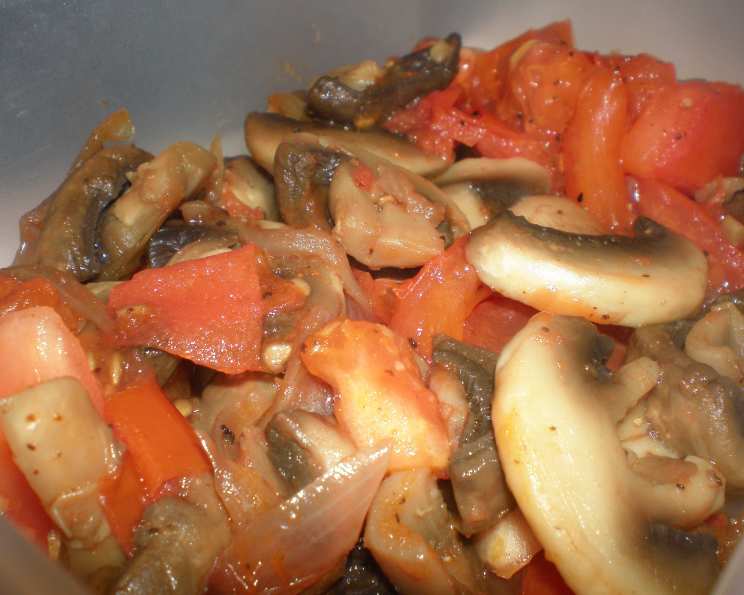
Mushroom, Tomato, and Onion Sauté: A Rustic Delight
I remember first tasting this humble sauté at a bustling farmers market in Tuscany. The air was thick with the aroma of sun-ripened tomatoes and earthy mushrooms, and a kind old woman was serving up small bowls of this simple dish from a massive, well-worn pan. Each bite was an explosion of flavor, a perfect encapsulation of the season. It was so good, so satisfying in its simplicity, that I knew I had to learn how to recreate it.
Recipe Overview
- Prep Time: 15 minutes
- Cook Time: 30-35 minutes
- Total Time: 45-50 minutes
- Servings: 4
- Dietary Type: Vegan
Ingredients
- 2-4 tablespoons olive oil
- 2 onions, chopped
- 8 ounces mushrooms, quartered
- 4-5 medium tomatoes, coarsely chopped
- Salt and pepper, to taste
Equipment Needed
- Large cast iron pan (or a large non-stick pan)
- Chopping board
- Knife
- Spoon or spatula
Instructions
-
Begin by preheating your pan over medium-low heat. This is crucial, especially if you’re using a cast iron pan, as it allows the heat to distribute evenly. Once the pan is warm, add 2 tablespoons of olive oil.
-
Add the chopped onions to the pan. The goal here is to brown them slowly until they are tender and golden. This process should take around 10 minutes. Resist the urge to rush it by increasing the heat. Slow and steady browning is key to developing a deep, sweet flavor. Stir occasionally to prevent sticking and ensure even cooking.
-
Observe the pan and assess the moisture levels. If the pan seems dry or the onions are sticking, add more olive oil as needed. It’s better to have a little too much oil than to risk burning the onions. Now, add the quartered mushrooms. It’s important to maintain the medium-low heat at this stage. Raising the heat will cause the mushrooms to release their moisture too quickly and they will steam instead of sauté, resulting in a less flavorful dish. Cook the mushrooms for an additional 10 minutes, stirring occasionally, until they soften and begin to brown.
-
Introduce the coarsely chopped tomatoes to the pan. Stir to combine them with the onions and mushrooms. Continue to cook the mixture, still maintaining medium-low heat, until the tomatoes soften and release their juices, creating a rich and slightly thickened sauce. This should take approximately 10-15 minutes.
-
Season the sauté generously with salt and pepper to taste. Remember that seasoning is a personal preference, so start with a small amount and adjust as needed. Taste the sauté throughout the cooking process to ensure the flavors are balanced.
-
Serve immediately and enjoy!
Expert Tips & Tricks
- Slow and Steady Wins the Race: Don’t be tempted to rush the cooking process by increasing the heat. The low and slow method allows the flavors to develop fully and prevents the vegetables from burning.
- Mushroom Magic: For a deeper, more complex flavor, try using a mix of mushroom varieties. Shiitake, cremini, and oyster mushrooms all work well in this recipe.
- Tomato Triumphs: If you’re using canned tomatoes, opt for whole peeled tomatoes and crush them by hand for a chunkier texture. San Marzano tomatoes are particularly flavorful.
- Herbal Enhancement: Fresh herbs like thyme, rosemary, or oregano can add a wonderful aromatic dimension to this sauté. Add them towards the end of the cooking process to preserve their flavor. A bay leaf during the simmering process also adds depth. Remember to remove it before serving.
- Acid Adjustment: If the sauté tastes too sweet, a splash of balsamic vinegar or lemon juice can help balance the flavors.
Serving & Storage Suggestions
This mushroom, tomato, and onion sauté is incredibly versatile and pairs well with a variety of dishes. Serve it as a side dish with grilled meats, roasted vegetables, or pasta. It’s also delicious spooned over crusty bread or polenta.
Leftovers can be stored in an airtight container in the refrigerator for up to 3 days. To reheat, simply warm the sauté in a pan over medium heat until heated through. You can also reheat it in the microwave. For longer storage, the sauté can be frozen for up to 2 months. Thaw it overnight in the refrigerator before reheating.
Nutritional Information
| Nutrient | Amount per Serving | % Daily Value |
|---|---|---|
| Calories | 120 kcal | 6% |
| Total Fat | 8g | 12% |
| Saturated Fat | 1g | 5% |
| Cholesterol | 0mg | 0% |
| Sodium | 15mg | 1% |
| Total Carbohydrate | 12g | 4% |
| Dietary Fiber | 3g | 12% |
| Sugars | 7g | – |
| Protein | 3g | 6% |
Variations & Substitutions
- Spice it up: Add a pinch of red pepper flakes or a finely chopped chili pepper to the sauté for a touch of heat.
- Mediterranean Twist: Incorporate Kalamata olives, capers, and a sprinkle of feta cheese for a Mediterranean-inspired version.
- Creamy Dream: Stir in a dollop of crème fraîche or mascarpone cheese at the end of cooking for a richer, creamier texture. (Note: This will no longer be vegan.)
- Wine Time: Deglaze the pan with a splash of dry red or white wine after the onions have browned for added depth of flavor. Allow the wine to reduce slightly before adding the mushrooms.
- Balsamic Glaze: Drizzle with a balsamic glaze before serving for a sweet and tangy finish.
FAQs (Frequently Asked Questions)
Q: Can I use dried herbs instead of fresh herbs?
A: Yes, you can substitute dried herbs for fresh herbs. Use about one-third the amount of dried herbs as you would fresh herbs. For example, if the recipe calls for 1 tablespoon of fresh thyme, use 1 teaspoon of dried thyme.
Q: Can I use different types of onions?
A: Absolutely! Yellow onions are a good all-purpose choice, but you can also use sweet onions, red onions, or even shallots for a slightly different flavor profile.
Q: My sauté is too watery. How can I thicken it?
A: Continue cooking the sauté over medium-low heat, uncovered, until some of the excess liquid has evaporated. You can also add a small amount of cornstarch or flour mixed with water to thicken the sauce.
Q: Can I add other vegetables to this sauté?
A: Yes, feel free to add other vegetables such as bell peppers, zucchini, or eggplant. Just be sure to adjust the cooking time accordingly.
Q: Is it essential to use a cast iron pan?
A: While a cast iron pan is preferable for its even heat distribution, a large non-stick pan will work just fine. Just keep a closer eye on the heat to prevent burning.
Final Thoughts
This mushroom, tomato, and onion sauté is a testament to the beauty of simple, fresh ingredients. It’s a dish that’s both comforting and versatile, perfect for a quick weeknight meal or a more elaborate dinner party. I encourage you to try this recipe and make it your own by experimenting with different herbs, spices, and vegetables. Don’t be afraid to get creative and have fun in the kitchen. And please, share your variations and feedback – I’d love to hear how you make this dish your own!