
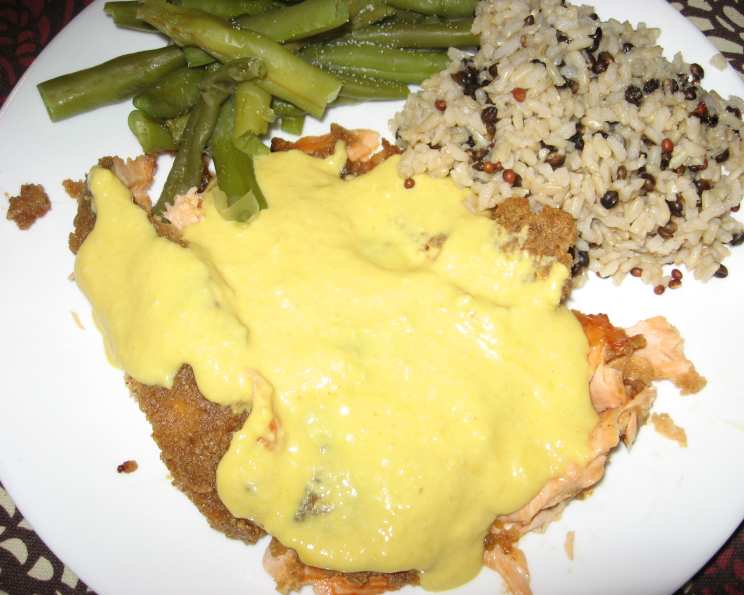
Mustard Baked Salmon: A Flavorful Family Favorite
I can still picture my grandmother, apron tied tight, humming in the kitchen as she prepared her famous mustard-baked salmon. The aroma of Dijon and lemon zest would fill the air, a promise of the flaky, flavorful delight to come. It wasn’t just the taste; it was the warmth and love she poured into every dish that made it so special. This recipe is my attempt to recreate that memory, to share a taste of my family’s history with you.
Recipe Overview
- Prep Time: 15 minutes
- Cook Time: 18 minutes
- Total Time: 33 minutes
- Servings: 4
- Yield: 4 salmon fillets
- Dietary Type: Gluten-Free (check breadcrumb ingredients)
Ingredients
- 3 tablespoons fresh lemon juice
- 1 tablespoon lemon rind, grated
- 2 tablespoons Dijon mustard
- 1 1/2 teaspoons dry mustard
- 1/4 cup vegetable oil
- 1 cup fresh breadcrumbs
For the Mustard Sauce:
- 1/3 cup Pommery mustard
- 1/3 cup sour cream
- 1/3 cup horseradish
Equipment Needed
- 9×13-inch baking dish
- Mixing bowls
- Whisk
- Large spatula
Instructions
- In a medium-sized mixing bowl, combine the lemon juice, grated lemon rind, Dijon mustard, and dry mustard.
- Slowly pour in the vegetable oil while whisking constantly. Continue whisking until a medium-thick sauce forms. This should take a few minutes, and the mixture will emulsify and thicken slightly.
- Add the fresh breadcrumbs to the mixture and stir to combine until all the breadcrumbs are moistened and coated in the mustard sauce. This breadcrumb mixture can be prepared up to a day in advance and stored in the refrigerator.
- Preheat your oven to 375°F (190°C).
- Lightly grease a 9×13-inch baking dish. This will prevent the salmon from sticking and ensure easy removal after baking.
- Arrange the salmon fillets in the prepared baking dish, skin side down.
- Evenly press the breadcrumb mixture onto the top of each salmon fillet, ensuring they are fully covered. Gently pat the breadcrumbs to help them adhere to the fish.
- Bake the salmon in the preheated oven for approximately 18 minutes, or until the fish is cooked through and the breadcrumbs are golden brown. The internal temperature of the salmon should reach 145°F (63°C).
- While the salmon is baking, prepare the mustard sauce. In a separate bowl, combine the Pommery mustard, sour cream, and horseradish. Mix well with a whisk until thoroughly combined.
- Once the salmon is done baking, carefully remove the baking dish from the oven. Using a large spatula, gently transfer the salmon fillets to a serving platter.
- Serve the Mustard Baked Salmon immediately, passing the prepared mustard sauce separately.
Expert Tips & Tricks
- Breadcrumb Boost: For extra flavor and crunch, toast the breadcrumbs lightly in a dry skillet before adding them to the mustard mixture.
- Mustard Variation: Experiment with different types of mustard to customize the flavor profile. Stone-ground mustard or even a honey mustard can add a unique twist.
- Doneness Check: The best way to check if the salmon is cooked through is to use a fork to flake the fish. If it flakes easily and is opaque throughout, it’s ready. Avoid overcooking, as it can make the salmon dry.
- Even Cooking: Ensure the salmon fillets are of similar thickness for even cooking. If they vary significantly, you may need to adjust the baking time slightly.
- Make Ahead: The breadcrumb topping can be made up to 24 hours in advance and stored in the refrigerator. This saves time on the day of cooking. Simply bring it to room temperature before applying it to the salmon.
- Broiling for Extra Crisp: For extra crispy breadcrumbs, broil the salmon for the last 1-2 minutes of cooking, watching carefully to prevent burning.
Serving & Storage Suggestions
Serve the Mustard Baked Salmon immediately while it’s still warm and flaky. The creamy mustard sauce complements the richness of the salmon perfectly. Consider pairing it with a side of roasted asparagus, steamed green beans, or a simple quinoa salad.
Leftover salmon can be stored in an airtight container in the refrigerator for up to 2 days. To reheat, gently warm in a preheated oven at 300°F (150°C) for about 10-15 minutes, or until heated through. Avoid microwaving, as it can make the salmon rubbery.
While not ideal, cooked salmon can be frozen. Wrap individual portions tightly in plastic wrap and then foil, or place in freezer bags. Thaw overnight in the refrigerator before reheating as described above.
Nutritional Information
| Nutrient | Amount per Serving | % Daily Value |
|---|---|---|
| Calories | 285.6 kcal | N/A |
| Calories from Fat | N/A | N/A |
| Total Fat | 19.6 g | 30% |
| Saturated Fat | 4.3 g | 21% |
| Cholesterol | 10 mg | 3% |
| Sodium | 361.1 mg | 15% |
| Total Carbohydrate | 23.9 g | 7% |
| Dietary Fiber | 2.4 g | 9% |
| Sugars | 4.4 g | N/A |
| Protein | 4.8 g | 9% |
Note: Nutritional information is an estimate and may vary based on specific ingredients and portion sizes.
Variations & Substitutions
- Gluten-Free: Use gluten-free breadcrumbs to make this recipe gluten-free.
- Herb Infusion: Add finely chopped fresh herbs like dill, parsley, or chives to the breadcrumb mixture for an extra layer of flavor.
- Spice It Up: Incorporate a pinch of red pepper flakes or a dash of hot sauce into the mustard mixture for a spicy kick.
- Sweeten the Deal: A drizzle of honey or maple syrup into the mustard sauce adds a touch of sweetness to balance the savory flavors.
- Dijon Alternatives: Try using whole grain mustard or even a flavored mustard like horseradish mustard for a unique flavor profile.
- Breadcrumb Alternatives: If you don’t have fresh breadcrumbs, you can use panko breadcrumbs or even crushed crackers.
- Herb Crust: Replace breadcrumbs with a mix of finely chopped fresh herbs (like parsley, dill, and chives) for a lighter, more aromatic crust.
FAQs (Frequently Asked Questions)
Q: Can I use frozen salmon for this recipe?
A: Yes, you can use frozen salmon. Be sure to thaw it completely before cooking and pat it dry with paper towels to remove excess moisture.
Q: How do I prevent the salmon from drying out during baking?
A: Avoid overcooking the salmon. Bake it just until it is cooked through and flakes easily with a fork. You can also brush the salmon with a little olive oil before topping it with the breadcrumb mixture.
Q: Can I use dried herbs instead of fresh in the breadcrumb mixture?
A: While fresh herbs are preferable, you can use dried herbs if that’s what you have on hand. Use about 1 teaspoon of dried herbs for every tablespoon of fresh herbs called for in the recipe.
Q: What if I don’t have Pommery mustard for the sauce?
A: You can substitute another type of grainy mustard, or even use a bit more Dijon mustard along with a touch of honey to replicate the slightly sweet and tangy flavor of Pommery mustard.
Q: Can I prepare the entire dish ahead of time and bake it later?
A: It’s best to bake the salmon immediately after topping it with the breadcrumb mixture to prevent the breadcrumbs from becoming soggy. However, you can prepare the breadcrumb mixture and the mustard sauce ahead of time and store them separately in the refrigerator.
Final Thoughts
This Mustard Baked Salmon is more than just a recipe; it’s a connection to family, a celebration of simple flavors, and a reminder that the best meals are often the ones shared with loved ones. I encourage you to try this recipe, make it your own, and share it with those you care about. Don’t be afraid to experiment with variations and find the flavors that resonate with you. I’d love to hear your feedback and see your creations! Bon appétit!