
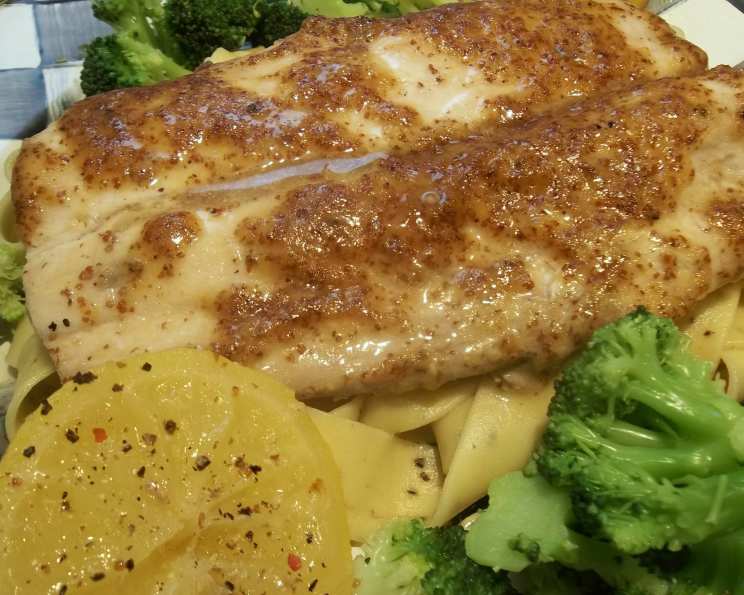
Mustard Glazed Fish: A Quick and Flavorful Delight
The first time I made a mustard-glazed fish, it was a complete accident. I was rummaging through the fridge, desperately trying to figure out what to do with a couple of neglected tilapia fillets and a near-empty jar of Dijon. Inspiration struck – why not combine the tangy mustard with a touch of sweetness and create a simple glaze? The result was surprisingly delicious, a perfect balance of sharp, savory, and slightly sweet that transformed humble fish into a restaurant-worthy meal. This recipe, inspired by that happy accident, is now a weeknight staple in my kitchen.
Recipe Overview
- Prep Time: 5 minutes
- Cook Time: 15 minutes
- Total Time: 20 minutes
- Servings: 4
- Dietary Type: Pescatarian
Ingredients
- 3 tablespoons honey
- 4 teaspoons Dijon mustard
- 4 teaspoons prepared mustard (yellow or brown)
- 4 white fish steaks, without skin, at least 1 inch thick (tilapia, cod, haddock)
- 2 lemons, cut in half
- 2 tablespoons butter
- Salt and pepper to taste
Equipment Needed
- Mixing bowl
- Whisk or fork
- Large non-stick skillet (ovenproof preferred, or use a separate baking dish)
- Oven
- Tongs or spatula
Instructions
- Position the oven rack near the top and preheat the oven to broil. Ensure proper ventilation by opening a window or turning on your range hood.
- In a mixing bowl, combine the honey, Dijon mustard, and prepared mustard. Whisk or stir with a fork until thoroughly combined. Set the mustard mixture aside.
- If using an ovenproof skillet, place it on the stovetop. If not, select a baking dish large enough to hold the fish steaks in a single layer. Add the butter to the skillet or baking dish and melt over medium heat.
- Place the fish steaks and the cut sides of the lemon halves in the melted butter. Season the fish generously with salt and pepper.
- Cook the fish for approximately 3-4 minutes per side, or until lightly browned. If using a non-ovenproof skillet, carefully transfer the fish and lemons to the baking dish at this point. Remove from the heat.
- Generously baste the top of each fish steak with the prepared mustard mixture, ensuring an even coating.
- Carefully transfer the skillet or baking dish to the preheated oven under the broiler.
- Broil for 3 to 5 minutes, depending on the thickness of the fish, or until the fish is cooked through and flakes easily with a fork. The mustard glaze should be bubbly and lightly caramelized. Keep a close eye on the fish to prevent burning.
- Remove from the oven and let rest for a minute or two before serving.
- Serve the mustard glazed fish immediately, garnished with the grilled lemon halves, rice, and your favorite vegetables.
Expert Tips & Tricks
- Don’t overcook the fish! White fish, like tilapia and cod, can quickly become dry if overcooked. Look for the fish to be opaque and flake easily when gently pressed with a fork.
- Control the Broiler: Keep a close watch while broiling as ovens can vary significantly. Lower the rack a level or two if the glaze starts to burn before the fish is cooked through.
- Prevent Sticking: Ensure your skillet is truly non-stick. If you’re concerned about sticking, lightly grease the skillet with cooking spray before adding the butter.
- Lemon Zest Boost: For an extra burst of citrus flavor, add a teaspoon of lemon zest to the mustard glaze.
- Marinate for Deeper Flavor: For a more intense flavor, marinate the fish in the mustard glaze for 30 minutes to an hour before cooking.
- Customize the Glaze: Adjust the ratio of honey to mustard according to your preference. For a tangier glaze, use more mustard; for a sweeter glaze, use more honey.
Serving & Storage Suggestions
Serve the mustard glazed fish hot, garnished with the grilled lemon halves. Squeeze the grilled lemon juice over the fish for an extra burst of flavor. This dish pairs well with rice, quinoa, roasted vegetables (asparagus, broccoli, green beans), or a simple salad.
Leftovers can be stored in an airtight container in the refrigerator for up to 2 days. To reheat, gently warm in a skillet over low heat or in the microwave. Be careful not to overcook the fish when reheating. Freezing is not recommended as it can alter the texture of the fish. Fish should not be left at room temperature for more than two hours.
Nutritional Information
| Nutrient | Amount per Serving | % Daily Value |
|---|---|---|
| Calories | 210 kcal | 10% |
| Total Fat | 8g | 12% |
| Saturated Fat | 4g | 20% |
| Cholesterol | 50mg | 17% |
| Sodium | 250mg | 11% |
| Total Carbohydrate | 18g | 6% |
| Dietary Fiber | 1g | 4% |
| Sugars | 15g | |
| Protein | 18g | 36% |
Note: Nutritional information is an estimate and may vary based on specific ingredients and portion sizes.
Variations & Substitutions
- Fish Variety: This recipe works well with a variety of white fish, including cod, haddock, pollock, and even salmon. Adjust the cooking time slightly depending on the thickness of the fish.
- Honey Alternative: Maple syrup or agave nectar can be used as a substitute for honey.
- Mustard Options: Experiment with different types of mustard for a unique flavor profile. Stone-ground mustard, whole-grain mustard, or even a spicy brown mustard can add a delicious twist.
- Gluten-Free: This recipe is naturally gluten-free.
- Herb Infusion: Add fresh herbs like thyme, rosemary, or dill to the mustard glaze for an herbaceous flavor.
FAQs (Frequently Asked Questions)
Q: Can I use frozen fish for this recipe?
A: Yes, you can use frozen fish, but be sure to thaw it completely before cooking. Pat the fish dry with paper towels to remove excess moisture.
Q: How do I know when the fish is cooked through?
A: The fish is cooked through when it is opaque and flakes easily with a fork. The internal temperature should reach 145°F (63°C).
Q: Can I make the mustard glaze ahead of time?
A: Yes, the mustard glaze can be made up to 24 hours in advance and stored in an airtight container in the refrigerator.
Q: What if I don’t have an ovenproof skillet?
A: If you don’t have an ovenproof skillet, you can transfer the fish to a baking dish after browning it on the stovetop.
Q: Can I grill the fish instead of broiling it?
A: Yes, you can grill the fish over medium heat, basting it frequently with the mustard glaze. Grilling time will vary depending on the thickness of the fish and the heat of your grill.
Final Thoughts
This Mustard Glazed Fish is a testament to the fact that incredible flavors don’t always require hours in the kitchen. It’s a simple, satisfying, and endlessly adaptable dish that’s perfect for busy weeknights or a quick and elegant weekend meal. I encourage you to give it a try, experiment with different types of fish and mustards, and make it your own. Don’t hesitate to share your creations and feedback – I’d love to hear how it turns out! Pair it with a crisp Sauvignon Blanc for a truly delightful experience.