
Grandma’s Sunshine Pickles: A Taste of Home
The memory is as vivid as the sunshine yellow of the pickles themselves: the cool, dark cellar, the scent of damp earth and preserving jars, and my grandmother’s sturdy hands carefully packing these tangy treasures into sterilized glass. These weren’t just any pickles; they were mustard pickles, bursting with the flavors of late summer and the love of generations. Every year, the bounty from her garden would transform into rows of these golden delights, a taste of home that followed us through the seasons. Now, I share this recipe, adapted from the Prince Edward Island Women’s Institute Cookbook from the 70’s, hoping to bring a bit of that sunshine to your table too.
Recipe Overview
- Prep Time: 24 hours and 30 minutes
- Cook Time: 26 minutes
- Total Time: 1 hour 56 minutes
- Yields: 8 pints (approx)
- Dietary Type: Vegetarian
Ingredients
- 1 quart onion
- 2 quarts cucumbers
- 1 medium cauliflower
- 2 finely diced sweet red peppers (optional – adds nice colour)
For the Sauce:
- 3 1/2 cups sugar
- 1/2 cup flour
- 2 tablespoons turmeric
- 2 tablespoons celery seeds
- 1/2 cup mustard powder
- 1 quart vinegar
Pickling Spice Bag:
- 4 tablespoons pickling spices
Equipment Needed
- Large Bowls
- Sharp Knife
- Cutting Board
- Large Pot
- Whisk
- Cheesecloth
- String
- Sterilized Jars
- Ladle
Instructions
-
Begin by preparing the onions. Peel them and cut them into medium-sized pieces. Don’t worry about being too precise; they’ll soften during cooking.
-
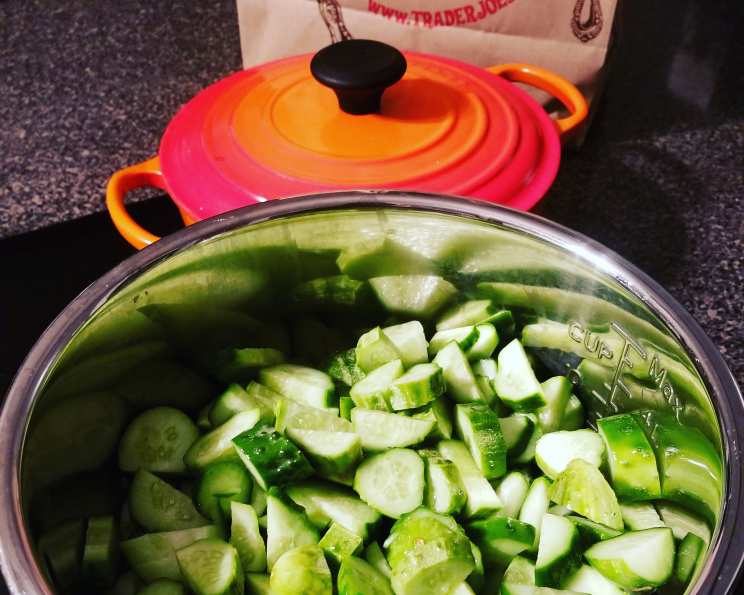
Next, prepare the cucumbers. Peel them, remove the seeds and centers. Then cut the cucumbers to your desired size. If your cucumbers are green and not overly ripe, you can leave the skin on for added texture and color.
-
Now, prepare the cauliflower. Separate the cauliflower into small flowerets. Aim for bite-sized pieces that will pickle nicely.
-
If using, dice the red peppers finely. This adds a beautiful pop of color and a touch of sweetness to the finished pickles.
-
In a large bowl, create a brine to cover the vegetables. Mix 1/2 cup of coarse salt with 1 quart of water. Add a pinch of alum (this helps keep the vegetables crisp). Submerge the prepared vegetables in the brine, ensuring they are fully covered. Let this mixture stand overnight, or for up to 24 hours, in the refrigerator. This step is crucial for drawing out excess moisture and firming up the vegetables.
-
After the brining period, drain the vegetables thoroughly. Rinse them lightly under cold water to remove excess salt.
-
Prepare the pickling spice bag. Place the pickling spices in 3-4 layers of cheesecloth. Gather the cheesecloth tightly and tie it closed with string or a knot, creating a secure bundle. Set this aside.
-
In a large pot, combine 3 cups of the vinegar with 3 cups of the sugar and the prepared pickling spice bag. Bring the mixture to a boil and boil for 1 minute.
-
Remove the pickling spice bag from the pot and discard it. The spice bag has infused the vinegar with its aromatic essence.
-
In a separate bowl, combine the remaining sugar, remaining vinegar, flour, mustard powder, turmeric, and celery seed. Whisk the ingredients together until smooth, ensuring there are no lumps.
-
Add the flour mixture to the hot vinegar mixture in the pot. Cook the sauce over medium heat, stirring constantly with a whisk, until it thickens. This will take a few minutes. Be patient and keep stirring to prevent scorching.
-
Once the sauce has thickened, add the drained vegetables to the pot.
-
Cook the vegetable and sauce mixture slowly for 25 minutes, stirring occasionally. Be careful not to scorch the bottom of the pot; reduce the heat if necessary. The vegetables should become slightly translucent and tender-crisp.
-
While the mixture is still hot, ladle the mustard pickles into hot, sterilized jars, leaving about 1/2 inch of headspace.
-
Process the jars in a boiling water bath according to standard canning procedures to ensure a proper seal. If you are unfamiliar with canning, consult a reliable source for detailed instructions.
Expert Tips & Tricks
- Crispness is key: Soaking the vegetables in a brine with alum is essential for achieving that satisfying crunch. Don’t skip this step!
- Spice it up (or down): Adjust the amount of pickling spices to suit your preference. A little extra red pepper flake can add a subtle kick.
- Don’t overcook: The vegetables should retain some texture; avoid overcooking them in the sauce, or they will become mushy.
- Sterilize carefully: Sterilizing the jars is crucial for preventing spoilage. Follow proper canning procedures to ensure a safe and long-lasting product.
Serving & Storage Suggestions
These mustard pickles are incredibly versatile. They are a classic accompaniment to holiday dinners, adding a bright and tangy counterpoint to rich meats and potatoes. They also make a fantastic relish on burgers, sandwiches, or even chopped into potato salad for a zesty twist.
Once processed, the jars can be stored in a cool, dark place for up to a year. After opening, refrigerate and consume within a few weeks. Unprocessed pickles should be refrigerated immediately and consumed within a week.
Nutritional Information
Note: Nutritional information is an estimate and may vary based on specific ingredients and portion sizes.
| Nutrient | Amount per Serving | % Daily Value |
|---|---|---|
| Calories | 499 kcal | N/A |
| Total Fat | 3.3g | 5% |
| Saturated Fat | 0.3g | 1% |
| Cholesterol | 0mg | 0% |
| Sodium | 34.9mg | 1% |
| Total Carbohydrate | 112g | 37% |
| Dietary Fiber | 4.9g | 19% |
| Sugars | 94.5g | N/A |
| Protein | 5.8g | 11% |
Variations & Substitutions
- Sweetness level: Adjust the amount of sugar to your liking. If you prefer a less sweet pickle, reduce the sugar by 1/2 cup. You can also substitute with a natural sweetener like honey or maple syrup (though this will slightly alter the flavor).
- Vinegar variety: Experiment with different types of vinegar, such as apple cider vinegar, for a more nuanced flavor profile.
- Vegetable medley: Feel free to add other vegetables to the mix, such as green beans, pearl onions, or even sliced carrots.
FAQs (Frequently Asked Questions)
Q: Can I use regular table salt instead of coarse salt for the brine?
A: Coarse salt is preferred because it doesn’t contain iodine or anti-caking agents, which can sometimes affect the color and flavor of the pickles. If you only have table salt, use slightly less (about 3/8 cup instead of 1/2 cup) and make sure it doesn’t contain any additives.
Q: How do I know if my jars are properly sealed after processing?
A: After the jars have cooled completely, press down on the center of each lid. If the lid doesn’t flex or pop, it’s properly sealed. If the lid flexes, it’s not sealed and should be reprocessed with a new lid or stored in the refrigerator and consumed within a few weeks.
Q: Can I make a smaller batch of this recipe?
A: Yes, you can easily halve the recipe. Just be sure to adjust all the ingredient quantities accordingly.
Q: What if I don’t have cheesecloth for the pickling spices?
A: You can use a coffee filter or even a clean cotton sock as a substitute. Just make sure the spices are securely contained.
Q: My mustard pickles are too sweet. What can I do?
A: While you can’t undo the sweetness once the pickles are made, you can try serving them with something salty or savory to balance the flavors. Alternatively, adjust the amount of sugar in future batches.
Final Thoughts
So, gather your vegetables, sharpen your knives, and prepare to embark on a culinary journey back in time. These mustard pickles are more than just a recipe; they’re a connection to the past, a celebration of seasonal abundance, and a delicious way to brighten any meal. Don’t be afraid to experiment and make them your own. And most importantly, share them with those you love – because the best flavors are always those that are shared. I encourage you to try this recipe and would love to hear how it turns out, or what variations you’ve discovered. Enjoy!