
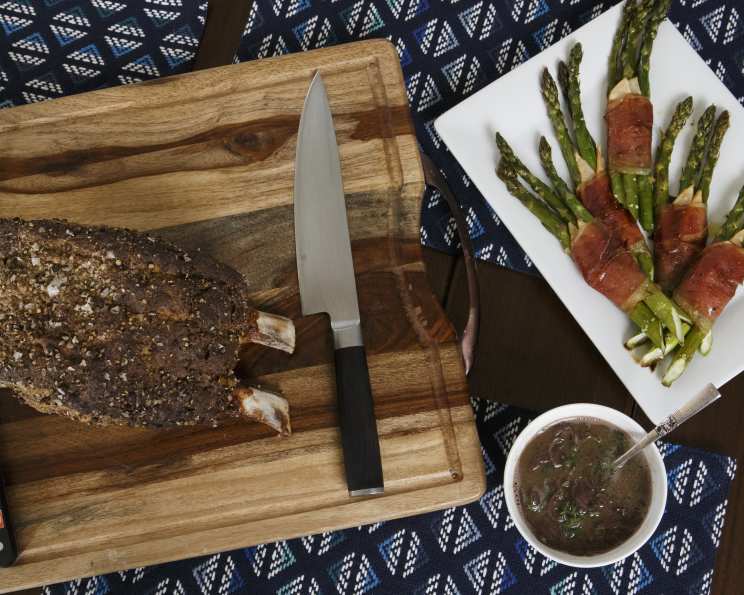
The Ultimate Mustard-Roasted Prime Rib: A Culinary Masterpiece
The aroma still lingers in my mind – that unmistakable blend of rich, roasted beef, pungent mustard, and earthy thyme. It takes me back to my first Christmas as a professional chef, tasked with preparing the holiday prime rib. Nervous as I was, the simplicity and bold flavors of this mustard-roasted version turned it into a resounding success, a centerpiece that brought gasps of delight and requests for seconds. That night, I learned that sometimes the most impressive dishes are the ones that let quality ingredients shine with just the right accent.
Recipe Overview
- Prep Time: 20 minutes
- Cook Time: 2 hours 30 minutes
- Total Time: 2 hours 50 minutes
- Servings: 5
- Dietary Type: Gluten-Free
Ingredients
For the Prime Rib:
- One 2-rib bone-in prime rib roast, frenched and tied, at room temperature (about 4 1/2 pounds)
- ¾ cup Dijon mustard
- ¼ cup fresh thyme leaves
- 2 tablespoons cumin seeds
- Kosher salt and coarsely ground black peppercorns
- Maldon salt
For the Red Wine Sauce:
- 1 tablespoon extra-virgin olive oil
- 1 teaspoon extra-virgin olive oil
- 4 medium shallots, peeled and sliced crosswise, 1/4-inch thick
- Kosher salt & freshly ground black pepper
- ½ cup red wine
- ½ cup beef stock
- 2 sprigs fresh thyme
- 1 tablespoon unsalted butter
For Asparagus Bundles:
- 1 lb asparagus, trimmed
- 5 thin slices prosciutto
- 1 Bartlett pear, cored and thinly sliced
- 1 tablespoon extra-virgin olive oil
- Kosher salt & freshly ground black pepper
Equipment Needed
- Baking sheet
- Rack
- Parchment paper
- Small bowl
- Medium skillet
Instructions
-
Roast the Prime Rib: Preheat your oven to 450 degrees Fahrenheit. Fit a baking sheet with a rack and line the rack with parchment paper. Place the prime rib fat side up on the prepared rack.
-
Prepare the Mustard Rub: In a small bowl, combine the Dijon mustard, fresh thyme leaves, cumin seeds, and 1 tablespoon of kosher salt. Mix well to form a paste.
-
Apply the Rub: Generously rub the mustard mixture on all sides of the prime rib roast, ensuring an even coating.
-
Season with Salt and Pepper: In another small bowl, combine 1 tablespoon of Maldon salt and 2 tablespoons of coarsely ground black pepper. Sprinkle this mixture evenly over the entire roast.
-
Sear the Roast: Transfer the prepared prime rib to the preheated oven. Roast until the edges of the meat are beginning to brown, about 15-20 minutes. This initial high heat helps to develop a beautiful crust.
-
Continue Roasting: Reduce the oven temperature to 325 degrees Fahrenheit. Continue roasting the prime rib, rotating it halfway through, until the internal temperature reaches 125 degrees Fahrenheit for medium-rare. This will take approximately 1 hour 40 minutes to 2 hours more. Use a meat thermometer to ensure accuracy.
-
Rest the Roast: Remove the prime rib from the oven and let it rest for at least 30 minutes, and up to 2 hours, before serving. Do not skip the resting period! This allows the juices to redistribute, resulting in a more tender and flavorful roast. Tent the roast loosely with foil to keep it warm.
-
Make the Red Wine Sauce: While the roast is resting, prepare the red wine sauce. In a medium skillet over medium-high heat, warm 1 tablespoon of extra-virgin olive oil until it shimmers.
-
Sauté the Shallots: Add the sliced shallots to the skillet, season with salt, and sauté, stirring occasionally, until they are golden brown, about 12 minutes. Take your time with this step; properly caramelized shallots are key to a deep, rich sauce.
-
Deglaze the Pan: Add the red wine to the skillet to deglaze, scraping the bottom of the skillet to loosen any browned bits (fond). Cook until the red wine has reduced by three-quarters, about 2-3 minutes.
-
Add Roasting Juices and Beef Stock: Skim any accumulated fat from the roasting juices released by the prime rib during the resting period. Add these juices to the skillet, along with the beef stock and fresh thyme sprigs.
-
Reduce the Sauce: Continue to cook the sauce, stirring, until it has reduced by half. This will concentrate the flavors.
-
Emulsify with Butter: Add the unsalted butter to the skillet and swirl the pan to emulsify the butter into the sauce, creating a smooth and glossy finish. Season to taste with salt and pepper.
-
Keep Warm: Remove the red wine sauce from the heat and rewarm if necessary when ready to serve.
-
Prepare the Asparagus Bundles: Increase the oven temperature to 425 degrees Fahrenheit. Separate the asparagus into groupings of 3 stalks each (you will have about 5 bundles).
-
Assemble the Bundles: Place two slices of the thinly sliced Bartlett pear on top of each set of asparagus stalks, and then wrap with one slice of prosciutto.
-
Roast the Asparagus: Place the asparagus bundles on a parchment-lined baking sheet. Drizzle with 1 tablespoon of extra-virgin olive oil, season lightly with salt and pepper, and transfer to the oven.
-
Cook Until Golden: Roast until the asparagus is deeply golden and tender-crisp, and the prosciutto is crisp, about 25-30 minutes.
-
Serve: Serve the mustard-roasted prime rib immediately, accompanied by the flavorful red wine sauce and the elegant asparagus bundles.
Expert Tips & Tricks
- Room Temperature Roast: Allowing the prime rib to come to room temperature before roasting ensures more even cooking.
- Doneness: Use a reliable meat thermometer for accurate temperature readings. Remember that the internal temperature will rise a few degrees during resting.
- Deglazing: Don’t skip the deglazing step when making the sauce! Those browned bits on the bottom of the pan are packed with flavor.
- Frenched Roast: A “frenched” roast has the rib bones exposed, providing a beautiful presentation.
Serving & Storage Suggestions
Serve the mustard-roasted prime rib hot, carved into slices against the grain. Drizzle generously with the red wine sauce. The asparagus bundles make an elegant and delicious side dish.
Leftover prime rib should be stored in an airtight container in the refrigerator for up to 3-4 days. Reheat gently in a low oven or in a skillet with a bit of beef broth to prevent drying. The red wine sauce can also be stored in the refrigerator and reheated. The asparagus is best enjoyed fresh, but leftovers can be stored and reheated gently.
Nutritional Information
| Nutrient | Amount per Serving | % Daily Value |
|---|---|---|
| Calories | 423 kcal | N/A |
| Calories from Fat | 134 g | 32% |
| Total Fat | 15 g | 23% |
| Saturated Fat | 3.6 g | 18% |
| Cholesterol | 6.1 mg | 2% |
| Sodium | 554.7 mg | 23% |
| Total Carbohydrate | 73.6 g | 24% |
| Dietary Fiber | 38 g | 152% |
| Sugars | 5.2 g | 20% |
| Protein | 18.3 g | 36% |
Variations & Substitutions
- Herb Variations: Experiment with different herbs in the mustard rub. Rosemary, sage, or a blend of Italian herbs would all be delicious.
- Spice it Up: Add a pinch of red pepper flakes to the mustard rub for a little heat.
- Different Mustard: While Dijon is classic, you could try using whole-grain mustard or even a flavored mustard like horseradish mustard.
- Vegetarian Option: For a vegetarian alternative, consider roasting a large portobello mushroom cap with the mustard rub and serving it with the red wine sauce.
FAQs (Frequently Asked Questions)
Q: Can I prepare the prime rib ahead of time?
A: You can prepare the mustard rub and apply it to the roast a day in advance. Just be sure to store the roast covered in the refrigerator until ready to cook.
Q: How do I know when the prime rib is done?
A: Use a reliable meat thermometer inserted into the thickest part of the roast, avoiding contact with the bone. For medium-rare, aim for an internal temperature of 125°F.
Q: Can I use a different cut of beef?
A: While prime rib is ideal for this recipe, you could also use a ribeye roast. However, cooking times may vary depending on the size and thickness of the roast.
Q: What if I don’t have Maldon salt?
A: You can substitute regular kosher salt, but Maldon salt provides a unique delicate crunch that enhances the flavor.
Q: Can I make the red wine sauce in advance?
A: Yes, the red wine sauce can be made a day or two in advance and stored in the refrigerator. Simply reheat before serving.
Final Thoughts
This Mustard-Roasted Prime Rib is more than just a recipe; it’s an experience. The combination of bold flavors and simple techniques creates a truly unforgettable centerpiece for any special occasion. Don’t be intimidated – embrace the process, trust your instincts, and get ready to impress your family and friends. I encourage you to try this recipe, make it your own, and share your feedback. Pair it with a bold Cabernet Sauvignon for the ultimate culinary indulgence. Happy cooking!