
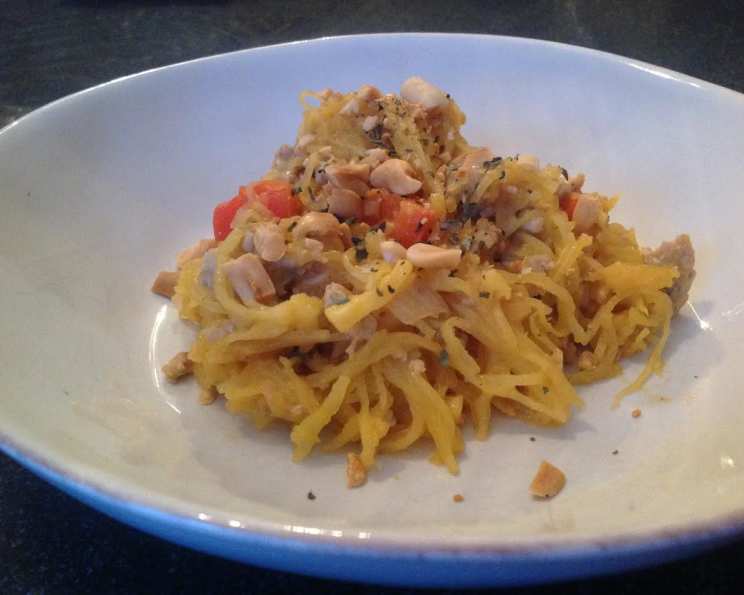
My Amazing Spaghetti Squash Chicken Pad Thai
I’ll never forget the first time I tried Pad Thai from a street vendor in Bangkok. The explosion of flavors – the tangy lime, the savory peanut sauce, the slight kick of chili – was simply intoxicating. Back home, I craved that experience, but wanted a healthier twist. I’d been on a spaghetti squash kick, roasting one almost weekly. One evening, staring at the stringy flesh of the squash, it hit me: why not use this as the base for a lighter, gluten-free Pad Thai? After a few experiments, I landed on this recipe, and trust me, it captures the essence of Pad Thai without the carb overload.
Recipe Overview
- Prep Time: 15 minutes
- Cook Time: 15 minutes
- Total Time: 30 minutes
- Servings: 4
- Dietary Type: Gluten-Free (if using GF soy sauce), Low-Carb
Ingredients
- 1 spaghetti squash
- 1 lb lean ground chicken
- ¼ teaspoon pepper
- ¼ teaspoon salt
- 1 teaspoon dried basil
- 1 small onion, chopped
- 1 cup bean sprouts (optional) or 1 red bell pepper, chopped (optional)
- 1 tablespoon chopped peanuts (garnish) (optional)
- 2 tablespoons reduced sodium soy sauce (you can use GF)
- ¼ cup chicken broth
- 1 tablespoon light brown sugar
- 1 tablespoon peanut butter
- 1 tablespoon rice vinegar
- 1 teaspoon hot sauce (2 tsp if you like it spicier)
- ½ teaspoon ground ginger
- ½ teaspoon minced garlic
- 1 tablespoon fresh lime juice (about half a lime)
- 2 teaspoons corn starch mixed with 1 tablespoon water
Equipment Needed
- Knife
- Microwave
- Glass dish
- Wok or large frying pan
- Mixing bowl
Instructions
-
Begin by preparing the spaghetti squash. Since raw squash can be difficult to cut, we’ll soften it slightly. Take your knife and poke a few holes in the skin, in a dotted line along where you plan to slice the squash in half (they do not have to be super deep). This helps steam escape and prevents explosions in the microwave!
-
Place the whole squash in the microwave for about 6 minutes. This partially cooks it, making it easier to handle.
-
Let the squash cool slightly. Once it’s cool enough to handle, cut off the stem end, and then cut it in half along the dotted line you created earlier. Use a spoon to remove the seeds and stringy bits from the center of each half.
-
Place your cut squash (halves or quarters) face down in a glass dish with 4 tablespoons of water. This creates a steamy environment that helps cook the squash evenly. Microwave for about 10 minutes, or until the squash is easily pierced with a fork.
-
While the squash is cooking in the microwave, prepare the Pad Thai sauce. In a mixing bowl, whisk together the soy sauce, chicken broth, light brown sugar, peanut butter, rice vinegar, hot sauce, ground ginger, minced garlic, and lime juice.
-
In a separate small bowl, mix your corn starch with water until it forms a slurry. Whisk this slurry into the Pad Thai sauce. This will help thicken the sauce as it cooks.
-
Now, prepare the other ingredients. Chop your onion and red bell pepper (if using) and set them aside.
-
Spray a stove-top wok pan (or a large frying pan) with cooking spray. Add your ground chicken, basil, pepper, and salt. Cook over medium-high heat for about 5 minutes, breaking up the chicken with a spoon as it cooks.
-
Add your chopped onion and bell pepper (if using) to the wok with the chicken. Stir occasionally until the meat is fully cooked and the vegetables are tender-crisp, about 3-5 minutes.
-
Once the spaghetti squash is cooked, remove the inside of the squash from the skin with a fork, creating spaghetti-like strands.
-
Add the spaghetti squash to the wok with the cooked chicken and vegetables. Toss in the bean sprouts (optional).
-
Pour the prepared Pad Thai sauce over the squash and chicken mixture. Toss everything together to coat evenly. Cook for another 2-3 minutes, allowing the sauce to thicken slightly and the flavors to meld.
-
Serve immediately, topped with chopped peanuts (optional) for garnish.
Expert Tips & Tricks
- Don’t overcook the spaghetti squash! You want it to be tender but still have some bite. Overcooked squash will be mushy and watery.
- Adjust the spice level to your liking. If you prefer a milder Pad Thai, use less hot sauce. For a spicier version, add more or use a hotter variety of chili sauce.
- Toast the peanuts before chopping for a richer flavor. Simply spread them on a baking sheet and bake at 350°F (175°C) for 5-7 minutes, or until lightly golden.
- If your sauce is too thin, you can add a bit more cornstarch slurry. Mix 1 teaspoon of cornstarch with 1 tablespoon of cold water and whisk it into the sauce while it’s simmering.
- Make it ahead! The Pad Thai sauce can be made a day or two in advance and stored in the refrigerator. This makes for a super quick weeknight meal.
Serving & Storage Suggestions
Serve your Spaghetti Squash Chicken Pad Thai immediately while it’s hot. Garnish with chopped peanuts, fresh cilantro, and a wedge of lime for an extra burst of flavor.
Leftovers can be stored in an airtight container in the refrigerator for up to 3 days. To reheat, simply microwave for a few minutes, or stir-fry in a pan until heated through. The squash may release some water upon reheating, so you may need to drain off any excess liquid. It is not recommended to freeze this dish, as the spaghetti squash texture will deteriorate.
Nutritional Information
| Nutrient | Amount per Serving | % Daily Value |
|---|---|---|
| Calories | 275 kcal | 14% |
| Total Fat | 12g | 15% |
| Saturated Fat | 3g | 15% |
| Cholesterol | 95mg | 32% |
| Sodium | 480mg | 21% |
| Total Carbohydrate | 15g | 5% |
| Dietary Fiber | 3g | 10% |
| Sugars | 7g | – |
| Protein | 28g | 56% |
Nutritional information is an estimate and may vary based on specific ingredients and portion sizes.
Variations & Substitutions
- Vegetarian: Substitute the ground chicken with firm tofu, tempeh, or a mixture of vegetables like mushrooms, carrots, and broccoli.
- Vegan: Use tofu or tempeh instead of chicken, and replace the chicken broth with vegetable broth. Make sure your peanut butter doesn’t contain honey, or use agave/maple syrup instead of brown sugar.
- Shrimp Pad Thai: Use cooked shrimp instead of chicken. Add the shrimp to the wok during the last few minutes of cooking, just long enough to heat through.
- Spicy Peanut Sauce Boost: For an even more intense peanut flavor, add a tablespoon of peanut flour or powdered peanut butter to the sauce.
- Sweet and Sour: Add a splash of pineapple juice or a teaspoon of tamarind paste to the sauce for a tangy sweetness.
- Nut-Free: Substitute the peanut butter with tahini (sesame seed paste) or sunflower seed butter. Omit the peanut garnish or replace it with sesame seeds.
FAQs (Frequently Asked Questions)
Q: Can I use a different type of squash?
A: While spaghetti squash is ideal for mimicking the texture of noodles, you could experiment with butternut squash or acorn squash. Keep in mind the flavor profile will change significantly.
Q: Can I make this without a microwave?
A: Yes, you can roast the spaghetti squash in the oven. Preheat your oven to 400°F (200°C), drizzle the cut squash with olive oil, and roast for 40-50 minutes, or until tender.
Q: Is it okay to use regular soy sauce if I’m not gluten-free?
A: Absolutely! Reduced sodium soy sauce is recommended to control the salt level, but you can use regular soy sauce if you prefer.
Q: Can I add other vegetables?
A: Definitely! Feel free to add any vegetables you enjoy, such as carrots, zucchini, snap peas, or green onions.
Q: My sauce is too salty. How can I fix it?
A: Add a squeeze of lime juice or a little bit of brown sugar to balance the saltiness. You can also add a splash of water or chicken broth to dilute the sauce.
Final Thoughts
This Spaghetti Squash Chicken Pad Thai is a fantastic way to enjoy the flavors of traditional Pad Thai in a healthier and gluten-free format. It’s a quick, easy, and customizable recipe that’s perfect for a weeknight dinner. Don’t be afraid to experiment with different vegetables and protein sources to create your own unique version. I encourage you to give this recipe a try and let me know what you think! Consider pairing it with a crisp cucumber salad or a light Asian-inspired slaw for a complete and satisfying meal. Happy cooking!