
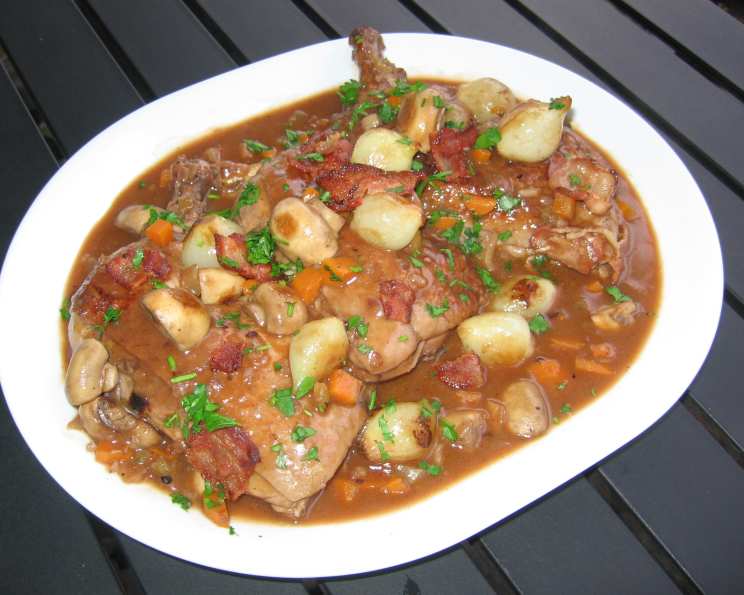
My Coq Au Vin: A Culinary Embrace
I remember the first time I tasted true Coq au Vin. It wasn’t in a Michelin-starred restaurant, but in a small, family-run bistro tucked away in the French countryside. The aroma of wine, herbs, and slowly braised chicken filled the air, a comforting and intoxicating blend that immediately wrapped around me like a warm embrace. That meal wasn’t just food; it was an experience, a connection to history and tradition, and I’ve been chasing that feeling ever since, constantly refining my own version of this classic dish.
Recipe Overview
- Prep Time: 30 minutes
- Cook Time: 1 hour
- Total Time: 1 hour 30 minutes
- Servings: 4-6
- Dietary Type: Omnivore
Ingredients
- 3 tablespoons oil
- 6 chicken legs (about 3 lbs)
- 1 onion, chopped
- 1 carrot, diced
- 1 celery stalk, chopped
- 2 tablespoons flour
- 1 cup dry red wine
- 1 cup beef stock
- 1 tablespoon tomato paste
- 2 garlic cloves, minced
- 1 pinch dried thyme
- 1 bay leaf
- 20 white pearl onions
- 1/4 lb bacon (1 inch pieces)
- 1/2 lb button mushrooms
- 2 tablespoons parsley, chopped
- Salt and pepper to taste
Equipment Needed
- Heavy saucepan or Dutch oven
- Saucepan
- Heavy skillet
Instructions
-
In a heavy saucepan or Dutch oven, heat 2 tablespoons of the oil over medium heat. The key here is using a pan that distributes heat evenly to prevent scorching and ensure consistent browning.
-
Brown the chicken legs well on both sides, working in batches if necessary to avoid overcrowding the pan. Overcrowding lowers the pan temperature and results in steamed, rather than browned, chicken. Remove the browned chicken and set it aside. Browning is crucial for developing deep flavor in the final dish.
-
Add the chopped onion, diced carrot, and chopped celery to the same pan. Cook until softened, approximately 3 to 5 minutes, scraping up any browned bits from the bottom of the pan – these are called fond and are packed with flavor. This step is known as mirepoix, a classic aromatic foundation in French cooking.
-
Add the flour and cook, stirring constantly, for about 2 minutes until lightly browned. This creates a roux, which will help thicken the sauce later. Ensure the flour is fully incorporated and doesn’t burn, as this will impart a bitter taste.
-
Gradually stir in the red wine, beef stock, tomato paste, minced garlic, thyme, and bay leaf. Bring the mixture to a boil, stirring constantly to prevent lumps from forming. The red wine is a defining ingredient; choose a good quality, dry variety like Burgundy or Pinot Noir. The alcohol will cook off, leaving behind the complex flavors of the wine.
-
Return the chicken to the pan, reduce the heat to low, cover, and simmer gently for 30 minutes. The simmering process allows the flavors to meld together and tenderizes the chicken.
-
While the chicken is simmering, prepare the pearl onions. Bring a saucepan of water to a boil, add the pearl onions, and boil for 3 minutes. Drain the onions and run them under cold water to stop the cooking process. This blanching method makes it easier to peel the onions. Peel and trim the onions.
-
In a heavy skillet, cook the bacon until crisp and brown. Remove the bacon, drain off the excess fat (but reserve a little for added flavor), and wipe the skillet clean.
-
Add the remaining tablespoon of oil to the skillet over medium heat. Add the pearl onions and cook until browned all over, about 3 to 5 minutes. Remove the onions and set them aside.
-
Add the mushrooms to the skillet and brown them lightly for about 3 minutes. You might need to add a little extra oil if the pan seems dry. Don’t overcrowd the pan; work in batches if necessary to achieve proper browning.
-
Add the browned pearl onions and mushrooms to the chicken mixture in the Dutch oven. Simmer, covered, for an additional 15 minutes, or until the onions are tender and the chicken is no longer pink and cooked through.
-
Remove the bay leaf from the sauce. Season the dish with salt and pepper to taste. Remember that seasoning is crucial – taste as you go and adjust accordingly.
-
Transfer the Coq au Vin to a serving platter and sprinkle with the cooked bacon and fresh chopped parsley before serving. This adds a final touch of flavor and visual appeal.
Expert Tips & Tricks
- Marinate the chicken: For an even deeper flavor, marinate the chicken legs in the red wine, herbs, and garlic for several hours or overnight before cooking.
- Deglaze the pan thoroughly: When adding the red wine to the pan, make sure to scrape up all the browned bits from the bottom of the pan. These bits are packed with flavor and will add depth to the sauce.
- Thicken the sauce (if needed): If the sauce is too thin at the end of cooking, you can thicken it with a cornstarch slurry (1 tablespoon cornstarch mixed with 2 tablespoons cold water). Stir the slurry into the simmering sauce and cook until thickened.
- Make it ahead: Coq au Vin is even better the next day, as the flavors have had more time to meld together. Prepare the dish up to 2 days in advance and store it in the refrigerator. Reheat gently before serving.
Serving & Storage Suggestions
Serve your Coq au Vin hot, ideally with creamy mashed potatoes, crusty bread for soaking up the delicious sauce, or boiled baby potatoes as originally suggested. A simple green salad provides a refreshing contrast to the rich dish.
Leftovers can be stored in an airtight container in the refrigerator for up to 3 days. For longer storage, freeze the Coq au Vin in freezer-safe containers for up to 2 months. Thaw overnight in the refrigerator before reheating. Reheat gently on the stovetop or in the oven until heated through.
Nutritional Information
| Nutrient | Amount per Serving | % Daily Value |
|---|---|---|
| Calories | 912.7 kcal | N/A |
| Calories from Fat | 486 g | 53% |
| Total Fat | 54 g | 83% |
| Saturated Fat | 14.3 g | 71% |
| Cholesterol | 227.2 mg | 75% |
| Sodium | 695.9 mg | 28% |
| Total Carbohydrate | 40.9 g | 13% |
| Dietary Fiber | 5.9 g | 23% |
| Sugars | 15.9 g | 63% |
| Protein | 55 g | 110% |
Note: Nutritional information is an estimate and may vary based on specific ingredients and portion sizes.
Variations & Substitutions
- Chicken Thighs: While I prefer chicken legs for their richness, you can substitute them with chicken thighs. As mentioned, breasts are not recommended, as they tend to dry out during the long cooking time.
- Vegetarian Option: For a vegetarian twist, try using hearty mushrooms like portobello or cremini in place of the chicken. Add some smoked paprika to mimic the smoky flavor of bacon.
- Different Wine: If you don’t have dry red wine, you can use a dry rosé or even chicken broth with a splash of red wine vinegar in a pinch. The flavor profile will be slightly different, but still delicious.
- Herbs: Feel free to experiment with different herbs. Rosemary, sage, or a bouquet garni (a bundle of herbs tied together with string) would all be delicious additions.
FAQs (Frequently Asked Questions)
Q: Can I use frozen pearl onions?
A: Yes, frozen pearl onions are a convenient alternative to fresh ones. There is no need to boil them before adding them to the recipe, you can simply add them to the skillet with the mushrooms.
Q: Can I make this in a slow cooker?
A: Absolutely! Brown the chicken and vegetables as directed, then transfer everything to a slow cooker. Cook on low for 6-8 hours or on high for 3-4 hours.
Q: What if I don’t have beef stock?
A: Chicken stock can be substituted for beef stock. The flavor will be slightly lighter, but still delicious.
Q: How do I prevent the sauce from being too thin?
A: Make sure to brown the flour properly when making the roux. This will help thicken the sauce. If the sauce is still too thin at the end of cooking, you can thicken it with a cornstarch slurry as described in the “Expert Tips & Tricks” section.
Q: Can I add other vegetables?
A: Yes, feel free to add other vegetables like parsnips, turnips, or potatoes to the dish. Add them along with the pearl onions and mushrooms.
Final Thoughts
This Coq au Vin recipe is more than just a set of instructions; it’s an invitation to create an experience. It’s about slowing down, embracing the process, and savoring the rich, comforting flavors that emerge. So, gather your ingredients, pour yourself a glass of wine (the same one you’ll be cooking with!), and embark on this culinary journey. I encourage you to experiment, make it your own, and most importantly, share it with the people you love. I’d love to hear about your experience and any variations you try! Bon appétit!