
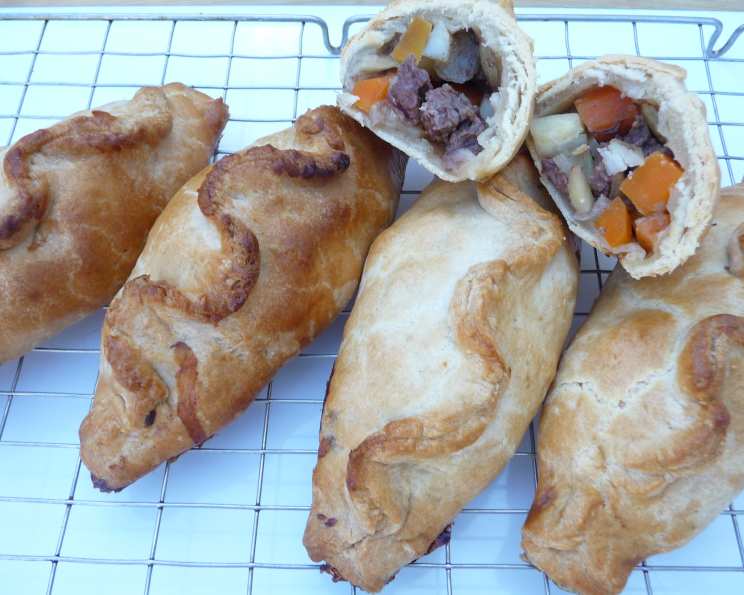
My Favorite Cornish Pasties
The scent of baking pasties always takes me back to my childhood summers spent in Michigan’s Upper Peninsula. My grandmother, a proud descendant of Cornish miners, would spend hours in her tiny kitchen, the air thick with the savory aroma of meat, potatoes, and carrots encased in golden, flaky crust. We’d devour them fresh from the oven, steam rising with each bite, the earthy flavors grounding me in a sense of heritage and home. These weren’t just meals; they were edible stories, a connection to a history forged in the depths of the earth.
Recipe Overview
- Prep Time: 30 minutes
- Cook Time: 45 minutes
- Total Time: 1 hour 15 minutes
- Servings: 4
- Yield: 4 pasties
- Dietary Type: Not Gluten-Free
Ingredients
- 1 lb lean ground beef (uncooked)
- 1 large potato (peeled and cubed)
- 1 large carrot (cut into small cubes)
- 1 large onion (chopped)
- 1 teaspoon salt
- 1 1/4 teaspoons pepper
- 4 ready-made pie crusts
- 1/4 cup milk
- 1 quart leftover beef gravy, heated (for serving)
Equipment Needed
- Large mixing bowl
- Rolling pin (if not using pre-made crusts)
- Pastry brush
- Large baking sheet
- Small bowl for milk
Instructions
- In a large mixing bowl, thoroughly combine the uncooked ground beef, cubed potato, diced carrot, chopped onion, salt, and pepper. Ensure the spices are evenly distributed throughout the mixture. This is the heart of the pasty, so don’t skimp on the mixing!
- Lightly flour a clean, flat surface. Unroll or lay one pie crust flat on the prepared surface.
- Place approximately one-quarter of the filling mixture onto one half of the pie crust. Be sure to leave at least a 1 1/2-inch border around the edge. This space is crucial for creating a secure seal and preventing the filling from leaking out during baking.
- Using your fingertips, gently moisten the bottom edges of the sealing area with milk. The milk acts as a natural glue, helping the two crusts adhere to each other.
- Carefully fold the other half of the crust over the filling, creating a half-moon shape. Bring the edges of the top and bottom halves together, pressing firmly to seal.
- Fold the sealed edges in towards the center once or twice to create a thicker, more decorative border. This helps to further reinforce the seal and adds a touch of rustic charm to the pasty.
- Crimp the edges of the pasty well using your fingers or a fork. Crimping is essential for preventing the filling from escaping during baking.
- Coat the entire top of the pasty with milk using a pastry brush. This will help the crust turn a beautiful golden brown in the oven.
- Place the prepared pasty on a slightly greased large baking sheet.
- Repeat steps 2 through 9 with the remaining crusts and filling.
- Bake in a preheated oven at 425 degrees Fahrenheit (220 degrees Celsius) for 15 minutes.
- Reduce the oven temperature to 350 degrees Fahrenheit (175 degrees Celsius) and continue baking for another 30 minutes, or until the pasties are golden brown and the filling is cooked through. The internal temperature of the meat should reach 160 degrees F.
- Remove the pasties from the oven and let them cool slightly before serving.
Expert Tips & Tricks
- Don’t overfill the pasties. Too much filling will make them difficult to seal and can cause the crust to burst during baking.
- Ensure the meat is evenly distributed. Large clumps of meat will cook unevenly, resulting in some parts being overcooked while others remain undercooked.
- For an extra golden crust, brush the pasties with an egg wash instead of milk.
- If the crust starts to brown too quickly, tent the pasties with foil for the last 15 minutes of baking.
- Make-ahead tip: Assemble the pasties ahead of time and store them in the refrigerator for up to 24 hours before baking. You may need to add a few extra minutes to the baking time if baking from cold.
Serving & Storage Suggestions
These Cornish pasties are best served warm, straight from the oven, smothered in rich beef gravy. Leftovers can be stored in the refrigerator for up to 3 days. To reheat, wrap the pasty in foil and bake in a preheated oven at 350 degrees Fahrenheit (175 degrees Celsius) until heated through. You can also reheat them in the microwave, but the crust may become slightly soggy.
For longer storage, you can freeze the baked pasties. Wrap them individually in plastic wrap and then place them in a freezer-safe bag or container. They can be stored in the freezer for up to 2 months. To reheat from frozen, bake in a preheated oven at 350 degrees Fahrenheit (175 degrees Celsius) until heated through.
Nutritional Information
| Nutrient | Amount per Serving | % Daily Value |
|---|---|---|
| Calories | 670 kcal | 34% |
| Total Fat | 38.7 g | 59% |
| Saturated Fat | 11.3 g | 57% |
| Cholesterol | 41.5 mg | 14% |
| Sodium | 735 mg | 31% |
| Carbohydrates | 58.1 g | 19% |
| Fiber | 2.7 g | 11% |
| Sugar | 1 g | 4% |
| Protein | 22.8 g | 46% |
Nutritional information is an estimate and may vary based on specific ingredients and portion sizes.
Variations & Substitutions
- Vegetarian Pasties: Substitute the ground beef with lentils, mushrooms, or a mixture of root vegetables.
- Gluten-Free Pasties: Use a gluten-free pie crust. You can find pre-made gluten-free crusts in most supermarkets, or make your own using a gluten-free flour blend.
- Spicy Pasties: Add a pinch of cayenne pepper or some chopped jalapeños to the filling for a spicy kick.
- Sweet Pasties: For a dessert version, fill the crust with apples, cinnamon, and sugar.
- Crust variations: Adding a little more fat to the dough makes for an even flakier crust. Some people use lard.
FAQs (Frequently Asked Questions)
Q: Can I use pre-cooked ground beef instead of uncooked?
A: While you can, using uncooked ground beef is recommended for the best flavor and texture. The beef will cook alongside the vegetables, infusing them with its savory juices. If you do use pre-cooked beef, reduce the baking time slightly to prevent the filling from drying out.
Q: Can I use a different type of potato?
A: Yukon Gold or red potatoes work well as substitutes for russet potatoes. They have a slightly creamier texture and hold their shape well during baking.
Q: How do I prevent the bottom crust from getting soggy?
A: Make sure to avoid overfilling the pasties, as excess moisture from the filling can seep into the crust. You can also lightly dust the bottom crust with flour before adding the filling.
Q: Can I freeze the pasties after baking?
A: Yes, baked pasties freeze very well. Allow them to cool completely before wrapping them individually in plastic wrap and placing them in a freezer-safe bag.
Q: What is the origin of Cornish pasties?
A: Cornish pasties originated in Cornwall, England, where they were traditionally made for miners. The sturdy crust and portable size made them a convenient and nutritious meal to take down into the mines.
Final Thoughts
I truly hope you’ll give these Cornish pasties a try. They are more than just a recipe; they’re a taste of history, a connection to family, and a warm, comforting meal that’s perfect for any occasion. Don’t hesitate to tweak the filling to your liking and please, share your baking adventures and any personal touches you add. Enjoy!