
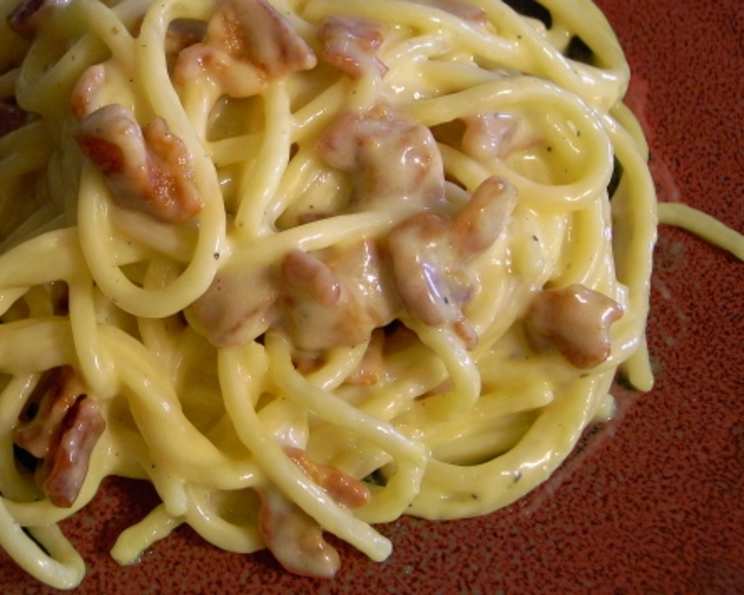
My Spaghetti Carbonara: A Culinary Love Affair
The first time I tasted real carbonara, I was a wide-eyed culinary student in Rome. Forget the creamy, vaguely cheesy sauces I’d encountered back home; this was a revelation. The richness, the sharpness of the Parmesan, the salty punch of pancetta, all clinging to perfectly cooked spaghetti. It was a dish that spoke of simple ingredients treated with respect, a dish that whispered secrets of Italian kitchens and generations of home cooks. I’ve been chasing that flavor ever since, tweaking and perfecting my own version, and I’m thrilled to share it with you.
Recipe Overview
- Prep Time: 10 minutes
- Cook Time: 15 minutes
- Total Time: 25 minutes
- Servings: 6
- Dietary Type: Not Gluten-Free
Ingredients
- 1 tablespoon olive oil
- 10 ounces pancetta, cut into 1/2-inch dice
- 1 lb spaghetti
- 1 cup heavy cream
- 4 large egg yolks
- 2 cups Parmesan cheese, grated (5 oz.)
- 1 teaspoon salt
- 1/4 teaspoon black pepper
Ingredient Notes:
- Pancetta: Guanciale (cured pork cheek) is the traditional ingredient, offering an even richer flavor than pancetta. If you can find it, substitute it in equal measure. Bacon can also be used in a pinch, but the flavor will be slightly different.
- Parmesan: Use freshly grated Parmesan cheese for the best flavor and melting quality. Pre-grated cheese often contains cellulose that can prevent it from melting smoothly.
- Black Pepper: Freshly cracked black pepper is essential for adding a bright, aromatic spice to the dish.
Equipment Needed
- Large saucepan
- Heavy medium skillet
- Medium bowl
- Whisk
Instructions
- Begin by bringing a large saucepan of water to a rolling boil. This is crucial for cooking the pasta properly. Be generous with the water; it will help prevent the pasta from sticking together.
- While the water is heating, prepare the pancetta. In a heavy medium skillet, heat the olive oil over medium heat. Add the diced pancetta and cook, stirring occasionally, until it is browned and crispy, about 3-4 minutes. The rendered fat from the pancetta is liquid gold – don’t discard it! Remove the cooked pancetta from the skillet and set aside, keeping it warm.
- Once the water is boiling vigorously, add the spaghetti and cook according to package directions until al dente, about 8 minutes. “Al dente” means “to the tooth” in Italian, indicating that the pasta should be firm to the bite, not mushy. Reserve about 1 cup of the pasta water before draining. This starchy water will be helpful in creating a creamy sauce.
- While the spaghetti is cooking, prepare the sauce. In a medium bowl, whisk together the heavy cream, egg yolks, grated Parmesan cheese, salt, and black pepper until well combined. Make sure there are no lumps and that the mixture is smooth. This is your creamy, cheesy base.
- Once the spaghetti is cooked al dente, drain it quickly and immediately return it to the still-warm saucepan. Time is of the essence here. The residual heat of the pasta is what will gently cook the egg yolks and create the creamy sauce.
- Immediately pour the egg/cheese mixture over the hot spaghetti and stir vigorously until the sauce is smooth and coats every strand of pasta. The heat from the pasta will cook the eggs just enough to thicken the sauce without scrambling them. This is a crucial step – stir quickly and consistently to prevent the eggs from overcooking.
- Add the warm pancetta and all the rendered fat from the pan to the pasta. Toss everything together well to ensure the pancetta and its flavorful fat are evenly distributed.
- If the sauce seems too thick, thin it with a little of the reserved pasta water until it reaches your desired consistency. The pasta water contains starch that will help emulsify the sauce and create a silky, luxurious texture.
- Serve immediately, garnished with more grated Parmesan cheese and freshly cracked black pepper. Carbonara is best enjoyed fresh, as the sauce can thicken upon standing.
Expert Tips & Tricks
- Temperature is Key: The success of carbonara hinges on temperature control. The pasta must be hot enough to gently cook the egg yolks, but not so hot that they scramble. Work quickly and efficiently.
- Don’t Overcook the Pasta: Overcooked pasta will result in a mushy dish. Aim for al dente; the pasta will continue to cook slightly when you add the sauce.
- The Secret Weapon: Pasta Water: Don’t underestimate the power of pasta water! It’s starchy, salty, and helps create a perfectly emulsified sauce.
- For Extra Richness: Add a pat of butter to the pasta along with the pancetta fat for an extra layer of flavor and richness.
- Pre-grate the Cheese: Grating the Parmesan in advance will save you time and ensure it’s ready to go when you need it.
Serving & Storage Suggestions
Serve your Spaghetti Carbonara immediately while it’s hot and the sauce is creamy. A sprinkle of fresh Parmesan and a generous grind of black pepper add a final flourish.
Leftovers can be stored in an airtight container in the refrigerator for up to 2 days. However, be aware that the sauce will thicken and may become slightly grainy. To reheat, gently warm the carbonara in a skillet over low heat, adding a splash of cream or pasta water to loosen the sauce. Microwaving is not recommended, as it can cause the eggs to overcook and the sauce to separate. Carbonara is not suitable for freezing.
Nutritional Information
| Nutrient | Amount per Serving | % Daily Value |
|---|---|---|
| Calories | 619.1 kcal | N/A |
| Calories from Fat | N/A | 45% |
| Total Fat | 30.6 g | 47% |
| Saturated Fat | 16.5 g | 82% |
| Cholesterol | 223.5 mg | 74% |
| Sodium | 921.6 mg | 38% |
| Total Carbohydrate | 59.7 g | 19% |
| Dietary Fiber | 2.5 g | 9% |
| Sugars | 1.8 g | N/A |
| Protein | 25.4 g | 50% |
Note: Nutritional information is an estimate and may vary based on specific ingredients and portion sizes.
Variations & Substitutions
- Vegetarian Carbonara: Substitute the pancetta with sautéed mushrooms, zucchini, or asparagus for a vegetarian twist. Add a pinch of smoked paprika to mimic the smoky flavor of the pancetta.
- Gluten-Free Carbonara: Use gluten-free spaghetti for a gluten-free version. Ensure all other ingredients are also gluten-free.
- Spicy Carbonara: Add a pinch of red pepper flakes to the pancetta while cooking for a spicy kick.
- Seafood Carbonara: Replace the pancetta with cooked shrimp or scallops for a seafood variation.
- Lighter Carbonara: While not traditional, you can lighten up the recipe by using half-and-half instead of heavy cream. The sauce will be less rich, but still delicious.
FAQs (Frequently Asked Questions)
Q: Can I make carbonara ahead of time?
A: Carbonara is best served immediately. The sauce can thicken and become less creamy as it sits. If you need to prep ahead, you can cook the pancetta and grate the cheese, but cook the pasta and make the sauce right before serving.
Q: What if my eggs scramble?
A: Scrambled eggs indicate the pasta was too hot. Next time, ensure the pasta is only warm, not scorching, when you add the egg mixture. Also, stir constantly and quickly to prevent the eggs from overcooking.
Q: Can I use bacon instead of pancetta?
A: Yes, bacon can be used as a substitute, but the flavor will be slightly different. Pancetta has a richer, more porky flavor than bacon.
Q: Why is my carbonara sauce watery?
A: A watery sauce can result from not using enough Parmesan cheese or from not using enough pasta water to emulsify the sauce. Make sure to use freshly grated Parmesan and gradually add pasta water until the sauce reaches your desired consistency.
Q: Can I add garlic to my carbonara?
A: While not traditional, some people enjoy adding a clove of minced garlic to the olive oil when cooking the pancetta. This adds a subtle garlic flavor to the dish.
Final Thoughts
Making Spaghetti Carbonara is more than just following a recipe; it’s about connecting with Italian culinary traditions and creating a dish that’s both comforting and elegant. Don’t be intimidated by the simplicity; it’s in the details that the magic happens. So, gather your ingredients, channel your inner Italian nonna, and create a plate of carbonara that will transport you to a Roman trattoria. I encourage you to try this recipe and make it your own. Share your results, your tweaks, and your stories. Buon appetito!