
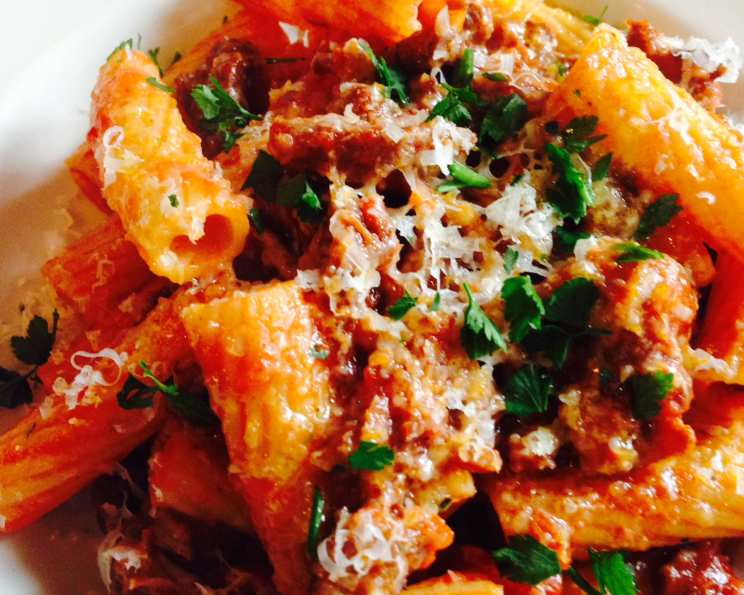
The Soul of Naples: A Slow-Simmered Ragù
The aroma alone transports me back to a tiny trattoria tucked away in a winding Naples alleyway. My grandmother, Nonna Emilia, would spend what seemed like days coaxing the flavors from humble ingredients, her wooden spoon a conductor leading an orchestra of bubbling richness. The resulting ragù, clinging lovingly to al dente pasta, was more than just a meal; it was a testament to patience, love, and the enduring power of simple pleasures shared around a crowded table.
Recipe Overview
- Prep Time: 20 minutes
- Cook Time: 3 hours
- Total Time: 3 hours 20 minutes
- Servings: 8
- Yield: About 8 servings
- Dietary Type: Not suitable for vegetarian or vegan diets
Ingredients
- 3 tablespoons extra virgin olive oil
- 2 teaspoons salt
- Ground black pepper
- 1 lb beef stew meat (such as beef chuck, cut into 1-inch cubes)
- 3 ounces diced pancetta or guanciale (cured pork belly, cured pork jowl), or 3 ounces bacon (if you must)
- 2 finely diced shallots or 1 finely diced Vidalia onion
- 1 finely minced garlic clove
- 2 teaspoons red pepper flakes
- 1 cup red wine
- 2 (8 ounce) cans peeled whole tomatoes (preferably San Marzano, but any kind that are not pre-seasoned or fire roasted are suitable)
- 1 tablespoon oregano
- 1 bay leaf
- 1 lb penne rigate (preferably de cecco brand)
- Parmigiano-Reggiano cheese or Grana Padano, for serving
Equipment Needed
- 6-quart heavy-bottomed sauté pan with tight-fitting lid
- Shallow bowl
- Wooden spoon
- Colander
- Fork
Instructions
-
Begin by heating the olive oil in a large, 6-quart heavy-bottomed sauté pan over medium-high heat. Make sure you have a tight-fitting lid for later; otherwise, be prepared to cover your pan tightly with foil.
-
Pat the beef dry with paper towels to remove any moisture. Season the beef generously with salt and ground black pepper.
-
Carefully add the seasoned beef to the heated pan, ensuring that it sizzles upon contact. If the meat does not sizzle, your pan is not hot enough. Conversely, if the olive oil begins to smoke, the pan is too hot. The beef should fit in a single layer with adequate space. Depending on the size of your pan, you may need to brown the beef in two batches. Overcrowding the pan will cause the meat to steam rather than brown, which is undesirable for this sauce.
-
Once the beef is browned on all sides, remove it from the pan and place it in a shallow bowl to collect any accumulated juices.
-
Turn the heat down slightly to medium and add the diced pork (pancetta or guanciale) to the pan, allowing it to render its fat without browning, approximately 3 minutes.
-
Add the diced shallots (or onion) to the pan with the pork, coating them in the rendered fat. Cook until the shallots are translucent, but not browned, about 3 to 5 minutes, depending on how finely they are diced. Stir occasionally with a wooden spoon to prevent browning.
-
Once the shallots are translucent (and not a moment before!), add the minced garlic. Adding the garlic too soon will cause it to burn quickly, ruining the entire sauce. Stir the garlic into the pork/shallot mixture for about 60 seconds. If the garlic starts to turn golden, move to the next step immediately.
-
Slowly add the red wine to the pan, deglazing it by stirring with a wooden spoon to release any browned bits that may be sticking to the bottom. Allow the wine to reduce by one half.
-
Once the wine has reduced, return the browned beef and its accumulated juices to the pan. Add the whole tomatoes and their juices.
-
Add the oregano and bay leaf. If you happen to have the outer rind of a Parmesan cheese on hand, add that now as well, as it imparts a wonderful savory depth. Stir the beef to coat it with the sauce mixture, and bring the ragù to a boil.
-
Once the ragù has reached a boil, lower the heat to a very faint simmer, cover the pan, and cook for 3 hours. Stir the sauce occasionally with a wooden spoon, breaking down the whole tomatoes as you stir. If the ragù appears to be drying out, add ½ cup of cold water and stir to incorporate. (Note: If you prefer to use a slow cooker, prepare the ragù through this step and then transfer it to the slow cooker. Cook on low for 6 hours or on high for 3 hours, according to the manufacturer’s instructions. Stirring is not necessary during the slow cooking process, but be sure to break up the tomatoes when the sauce is finished cooking.)
-
When the ragù has simmered for approximately 3 hours, bring a large pot of water to a rolling boil for the pasta. Add salt to the boiling water. The general rule of thumb is 1 liter of water for every 100 grams of pasta, with 10 grams of salt added (the 1000/100/10 ratio). A generous amount of salt is key; the water should taste brackish.
-
Once the salted pasta water is boiling vigorously, add the penne. Stir with a fork to prevent sticking, and cook until al dente, usually about 10 minutes for penne. Taste the pasta to check for doneness.
-
When the penne is cooked al dente, drain it immediately, reserving about 5 tablespoons of the pasta water.
-
Uncover the ragù and remove the bay leaf and Parmesan rind (if used). Add the drained penne and the reserved pasta water immediately (do not allow the pasta to rest and become flaccid in the colander).
-
Raise the heat to medium-high and stir with a wooden spoon to coat the penne with the sauce. For a more authentic Neapolitan touch, you can flip the pasta in the pan instead of stirring, using a deft wrist motion. Stir and cook for about 1 minute. This step of mixing the pasta and ragù is crucial, as it ensures that the sauce adheres properly to the pasta, creating a unified and flavorful dish.
-
Plate the penne ragù (a shallow bowl is ideal), add a few gratings of Parmesan cheese to taste, garnish with fresh basil, and serve warm with crusty bread.
Expert Tips & Tricks
- Browning is key: Don’t rush the browning process for the beef. A deep, rich sear on the meat is essential for developing flavor.
- Low and slow: The long, slow simmer is what transforms the simple ingredients into a deeply complex ragù. Resist the urge to speed up the process.
- Don’t burn the garlic: Burnt garlic can ruin the entire sauce. Watch it carefully and add the wine as soon as it starts to turn golden.
- Pasta water is your friend: Don’t discard the pasta water! The starchy water helps to emulsify the sauce and create a glossy, luscious texture.
- Cheese rind secret: Adding a Parmesan cheese rind to the ragù during simmering adds a subtle but significant depth of flavor. Just remember to remove it before serving.
Serving & Storage Suggestions
Serve the penne ragù immediately after preparing, garnished with fresh basil and grated Parmesan cheese. A simple side salad and crusty bread for soaking up the sauce are excellent accompaniments.
Leftovers can be stored in an airtight container in the refrigerator for up to 3 days. To reheat, gently warm the ragù in a saucepan over medium heat, adding a splash of water or broth if needed to prevent it from drying out. You can also reheat it in the microwave, but be careful not to overcook the pasta. For longer storage, the ragù can be frozen for up to 3 months. Thaw it overnight in the refrigerator before reheating.
Nutritional Information
| Nutrient | Amount per Serving | % Daily Value |
|---|---|---|
| Calories | 370.8 kcal | – |
| Calories from Fat | – | 21% |
| Total Fat | 8.7 g | 13% |
| Saturated Fat | 2 g | 9% |
| Cholesterol | 36.3 mg | 12% |
| Sodium | 635.3 mg | 26% |
| Total Carbohydrate | 47.1 g | 15% |
| Dietary Fiber | 2.7 g | 10% |
| Sugars | 3.4 g | – |
| Protein | 20.5 g | 41% |
Variations & Substitutions
- Vegetarian option: Substitute the beef and pork with mushrooms (such as cremini or portobello), eggplant, or lentils.
- Spicy ragù: Add more red pepper flakes or a pinch of cayenne pepper for extra heat.
- Wine substitution: If you don’t have red wine on hand, you can use beef broth or vegetable broth instead, but the flavor will be slightly different.
- Pasta variations: While penne rigate is traditional, other types of pasta, such as rigatoni or paccheri, also work well.
FAQs (Frequently Asked Questions)
Q: Can I use pre-ground beef for this recipe?
A: While you can, using cubed stew meat and browning it yourself results in a richer, more complex flavor and a better texture in the final ragù.
Q: How do I prevent the sauce from splattering while it simmers?
A: Ensure the lid is tight-fitting, and maintain a very low simmer. If necessary, use a splatter screen in addition to the lid.
Q: Can I make this ragù in an Instant Pot?
A: Yes, you can! Brown the meat using the sauté function, then add the remaining ingredients and cook on high pressure for about 45 minutes, followed by a natural pressure release.
Q: The ragù seems too acidic. How can I fix it?
A: A pinch of sugar or a small knob of butter stirred into the sauce at the end can help to balance the acidity.
Q: Can I add other vegetables to the ragù?
A: Absolutely! Diced carrots, celery, or bell peppers can be added along with the shallots for extra flavor and nutrients.
Final Thoughts
I hope this recipe inspires you to embark on your own culinary journey to Naples. Don’t be intimidated by the long cooking time; the hands-on work is minimal, and the reward is immeasurable. Gather your loved ones, uncork a bottle of robust red wine, and savor the simple pleasure of a truly authentic Neapolitan ragù. I invite you to share your creations and any variations you discover along the way – buon appetito!