
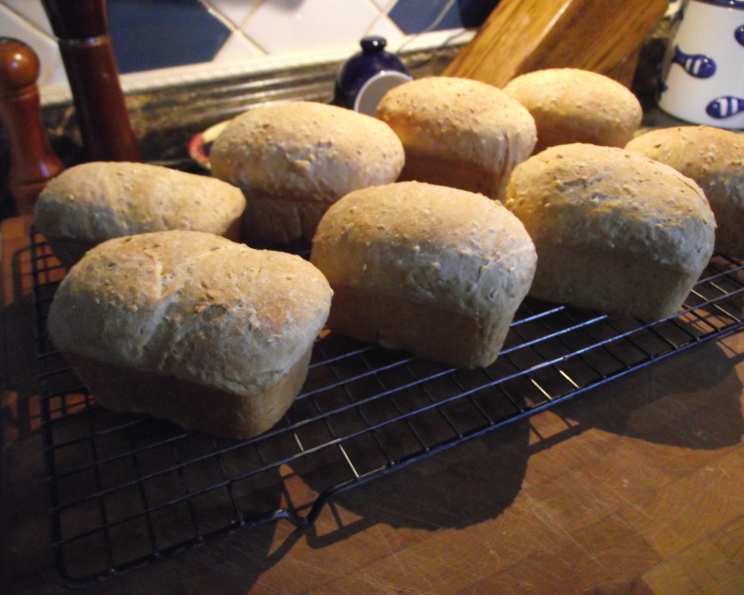
Neil’s Harbour White Bread: A Taste of Home
The scent of baking bread…it’s a memory etched in my mind from childhood summers spent with my grandmother. Her kitchen, always warm and filled with light, held the promise of simple pleasures. While she had her own secret sourdough recipe, the yeasty aroma of a classic white bread evokes that same comforting feeling of love and home. This Neil’s Harbour White Bread recipe captures that essence perfectly.
Recipe Overview
- Prep Time: 30 minutes
- Cook Time: 20 minutes
- Rise Time: 2-3 hours
- Total Time: 3 hours 20 minutes
- Yields: 3 large loaves or 6 small loaves
- Dietary Type: Vegetarian
Ingredients
- 1 cup lukewarm water
- 1 teaspoon white sugar
- 2 tablespoons traditional yeast
- 2 cups lukewarm water
- ½ cup white sugar
- 1 tablespoon salt
- ½ cup canola oil (or ½ cup melted shortening)
- 9 cups all-purpose flour
Equipment Needed
- Large pottery bowl (or any large mixing bowl)
- Measuring cups and spoons
- Plastic wrap
- Heavy kitchen towel
- Loaf pans (3 large or 6 small), greased
- Cooling rack
Instructions
-
In a large, warmed pottery bowl, pour 1 cup lukewarm water. Dissolve 1 teaspoon white sugar into the water. Sprinkle 2 tablespoons traditional yeast over the sugar water.
-
Allow the yeast mixture to sit for about 10 minutes. The yeast should become frothy and rise to the surface of the water, indicating that it is active. Stir until blended, ensuring all the yeast is dissolved.
-
Into the yeast mixture, stir in 2 cups lukewarm water, ½ cup white sugar, 1 heaping tablespoon of salt, and ½ cup canola oil (or melted shortening).
-
Beat, then stir in 1 cup of all-purpose flour at a time. Continue mixing until the dough requires some effort to handle. You may not need all 9 cups of flour. The dough should hang together and be easy to handle, but still be slightly moist.
-
On a lightly floured surface, place the dough. Sprinkle with more flour as needed. Knead the dough until it is smooth and elastic, typically taking around 8 minutes.
-
Place the kneaded dough back into the bowl. Cover the bowl with plastic wrap, then cover with a heavy kitchen towel. Let the dough rise in a warm, draft-free place for 1-2 hours, or until it has doubled in size. A sunny day provides ideal conditions for rising.
-
To test if the dough has risen sufficiently, gently stick your finger into the dough. If the imprint remains, the dough is ready.
-
Punch the dough down to release the air.
-
Shape the dough into loaves. Divide the dough into 3 equal portions for large loaves, or 6 equal portions for smaller loaves.
-
Place the formed loaves into well-greased loaf pans. Cover the pans and let the dough rise again for about an hour.
-
Bake in a preheated 400°F (200°C) oven for approximately 20 minutes, or until the tops and bottoms are golden brown. To check for doneness, tap the bottom of the loaf; it should sound hollow.
-
Remove the loaves from the pans and let them cool on a rack before slicing and serving.
Expert Tips & Tricks
- Warming the bowl before adding the yeast mixture helps to create an optimal environment for the yeast to activate. You can warm the bowl by running it under hot water and then drying it thoroughly.
- Don’t over-knead the dough. Over-kneading can result in a tough bread. Knead just until the dough is smooth and elastic.
- Temperature is key for rising. Too cold and the dough will rise very slowly, if at all. Too hot and the yeast can die. A warm (but not hot) environment is ideal.
- If your oven tends to brown bread too quickly, you can tent the loaves with aluminum foil during the last 10 minutes of baking to prevent over-browning.
Serving & Storage Suggestions
Neil’s Harbour White Bread is delicious served warm with butter, jam, or honey. It’s also perfect for sandwiches, toast, and French toast.
- Storage: Store the cooled loaves in an airtight container or wrapped in plastic wrap at room temperature for up to 3 days.
- Refrigeration: For longer storage, refrigerate the loaves for up to a week.
- Freezing: To freeze the bread, wrap the cooled loaves tightly in plastic wrap and then in a layer of foil. Frozen bread can be stored for up to 3 months. To thaw, let it sit at room temperature for several hours, or overnight. You can also reheat it in a low oven to refresh it.
Nutritional Information
| Nutrient | Amount per Serving (1 slice – based on 12 slices per loaf) | % Daily Value |
|---|---|---|
| Calories | 154 kcal | 8% |
| Total Fat | 4.5g | 6% |
| Saturated Fat | 0.4g | 2% |
| Cholesterol | 0mg | 0% |
| Sodium | 260mg | 11% |
| Total Carbohydrate | 36g | 12% |
| Dietary Fiber | 1.3g | 5% |
| Sugars | 4g | 8% |
| Protein | 4.6g | 9% |
Note: Nutritional information is an estimate and can vary based on specific ingredients and portion sizes.
Variations & Substitutions
- Whole Wheat Bread: Substitute up to half of the all-purpose flour with whole wheat flour for a nuttier flavor and increased fiber.
- Sweet Bread: Add ¼ cup of honey or maple syrup to the dough for a sweeter bread.
- Herb Bread: Incorporate 1-2 tablespoons of dried herbs like rosemary, thyme, or oregano into the dough for an aromatic twist.
- Dairy-Free: Ensure the shortening used (if using instead of oil) is dairy-free.
- Enriched Dough: Add an egg to the wet ingredients for a richer, softer crumb.
FAQs (Frequently Asked Questions)
Q: My dough isn’t rising. What am I doing wrong?
A: Ensure your yeast is fresh and active. Check the expiration date and make sure the water you’re using is lukewarm, not hot. Also, provide a warm, draft-free environment for the dough to rise.
Q: Can I use active dry yeast instead of traditional yeast?
A: Yes, you can. If using active dry yeast, you may need to proof it in warm water with sugar for a slightly longer time (10-15 minutes) to ensure it’s active before adding it to the other ingredients.
Q: My bread is browning too quickly. What can I do?
A: Reduce the oven temperature by 25°F (15°C) and tent the loaves with aluminum foil during the last 10 minutes of baking.
Q: Can I make this bread in a bread machine?
A: Yes, you can adapt this recipe for a bread machine. Follow your bread machine’s instructions for adding ingredients and selecting the appropriate settings.
Q: How can I tell if my bread is fully baked?
A: The best way to check for doneness is to tap the bottom of the loaf. If it sounds hollow, it’s done. You can also use a thermometer; the internal temperature should reach 200-210°F (93-99°C).
Final Thoughts
Neil’s Harbour White Bread is more than just a recipe; it’s an invitation to experience the simple pleasure of homemade bread. The aroma that fills your kitchen as it bakes is a reward in itself, and the taste of that first warm slice is pure comfort. I encourage you to try this recipe, experiment with the variations, and make it your own. Share it with loved ones and create memories that will last a lifetime. Don’t be afraid to experiment and please, share your results!