
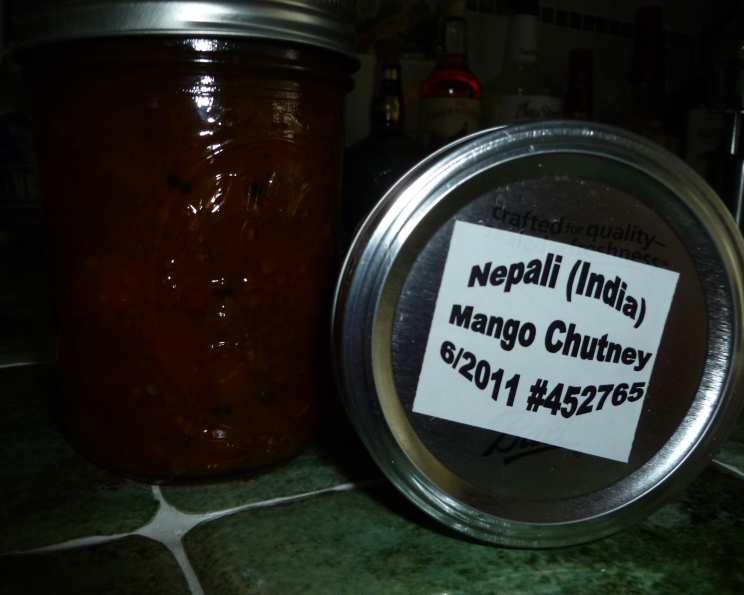
Nepali Mango Chutney: A Taste of Exotic Spice
Mangoes have always held a special place in my heart, transporting me back to my childhood summers. I vividly remember my grandmother’s hands, stained yellow from peeling mountains of ripe mangoes, as she prepared her signature chutney. The sweet, tangy aroma that filled her kitchen is a sensory memory I cherish, and this Nepali Mango Chutney, with its unique blend of spices, evokes a similar feeling of warmth and nostalgia, a reminder of flavors both familiar and intriguingly new.
Recipe Overview
- Prep Time: 20 minutes
- Cook Time: 2-3 hours
- Total Time: 2 hours 20 minutes – 3 hours 20 minutes
- Yields: 4 Pints
- Dietary Type: Vegan, Gluten-Free
Ingredients
- 4 mangoes, slightly under ripe (3 lbs)
- ¾ lb brown sugar
- ⅔ teaspoon cumin seed
- 1 teaspoon coriander seed
- ¼ teaspoon cardamom
- 1 teaspoon red pepper
- ½ teaspoon turmeric
- 1 ½ teaspoons ginger paste
- ½ teaspoon clove
- 16 ounces vinegar
- 2 teaspoons garlic paste (minced will do)
- 1 onion, finely chopped
Equipment Needed
- Large pot or Dutch oven
- Knife or potato peeler
- Measuring spoons and cups
- Funnel (for canning)
- Jars for canning
Instructions
-
Begin by peeling the mangoes. A sharp knife works well, but a potato peeler can also be effective. Aim for as little waste as possible, removing only the skin.
-
Chop the peeled mangoes into small, even pieces. This will ensure they cook evenly and break down nicely into the chutney.
-
In a large bowl, evenly sprinkle the brown sugar over the chopped mangoes. This step is crucial as it helps to draw out the natural juices from the fruit, creating a flavorful base for the chutney. For even better results, cover the bowl and leave the mangoes and sugar mixture in a cool place for at least 12 hours. This allows the sugar to fully macerate the fruit.
-
When ready to cook, heat a large pot or Dutch oven over medium heat. This type of pot will distribute the heat evenly, preventing scorching and ensuring consistent cooking.
-
Now comes the aromatic heart of the chutney. Add the cumin seed, coriander seed, and cardamom to the hot pot. Roast these spices for a minute or two, until they become fragrant. Be careful not to burn them; a gentle toast is all that’s needed to release their essential oils.
-
Add the chopped onion to the pot and cook until softened, about 5 minutes. Stir occasionally to prevent burning.
-
Add the ginger paste and garlic paste to the softened onions and cook for another minute, stirring constantly, until fragrant.
-
Add the macerated mangoes and sugar to the pot, along with any accumulated juices.
-
Add the remaining spices: red pepper, turmeric, and clove. Stir well to combine all ingredients.
-
Pour in the vinegar. The vinegar provides the necessary acidity to balance the sweetness of the mangoes and sugar, and also acts as a preservative.
-
Bring the mixture to a simmer over medium heat, then reduce the heat to low.
-
Simmer gently for 2-3 hours, stirring occasionally to prevent sticking. The cooking time will depend on the ripeness of the mangoes and the desired consistency of the chutney.
-
Continue to cook, stirring more frequently as the mixture thickens. You’ll know it’s ready when the mango pieces become translucent and the liquid has almost evaporated, leaving behind a thick, syrupy consistency. The chutney should be a rich, dark color.
-
Remove the pot from the heat and let the chutney cool completely. This will allow the flavors to meld and deepen.
-
Once cooled, transfer the chutney to sterilized jars using a funnel. Ensure that the jars are properly sealed according to good canning techniques to preserve the chutney for longer storage.
-
Store the jars in a cool, dark place.
Expert Tips & Tricks
- Mango ripeness is key: While the recipe calls for slightly underripe mangoes, the level of ripeness can be adjusted to your preference. Ripening the mangoes will yield a sweeter and softer chutney, while using firmer mangoes will result in a slightly tangier and chunkier chutney.
- Spice level adjustment: The amount of red pepper can be adjusted to control the heat level of the chutney. For a milder chutney, reduce or omit the red pepper altogether. For a spicier chutney, increase the amount of red pepper to taste.
- Spice roasting precision: Don’t skip the spice roasting step! It truly elevates the depth of flavor in the final chutney. Watch carefully and stir constantly to prevent burning, which can make the spices taste bitter.
- Consistency control: The cooking time will determine the thickness of your chutney. Cook longer for a thicker, more concentrated chutney.
- Adjust sweetness: Taste the chutney during the last hour of cooking. If it’s too tart, add a little more brown sugar, a tablespoon at a time, until the desired sweetness is achieved.
Serving & Storage Suggestions
This Nepali Mango Chutney is incredibly versatile. Serve it as a condiment with grilled meats, poultry, or fish. It’s also delicious with cheese and crackers, or as a flavorful accompaniment to Indian dishes like samosas or pakoras.
Once opened, store the chutney in the refrigerator for up to 2 weeks. Unopened jars, if properly canned, can be stored in a cool, dark place for up to a year.
Nutritional Information
| Nutrient | Amount per Serving | % Daily Value |
|---|---|---|
| Calories | 564.3 kcal | N/A |
| Calories from Fat | 14 g | 3% |
| Total Fat | 1.6 g | 2% |
| Saturated Fat | 0.4 g | 1% |
| Cholesterol | 0 mg | 0% |
| Sodium | 32.5 mg | 1% |
| Total Carbohydrate | 137.9 g | 45% |
| Dietary Fiber | 6.3 g | 25% |
| Sugars | 129.8 g | 519% |
| Protein | 3.4 g | 6% |
Note: Nutritional information is an estimate and may vary based on specific ingredients and preparation methods.
Variations & Substitutions
- Vinegar Variations: While this recipe calls for standard vinegar, feel free to experiment! Apple cider vinegar will add a fruity tang, while white wine vinegar offers a more delicate flavor. Malt vinegar will add a strong, distinctive flavor, so use it sparingly.
- Spice Variations: Adjust the spice blend to suit your tastes. Add a pinch of ground cinnamon or allspice for warmth, or a dash of cayenne pepper for extra heat.
- Sweetener Options: If you don’t have brown sugar on hand, you can substitute granulated sugar or honey. Keep in mind that honey will add a distinct flavor to the chutney.
- Fruit Additions: For a more complex chutney, consider adding other fruits like raisins, dried cranberries, or chopped dates. These will add sweetness and textural interest.
FAQs (Frequently Asked Questions)
Q: Why are my mangoes still hard after cooking for 2 hours?
A: The mangoes may be underripe. Increase the cooking time and stir occasionally until they soften and become translucent. You can also add a tablespoon or two of water to the pot if it seems too dry.
Q: Can I use frozen mangoes for this chutney?
A: Yes, frozen mangoes can be used, but be sure to thaw them completely before adding them to the pot. They may release more liquid than fresh mangoes, so you may need to increase the cooking time to achieve the desired consistency.
Q: How do I know if my chutney is properly canned?
A: Properly canned jars will have a tight seal. After processing, the lid should be slightly concave and not flex when pressed in the center. If the lid flexes, the jar did not seal properly and should be refrigerated and consumed within a few weeks.
Q: Can I make this chutney in a slow cooker?
A: Yes, you can adapt this recipe for a slow cooker. Combine all ingredients in the slow cooker and cook on low for 6-8 hours, or on high for 3-4 hours, stirring occasionally.
Q: My chutney is too sweet. How can I fix it?
A: Add a splash more vinegar or a squeeze of lemon juice to balance the sweetness. You can also add a pinch of salt to help cut through the sweetness.
Final Thoughts
This Nepali Mango Chutney is more than just a condiment; it’s a journey for your taste buds. The sweet and tangy mangoes, combined with the warmth of exotic spices, create a flavor profile that is both comforting and exciting. I encourage you to try this recipe and experience the unique blend of flavors for yourself. Don’t hesitate to experiment with the spice levels and fruit combinations to create your own signature version. And please, share your feedback and experiences – I’d love to hear how you make this recipe your own. This chutney pairs wonderfully with grilled chicken or pork, adding a vibrant touch to any meal!