
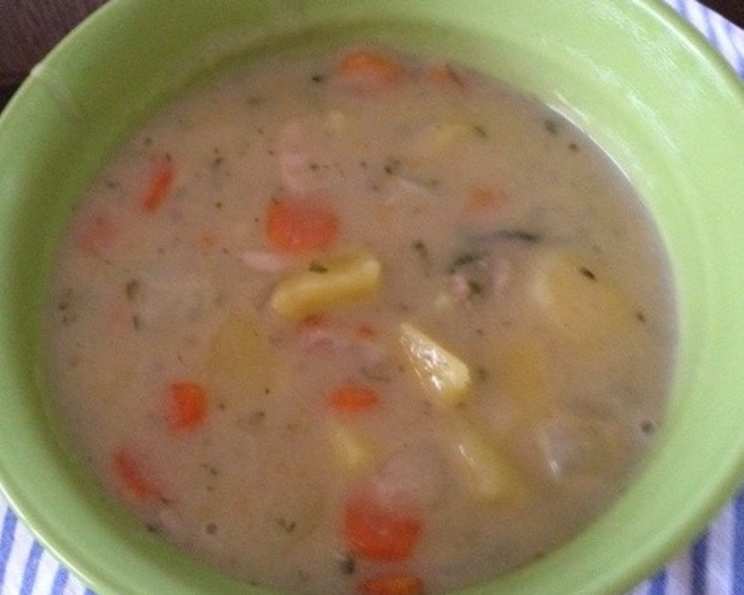
New England Clam Chowder: Dairy-Free and Low-Fat Comfort
The briny air of the Cape always held a promise of clam chowder – thick, creamy, and intensely flavorful. As a child, a steaming bowl of chowder after a windswept day at the beach was pure bliss. The rich aroma, the tender clams, and the satisfying warmth spreading through me… it was the taste of summer. Discovering I had developed a dairy intolerance years later felt like a cruel joke, cutting me off from one of my most cherished food memories. Determined to reclaim that taste of home, I embarked on a mission to create a dairy-free version that didn’t sacrifice a single ounce of that classic New England comfort.
Recipe Overview
- Prep Time: 20 minutes
- Cook Time: 1 hour
- Total Time: 1 hour 20 minutes
- Servings: 6
- Yield: About 8 cups
- Dietary Type: Dairy-Free, Low-Fat
Ingredients
- 1 tablespoon olive oil
- 1 large onion, diced
- 2 large carrots, scraped and diced
- ½ cup flour
- 2 cups clam broth
- 3 cups plain soymilk or 3 cups rice milk
- 2 (6 ½ ounce) cans chopped clams or 2 (6 ½ ounce) cans minced clams
- ½ teaspoon white pepper
- 1 tablespoon dried parsley
- ¾ teaspoon salt
- ½ teaspoon crushed thyme
- 1 bay leaf
- ¼ teaspoon ground black pepper
- 4 cups baking potatoes, peeled and diced into 1-inch cubes
- Salt and pepper, for serving
- Fat-free saltine crackers, for serving
Equipment Needed
- Large stockpot
- Measuring cups and spoons
- Cutting board
- Knife
Instructions
-
In a large stockpot, heat the olive oil over medium heat. Be patient and allow the oil to shimmer slightly before adding the vegetables. This will ensure they don’t steam and develop a richer flavor.
-
Add the diced onions and carrots to the pot and sauté until softened. This typically takes about 5-7 minutes. Stir frequently to prevent burning, and aim for a slight caramelization on the onions to deepen the overall flavor profile.
-
Gradually sift in the flour, stirring thoroughly and scraping the bottom of the pan. This is crucial for creating a smooth, lump-free base for the chowder. Work quickly and methodically to ensure the flour is evenly distributed and doesn’t stick to the bottom. The flour will act as a roux, thickening the chowder.
-
Very gradually stir in the clam broth, scraping the sides and bottom of the pan to make sure the flour is thoroughly incorporated without clumping. Add the broth in small increments, whisking constantly, to prevent lumps from forming. A whisk is your best friend at this stage!
-
Stir in the soymilk (or rice milk) until the mixture is smooth. Again, make sure to fully incorporate the soy or rice milk into the broth to prevent any separation.
-
Add the clams (with their juice), white pepper, dried parsley, salt, crushed thyme, and bay leaf. Stir well to combine all the ingredients. The bay leaf will infuse a subtle, aromatic note into the chowder, so don’t skip it!
-
Bring the soup to a boil, then cover and reduce the heat to low. Simmer for 30 minutes, allowing the flavors to meld together beautifully. A gentle simmer is key here; a rolling boil can cause the soymilk or rice milk to curdle.
-
Add the diced potatoes, cover, and simmer for an additional 30 minutes, or until the potatoes are tender. Check the potatoes for doneness by piercing them with a fork. They should be easily pierced but still hold their shape.
-
Taste and adjust the seasoning with additional salt and pepper, if needed. Remember that the clam broth and clams can be quite salty, so taste before adding more salt.
-
Serve hot with crushed fat-free saltine crackers. A sprinkle of fresh parsley can add a touch of freshness and visual appeal.
Expert Tips & Tricks
- Building Flavor: Don’t rush the sautéing of the onions and carrots. Allowing them to develop a slight caramelization will add a depth of flavor to the chowder.
- Thickening Power: The flour acts as the main thickening agent in this dairy-free chowder. If you prefer a thicker consistency, you can mix 1 tablespoon of cornstarch with 2 tablespoons of cold water to make a slurry. Add this slurry to the chowder during the last 10 minutes of simmering.
- Clam Choice: Using canned clams with their juice adds a significant amount of flavor to the chowder. Don’t discard the juice!
- Herbs: Fresh thyme can be used in place of dried thyme. Use about 1 teaspoon of fresh thyme leaves. Remember to remove the bay leaf before serving.
- Potato Variation: Consider using Yukon Gold potatoes for a creamier texture.
- Make-Ahead Tip: The chowder can be made a day in advance. The flavors will meld together even more beautifully overnight.
Serving & Storage Suggestions
Serve the New England Clam Chowder hot, garnished with crushed fat-free saltine crackers and a sprinkle of fresh parsley. For a heartier meal, consider pairing it with a side of crusty bread or a simple green salad.
Leftover chowder should be stored in an airtight container in the refrigerator. It will keep for up to 3 days. Reheat gently on the stovetop over medium-low heat, stirring occasionally, until heated through. Avoid boiling, as this can cause the soymilk or rice milk to separate.
Freezing is not recommended, as the texture of the potatoes and soymilk/rice milk can change upon thawing.
Nutritional Information
(Estimated per serving)
| Nutrient | Amount per Serving | % Daily Value |
|---|---|---|
| Calories | 290 kcal | 15% |
| Total Fat | 6g | 8% |
| Saturated Fat | 1g | 5% |
| Cholesterol | 25mg | 8% |
| Sodium | 950mg | 40% |
| Total Carbohydrate | 45g | 15% |
| Dietary Fiber | 5g | 20% |
| Sugars | 9g | – |
| Protein | 17g | 34% |
Variations & Substitutions
- Gluten-Free: To make this chowder gluten-free, substitute the all-purpose flour with a gluten-free all-purpose flour blend. Ensure that the gluten-free flour contains xanthan gum or guar gum for binding.
- Vegan: While this recipe is dairy-free, it isn’t strictly vegan due to the clams. For a vegan version, substitute the clams with hearts of palm, chopped and sautéed to mimic the texture of clams, or use a vegan clam substitute if you can find one. Use vegetable broth instead of clam broth, and consider adding a dash of seaweed flakes for a briny flavor.
- Coconut Milk: For a richer, more tropical flavor, you can substitute the soymilk or rice milk with full-fat coconut milk. Note that this will increase the fat content of the chowder.
- Vegetables: Feel free to add other vegetables such as celery or corn to the chowder.
FAQs (Frequently Asked Questions)
Q: Can I use frozen clams instead of canned clams?
A: Yes, you can use frozen clams. Be sure to thaw them completely and drain any excess liquid before adding them to the chowder.
Q: What if my chowder is too thin?
A: If your chowder isn’t thick enough, you can mix 1 tablespoon of cornstarch with 2 tablespoons of cold water and add this slurry to the chowder during the last 10 minutes of simmering.
Q: Can I add bacon to this recipe?
A: Yes, you can add cooked and crumbled bacon for a smoky flavor. Consider using turkey bacon to keep it lower in fat.
Q: Can I use a different type of milk?
A: While soymilk and rice milk are recommended for their neutral flavor and low-fat content, you can experiment with other non-dairy milks such as almond milk or oat milk. Keep in mind that these may alter the flavor and consistency slightly.
Q: How do I prevent the potatoes from becoming mushy?
A: Avoid overcooking the potatoes. Dice them into 1-inch cubes and simmer them until they are tender but still hold their shape.
Final Thoughts
Recreating a beloved classic with dietary restrictions can seem daunting, but this dairy-free and low-fat New England Clam Chowder proves that you don’t have to sacrifice flavor for health. I encourage you to try this recipe and experience the comforting taste of the coast without any compromises. Feel free to experiment with variations and substitutions to make it your own. Share your creations and feedback; I’d love to hear how it turns out! Pair this chowder with a crisp white wine, like a Pinot Grigio, for the ultimate New England experience. Bon appétit!