
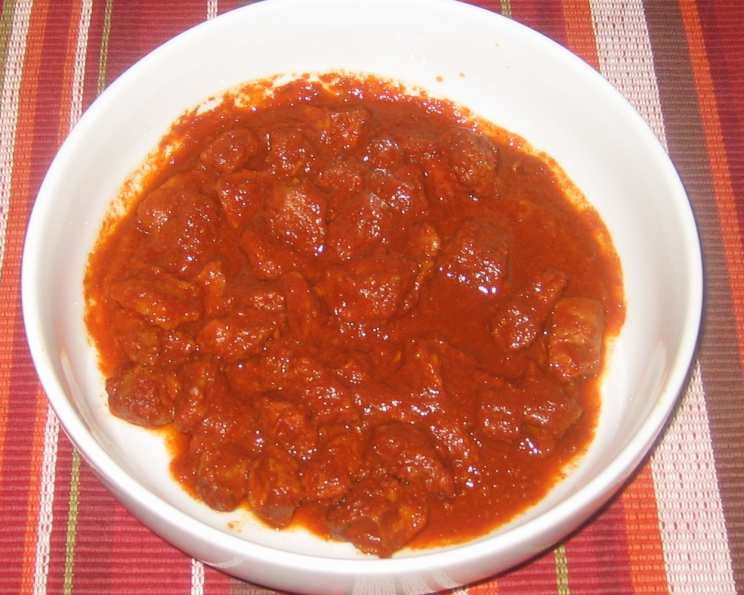
New Mexico Carne Adovada: A Taste of the Southwest
The scent of red chile simmering on the stove instantly transports me back to my childhood summers spent in Santa Fe. My grandmother, a true New Mexican matriarch, would make massive batches of carne adovada in her weathered cast iron pot. The aroma would permeate the entire house, a comforting and intoxicating blend of earthy chiles, savory pork, and fragrant spices. More than just a meal, it was a symbol of family, tradition, and the vibrant flavors of the Southwest. This recipe strives to capture that same warmth and authenticity, bringing a little piece of New Mexico to your table.
Recipe Overview
- Prep Time: 30 minutes
- Cook Time: 1 hour 30 minutes
- Total Time: 2 hours
- Servings: 8
- Yield: Varies depending on use
- Dietary Type: Gluten-Free
Ingredients
- 2 1/2 lbs pork shoulder
- 16 ounces water
- 6 garlic cloves, peeled and roughly chopped
- 1 medium onion, peeled and chopped
- 1 tablespoon salt
- 1/8 teaspoon fresh ground black pepper
- 1/8 teaspoon dried oregano
- 3 ounces red chili peppers, coarsely chopped (New Mexico chiles preferred)
- 2 1/2 ounces red chili powder (Hatch chiles would be perfect)
Equipment Needed
- Cutting Board
- Roasting Pan (approximately 13 by 21-inch)
- Blender
- Oven
Instructions
- Begin by preparing the pork. On a cutting board, cut the pork into 1 1/2-inch cubes.
- Place the pork cubes in a roasting pan (approximately 13 by 21-inch).
- Now, prepare the red chile sauce. Pour the water into a blender.
- Add the garlic, onion, salt, black pepper, oregano, red chili peppers, and red chili powder to the blender.
- Blend all ingredients together until the mixture is as smooth as possible. It’s okay if there are a few small pieces of chili skin remaining.
- Pour the blended red chile sauce over the pork cubes in the roasting pan.
- Toss the pork to ensure that all the cubes are well coated with the sauce. This is crucial for even flavor distribution.
- Preheat your oven to 400 degrees F (200 degrees C).
- Cover the roasting pan tightly with a lid or aluminum foil. This helps to keep the pork moist and tender during cooking.
- Place the covered roasting pan in the preheated oven.
- Bake for 1 1/2 hours, or until the pork is fork-tender. The exact cooking time may vary slightly depending on your oven, so check the pork periodically.
- To check for doneness, pierce a piece of pork with a fork. If the fork slides in easily and the pork pulls apart with minimal resistance, it is ready. If not, continue baking for a few more minutes and check again.
- Once the pork is cooked through, remove the roasting pan from the oven and let it rest for 10 minutes before serving. This allows the juices to redistribute, resulting in a more flavorful and tender final product.
Expert Tips & Tricks
- For a deeper, more complex flavor, toast the dried red chile peppers in a dry skillet over medium heat for a few minutes before blending. Be careful not to burn them, as this will result in a bitter taste.
- If you prefer a spicier carne adovada, add a pinch of cayenne pepper or a few dried chile de arbols to the sauce.
- If you don’t have a blender, you can finely mince the garlic and onion and mix all the sauce ingredients together in a bowl. The texture will be slightly different, but the flavor will still be delicious.
- For a richer sauce, you can add a tablespoon of apple cider vinegar or brown sugar to the blender.
- To make this dish ahead of time, prepare the carne adovada as directed and store it in the refrigerator for up to 3 days. Reheat it in the oven or on the stovetop before serving.
Serving & Storage Suggestions
Carne adovada is incredibly versatile. It can be served on its own as a main course, accompanied by rice, beans, and tortillas. Alternatively, it can be used as a filling for tacos, burritos, or enchiladas. It’s also delicious served over huevos rancheros for a hearty breakfast.
Leftover carne adovada should be stored in an airtight container in the refrigerator. It will keep for up to 3-4 days. You can also freeze it for longer storage, up to 2-3 months. To reheat, thaw it in the refrigerator overnight and then warm it up in the oven, on the stovetop, or in the microwave.
Nutritional Information
| Nutrient | Amount per Serving | % Daily Value |
|---|---|---|
| Calories | 374.7 kcal | N/A |
| Calories from Fat | 242 g | 65% |
| Total Fat | 26.9 g | 41% |
| Saturated Fat | 9.1 g | 45% |
| Cholesterol | 100.6 mg | 33% |
| Sodium | 1124 mg | 46% |
| Total Carbohydrate | 7.7 g | 2% |
| Dietary Fiber | 3.8 g | 15% |
| Sugars | 1.9 g | 7% |
| Protein | 26.1 g | 52% |
Variations & Substitutions
- For a vegetarian option, substitute the pork shoulder with butternut squash or sweet potatoes, cut into 1 1/2-inch cubes. Adjust the cooking time accordingly.
- If you can’t find dried red chili peppers, you can use canned diced tomatoes with green chiles (like Rotel) and increase the amount of red chili powder to taste.
- For a smoky flavor, add a teaspoon of smoked paprika to the sauce.
- If you prefer a milder flavor, remove the seeds and veins from the red chili peppers before blending.
- To make it spicier, try using a combination of different types of chiles, such as guajillo, ancho, and pasilla.
FAQs (Frequently Asked Questions)
Q: What kind of red chile powder should I use?
A: Authentic New Mexico red chile powder is ideal, especially Hatch chile powder if you can find it. Otherwise, any good quality red chile powder will work, but be mindful of the spice level.
Q: Can I use a different cut of pork?
A: While pork shoulder is the traditional choice due to its marbling and ability to become tender during slow cooking, you can use pork butt or even pork loin if you prefer a leaner option, though the cooking time might need adjusting.
Q: How do I adjust the spice level?
A: To reduce the spice, remove the seeds and veins from the dried red chiles before blending. To increase the heat, add a pinch of cayenne pepper or a few dried chile de arbols to the sauce.
Q: Can I make this in a slow cooker?
A: Yes, you can. Follow the same preparation steps and then cook on low for 6-8 hours or on high for 3-4 hours, or until the pork is fork-tender.
Q: What is the best way to serve carne adovada?
A: Carne adovada is delicious on its own with rice and beans, but it’s also fantastic as a filling for tacos, burritos, and enchiladas. Don’t forget to garnish with your favorite toppings, such as shredded cheese, sour cream, and guacamole.
Final Thoughts
Carne adovada is more than just a recipe; it’s an experience. It’s a journey to the heart of New Mexico, a celebration of rich flavors and time-honored traditions. I encourage you to try this recipe and create your own memories around this iconic dish. Don’t be afraid to experiment with different chile varieties and spice levels to find your perfect balance. Pair it with a cold cerveza or a refreshing margarita and enjoy the taste of the Southwest. And most importantly, share it with the people you love.