
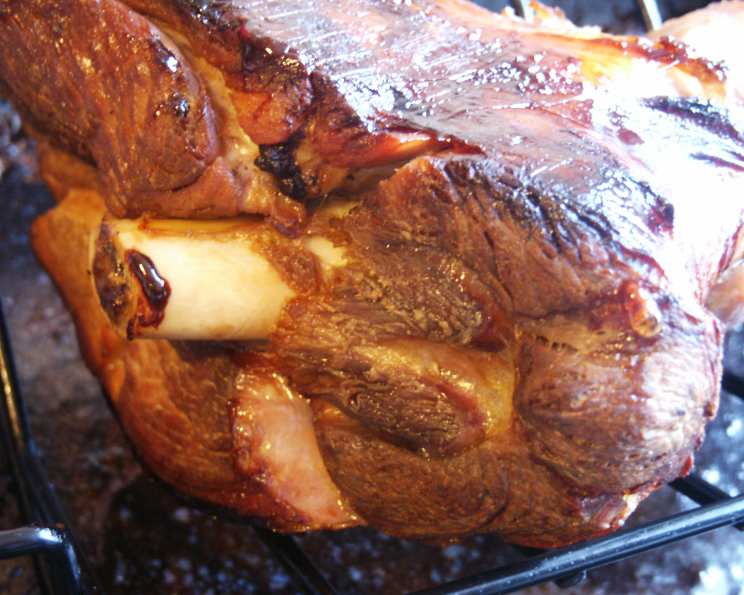
New Zealand High Country Sheep Station Roast Lamb
The aroma still brings me back. I remember clear, crisp autumn days on my grandfather’s farm, the scent of woodsmoke mingling with the savory promise of roast lamb drifting from the kitchen window. It was a simple, honest meal, a celebration of the land and the hard work that went into it, a taste of home served with laughter and stories around a well-worn table. This recipe, passed down through generations, embodies that spirit: uncomplicated, flavorful, and deeply satisfying.
Recipe Overview
- Prep Time: 10 minutes
- Cook Time: 3-3.25 hours
- Total Time: 3.25-3.5 hours
- Servings: 4-6
- Yield: 1 roast leg of lamb
- Dietary Type: Gluten-Free, Dairy-Free (as prepared)
Ingredients
- 4 lbs leg of lamb (bone in, approximately 2 kg)
- 1/4 cup soy sauce
- 2 tablespoons sugar
- Pepper, to taste
- Salt, to taste
Equipment Needed
- Roasting dish
- Metal rack (optional, for elevating the meat)
- Oven
- Meat thermometer or skewer
- Clean tea towel
Instructions
- Preheat your oven to 450°F (225°C). Make sure your oven rack is positioned in the center of the oven.
- Prepare the lamb by patting it dry with paper towels. This helps the soy sauce adhere properly.
- Pour a small amount of soy sauce into the palm of your hand.
- Rub the soy sauce all over the leg of lamb, ensuring every surface is coated. Repeat this process until the entire leg is “painted” with soy sauce. Think of this as your flavor base; don’t skimp!
- Next, rub the sugar evenly over the entire lamb leg. This will create a beautiful crust as it roasts.
- Generously season the lamb with salt and pepper, ensuring both sides are well-covered. Don’t be shy; the seasoning will penetrate the meat during cooking.
- Place a metal rack inside your roasting dish. This elevates the meat, preventing it from simmering in its own juices and allowing for more even roasting. If you don’t have a rack, it’s perfectly fine to place the lamb directly in the roasting dish.
- Place the seasoned leg of lamb into the roasting dish.
- Cover the roasting dish tightly with a lid or aluminum foil. This is crucial for the initial searing process.
- Roast in the preheated hot oven for 15 minutes.
- After 15 minutes, carefully remove the roasting dish from the oven and turn the lamb leg over. Be cautious, as there will be hot juices in the dish.
- Roast for another 15 minutes, still covered, to seal in the juices on the other side.
- Reduce the oven temperature to 375°F (190°C).
- Remove the lid or foil from the roasting dish.
- Continue roasting the lamb, uncovered, for a further 2.5 to 3 hours. Turn the lamb leg over halfway through the cooking time to ensure even browning.
- The cooking time will depend on how well-done you prefer your lamb. For medium-well, aim for an internal temperature of 155-160°F (68-71°C). For well-done, aim for 165°F (74°C) or higher.
- To check for doneness, insert a meat thermometer into the thickest part of the lamb leg, avoiding the bone. Alternatively, use a skewer; if the juices run clear when the skewer is inserted, the lamb is cooked. If the juices are still pink, continue cooking for a bit longer.
- Once the lamb is cooked to your liking, remove it from the oven and transfer it to a cutting board.
- Rest the lamb for at least 20 minutes before carving. This allows the meat fibers to relax and reabsorb the juices, resulting in a more tender and flavorful roast.
- While the lamb is resting, cover it loosely with a clean tea towel to keep it warm.
- Carve the lamb against the grain into thin slices and serve immediately.
Expert Tips & Tricks
- Browning Boost: For an even deeper, richer crust, you can brush the lamb with a mixture of honey and soy sauce during the last 30 minutes of cooking.
- Aromatic Infusion: Add sprigs of fresh rosemary or thyme to the roasting dish during the last hour of cooking to infuse the lamb with herbaceous flavors.
- Meat Thermometer is Key: While the skewer test works, a meat thermometer provides the most accurate indication of doneness, ensuring your lamb is cooked to perfection.
- Gravy Gold: Don’t discard the pan drippings! These flavorful juices can be used to create a delicious gravy. Simply skim off any excess fat and thicken the remaining juices with a slurry of cornstarch and water. Season to taste.
- Mutton Magic: If using mutton instead of lamb, increase the initial cooking time at the higher temperature by an additional 30 minutes before reducing the heat. Mutton benefits from a longer, slower cooking process to tenderize the meat.
Serving & Storage Suggestions
Serve the roast lamb hot, carved into slices, alongside your favorite side dishes. Classic accompaniments include roast potatoes, green beans, peas, and carrots. Mint sauce, a rich gravy, or a simple pan jus are perfect for drizzling over the lamb.
Leftover roast lamb can be stored in an airtight container in the refrigerator for up to 3-4 days. To reheat, gently warm the lamb in a low oven (around 300°F or 150°C) or in a skillet with a little broth to prevent it from drying out. Sliced lamb can also be frozen for up to 2-3 months.
Nutritional Information
| Nutrient | Amount per Serving | % Daily Value |
|---|---|---|
| Calories | 850 kcal | 43% |
| Total Fat | 55g | 85% |
| Saturated Fat | 24g | 120% |
| Cholesterol | 280mg | 93% |
| Sodium | 1100mg | 46% |
| Total Carbohydrate | 6g | 2% |
| Dietary Fiber | 0g | 0% |
| Sugars | 5g | N/A |
| Protein | 75g | 150% |
Note: Nutritional information is an estimate and may vary based on specific ingredients and cooking methods.
Variations & Substitutions
- Gluten-Free Variation: Ensure the soy sauce you are using is gluten-free. Tamari is a good substitute.
- Herb Crust: Before roasting, create a paste of fresh herbs (rosemary, thyme, garlic), olive oil, and breadcrumbs (or gluten-free breadcrumbs) and press it onto the lamb.
- Spice Rub: For a spicier kick, add a pinch of chili flakes or a dash of smoked paprika to the salt and pepper mixture.
- Vegetable Boost: Add chopped vegetables such as carrots, onions, and celery to the roasting dish to create a flavorful base for the gravy.
FAQs (Frequently Asked Questions)
Q: Why is it important to rest the lamb after cooking?
A: Resting allows the meat fibers to relax and reabsorb the juices, resulting in a more tender and flavorful roast. Cutting into the lamb immediately after cooking will cause the juices to run out, leaving you with a drier piece of meat.
Q: Can I use a different cut of lamb for this recipe?
A: While this recipe is specifically designed for a leg of lamb, you could adapt it for a shoulder of lamb. The cooking time will need to be adjusted, as the shoulder typically requires a longer, slower cooking process.
Q: What is the best way to carve a leg of lamb?
A: Place the lamb leg on a cutting board with the bone facing up. Use a sharp carving knife to cut thin slices against the grain, starting from the top and working your way down.
Q: Can I make this recipe in a slow cooker?
A: While not traditional, you can adapt this recipe for a slow cooker. Sear the lamb leg in a skillet before transferring it to the slow cooker with the soy sauce, sugar, and seasonings. Cook on low for 6-8 hours, or until the lamb is very tender.
Q: Is it necessary to use a roasting rack?
A: While a roasting rack is helpful for elevating the meat and promoting even cooking, it is not essential. If you don’t have a rack, you can place the lamb directly in the roasting dish.
Final Thoughts
This New Zealand High Country Sheep Station Roast Lamb is more than just a recipe; it’s a taste of tradition, a celebration of simple flavors, and a reminder of the importance of sharing good food with loved ones. I encourage you to try this recipe and experience the warmth and satisfaction that it brings. Don’t be afraid to experiment with variations and personalize it to your liking. And most importantly, share your creations with family and friends, creating your own memories around this timeless dish. Serve with a robust Pinot Noir for a truly authentic Kiwi experience. Enjoy!