
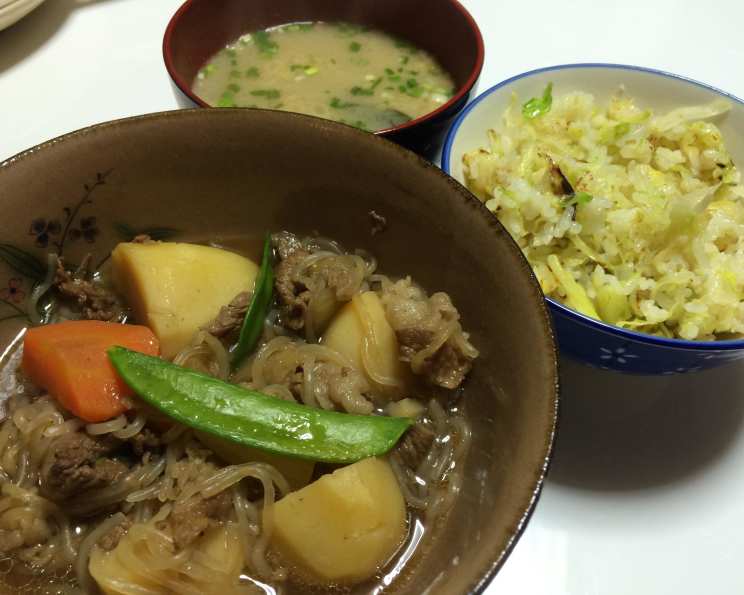
Nikujaga: A Taste of Home
The scent of simmering soy sauce and sweet mirin always transports me back to my college days. My tiny apartment, usually filled with the aroma of instant ramen, would transform into a haven of comfort whenever my Japanese host mother, Mrs. Tanaka, visited. Her signature Nikujaga, a humble stew of beef, potatoes, and onions, was more than just food; it was a warm hug on a cold day, a reminder of home, and a lesson in the simple elegance of Japanese cuisine. The savory-sweet aroma would fill every corner of the room, chasing away the lingering scent of textbooks and deadlines, and replacing it with the promise of something truly nourishing.
Recipe Overview
- Prep Time: 25 minutes
- Cook Time: 30 minutes
- Total Time: 55 minutes
- Servings: 4
- Dietary Type: Adaptable (Can be Gluten-Free with Tamari)
Ingredients
- 1 large onion
- ½ carrot
- 2 medium potatoes
- 225 g (½ pound) thinly sliced meat (usually beef, but pork is fine, too)
- 1 (5-7 ounce) package shirataki noodles
- 4 snow peas (can use green beans)
- 1 tablespoon vegetable oil
- 2 cups dashi stock (check your Asian market, make your own or substitute beef broth)
Seasonings (may want to bump these up a little for more flavor)
- 4 tablespoons mirin
- 4 tablespoons soy sauce
- 2 tablespoons sake
- 1 tablespoon sugar
Equipment Needed
- Large pot or Dutch oven
- Cutting board
- Knife
- Measuring spoons
- Colander
Instructions
-
Prepare the dashi stock or beef broth. If using instant dashi powder, follow package directions. Homemade dashi is ideal for a richer, more authentic flavor.
-
Prepare the vegetables: Cut the onion into 10-12 wedges. Peel and cut the carrot in half lengthwise and then cut diagonally into about 1-inch pieces. Cut the potatoes into large bite-sized chunks (they may cook down some) and put them in water to prevent discoloration.
-
Remove the strings from the snow peas and boil them for 30 seconds. Set them aside. This quick blanching helps retain their vibrant color and crispness. If using green beans, trim the ends and cut them into 1-inch pieces.
-
Rinse and drain the shirataki noodles and boil them for 1 minute. You may wish to cut them in half for easier eating. Set them aside. Boiling shirataki noodles helps to remove any residual odor and softens them slightly.
-
Cut the thinly sliced meat in half, if necessary. This ensures more even cooking and prevents the meat from clumping together.
-
Heat the vegetable oil in a large pot or Dutch oven over medium-high heat. Add the onion and the meat and cook until the meat is no longer pink. Stir frequently to prevent sticking.
-
Add the potatoes, carrots, and shirataki noodles to the pot. Then, add the dashi stock and the seasonings (mirin, soy sauce, sake, and sugar). Remember to taste and adjust the seasonings to your preference; a little extra soy sauce or sugar can enhance the overall flavor.
-
Bring the mixture to a boil, then turn down the heat to low, skim off any scum that rises to the surface. This step helps to create a cleaner, clearer broth.
-
Place an “otoshibuta” (or a piece of aluminum foil, folded round to fit in the pan on top of the mixture and with a hole poked in the middle for ventilation) on top of the mixture. This helps to distribute the heat evenly and prevents the potatoes from drying out. Simmer for about 15 minutes, or until the vegetables are cooked and tender. Check the potatoes with a fork to ensure they are easily pierced.
-
Turn off the heat, remove the “otoshibuta” or foil, and let the Nikujaga stand for at least 30 minutes before heating it up to serve, or plan to serve it the next day. Letting the stew sit allows the flavors to meld together and deepen. Nikujaga often tastes even better the next day!
-
Once heated again, top with the snow peas and serve immediately. The snow peas should be added at the very end to maintain their bright green color and crisp texture.
Expert Tips & Tricks
- Browning the Beef: Don’t overcrowd the pot when browning the beef. Work in batches if necessary to ensure each piece gets a good sear, which adds depth of flavor to the dish.
- Sweetness Adjustment: If you prefer a less sweet Nikujaga, start with a smaller amount of sugar and add more to taste.
- Potato Variety: Russet potatoes will create a creamier, thicker sauce, while Yukon Gold potatoes will hold their shape better.
- Dashi Alternatives: If you don’t have dashi on hand, a good quality beef broth can be substituted. For a vegetarian option, try using shiitake mushroom broth.
Serving & Storage Suggestions
Serve Nikujaga hot, garnished with fresh snow peas for a pop of color. It’s delicious on its own or served with a bowl of steamed rice and a side of pickled vegetables. Leftovers can be stored in an airtight container in the refrigerator for up to 3 days. To reheat, gently warm on the stovetop over low heat, stirring occasionally, or microwave in short intervals until heated through. Nikujaga can also be frozen for up to 2 months. Thaw overnight in the refrigerator before reheating.
Nutritional Information
| Nutrient | Amount per Serving | % Daily Value |
|---|---|---|
| Calories | 350 kcal | 18% |
| Total Fat | 15g | 23% |
| Saturated Fat | 5g | 25% |
| Cholesterol | 75mg | 25% |
| Sodium | 800mg | 35% |
| Total Carbohydrate | 35g | 12% |
| Dietary Fiber | 5g | 20% |
| Sugars | 10g | |
| Protein | 20g | 40% |
Variations & Substitutions
- Gluten-Free: Use tamari instead of soy sauce to make the dish gluten-free.
- Vegetarian: Substitute the beef with firm tofu or shiitake mushrooms. Use vegetable broth instead of dashi or beef broth.
- Spicy Nikujaga: Add a pinch of red pepper flakes or a small amount of gochujang to the seasoning mixture for a spicy kick.
- Winter Vegetables: In the winter, try adding burdock root (gobo) or kabocha squash for a heartier, more seasonal dish.
FAQs (Frequently Asked Questions)
Q: Can I make this ahead of time?
A: Absolutely! Nikujaga actually tastes better the next day as the flavors meld together. Store it in the refrigerator and reheat before serving.
Q: Can I use a different type of meat?
A: Yes, pork is a popular alternative to beef. You can also use thinly sliced chicken thighs.
Q: What is dashi, and can I substitute it?
A: Dashi is a Japanese soup stock made from kombu (kelp) and katsuobushi (dried bonito flakes). If you don’t have dashi, you can substitute beef broth or vegetable broth.
Q: Why do I need to soak the potatoes in water?
A: Soaking the potatoes in water helps to remove excess starch, which prevents them from becoming mushy during cooking.
Q: Can I freeze Nikujaga?
A: Yes, Nikujaga freezes well. Allow it to cool completely before transferring it to an airtight container and freezing for up to 2 months.
Final Thoughts
Nikujaga is more than just a recipe; it’s a culinary story, a memory, and a comforting embrace in a bowl. I urge you to try this recipe and experience the heartwarming flavors of this classic Japanese dish. Don’t be afraid to experiment with the seasonings and adjust them to your liking. Whether you’re a seasoned chef or a beginner cook, Nikujaga is a forgiving and rewarding dish that will surely become a favorite. Serve it with a crisp, dry sake for a truly authentic Japanese experience, and don’t hesitate to share your feedback and variations!