
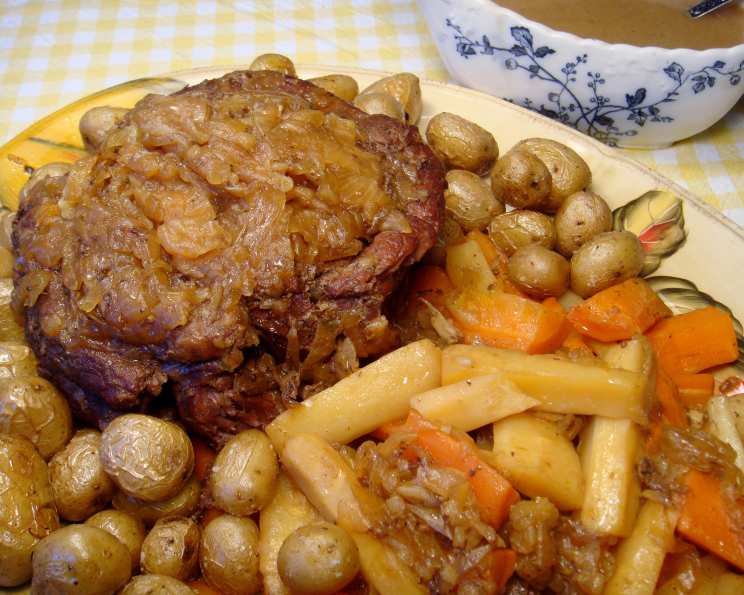
No-Fuss Pot Roast With Vegetables: A Culinary Classic
I still remember the comforting aroma that would fill my grandmother’s kitchen every Sunday. It was the unmistakable scent of a pot roast, slow-cooking to tender perfection. The anticipation was almost unbearable as a child, knowing that soon, I’d be enjoying fork-tender beef, sweet carrots, and melt-in-your-mouth potatoes, all bathed in a rich, savory gravy. It was more than just a meal; it was a tradition, a symbol of family and warmth, a memory I cherish and try to recreate in my own kitchen.
Recipe Overview
- Prep Time: 20 minutes
- Cook Time: 3 hours 25 minutes
- Total Time: 3 hours 45 minutes
- Servings: 12
- Yield: 1 pot roast
- Dietary Type: Gluten-Free (can be modified), Dairy-Free
Ingredients
- 3 lbs rump roast (or bottom round)
- 2 tablespoons olive oil or canola oil
- ¾ cup beef broth
- ¾ cup brewed coffee (or dry red wine)
- 2 teaspoons fresh thyme leaves (or ½ teaspoon dry thyme)
- 1 teaspoon sea salt
- 1 teaspoon pepper
- 2 garlic cloves, minced
- 2 Vidalia onions, thinly sliced & separated into rings
- 8 medium carrots, cut into 1-1/2 inch pieces
- 12 small new potatoes (baby reds or fingerlings)
- ½ cup water
- 2 tablespoons all-purpose flour (or gluten-free flour for GF option)
Equipment Needed
- Large skillet
- Dutch oven or large roasting pan
- Small bowl
- Whisk
- Spoon or ladle
Instructions
-
Preheat your oven to 350°F (175°C). (See below for crock-pot instructions if you prefer that method.)
-
In a large skillet, heat the olive oil or canola oil over medium heat. Once the oil is shimmering, carefully place the rump roast into the skillet. Brown the roast on all sides until a rich, golden crust forms. This searing process is crucial, as it locks in the juices and enhances the overall flavor of the roast. It also releases fat, contributing to a moister final product.
-
In a small bowl, whisk together the beef broth, brewed coffee (or dry red wine), fresh thyme leaves (or dry thyme), sea salt, pepper, and minced garlic. Set aside this flavorful liquid.
-
Lightly spray a Dutch oven or large roasting pan with non-stick cooking spray. This will help prevent sticking and make cleanup easier.
-
Place the seared roast in the center of the prepared Dutch oven or roasting pan. Pour the beef broth mixture evenly around the roast. Arrange the thinly sliced Vidalia onions around the roast, distributing them as evenly as possible.
-
Cover the Dutch oven or roasting pan tightly with a lid or aluminum foil. Place it in the preheated oven and bake for 2 ½ hours.
-
While the roast is baking, you can prepare the vegetables. At about the 2-hour mark, wash and cut the carrots into 1-1/2 inch pieces. If your new potatoes are large, cut them in half or quarters to ensure even cooking.
-
After the initial 2 ½ hours of baking, carefully remove the Dutch oven or roasting pan from the oven. Add the sliced carrots and new potatoes to the sides of the roast, nestling them in the broth.
-
Cover the pan again and return it to the oven. Continue baking for another 1 to 1 ½ hours, or until the vegetables are tender and the roast is cooked through. A fork should easily pierce the beef with minimal resistance when it’s done. The internal temperature of the roast should reach at least 190°F (88°C) for optimal tenderness.
-
Once the roast and vegetables are cooked, carefully remove them from the roasting pan to a serving platter. Cover the platter loosely with foil to keep everything warm while you prepare the gravy.
-
Skim off any excess fat from the drippings remaining in the roasting pan. You can use a spoon or a fat separator for this step. Place the pan on the stovetop over medium-low heat, keeping the drippings warm (but not boiling – a gentle simmer is ideal).
-
In a small bowl, whisk together the all-purpose flour (or gluten-free flour) and water until smooth, ensuring there are no lumps.
-
Gradually add the flour mixture to the simmering drippings in very small increments, whisking constantly to prevent lumps from forming. The key to a smooth gravy is to avoid boiling the liquid and to whisk continuously.
-
Continue cooking the gravy for 2-4 minutes, or until it has thickened to your desired consistency and the flour taste has cooked out. Remove the gravy from the heat.
-
Slice the beef roast thinly against the grain. Serve the sliced beef with the cooked vegetables and generous ladles of the flavorful gravy.
Crock-Pot Instructions:
-
Spray the inside of your crock-pot lightly with non-stick cooking spray.
-
Place the sliced onions, carrots, and potatoes in the bottom of the crock-pot.
-
Place the seared roast on top of the vegetables.
-
Pour the beef broth mixture around the roast.
-
Cover the crock-pot with the lid and cook on low heat for 8-10 hours, or until the roast is very tender and easily shreds with a fork. If you prefer a faster cooking time, cook on high heat for 4-5 hours, but be sure to check the tenderness of the roast and vegetables periodically.
Expert Tips & Tricks
- Browning is Key: Don’t skip the browning step! It adds depth of flavor and improves the final result.
- Deglaze the Pan: After browning the roast, you can deglaze the skillet with a splash of red wine or beef broth before adding it to the Dutch oven. This will loosen any browned bits from the bottom of the pan, adding even more flavor to the gravy.
- Low and Slow: The key to a tender pot roast is low and slow cooking. Resist the urge to increase the oven temperature, as this can result in a tough, dry roast.
- Check for Doneness: Use a fork to check the tenderness of the roast. It should easily pierce the meat with minimal resistance.
- Adjust Seasoning: Taste the gravy before serving and adjust the seasoning as needed. You may want to add a pinch more salt, pepper, or thyme to enhance the flavors.
- Thicken the Gravy: If your gravy is too thin, you can whisk together a tablespoon of cornstarch with a tablespoon of cold water and add it to the simmering gravy. Cook for a minute or two, until thickened.
Serving & Storage Suggestions
Serve the sliced pot roast hot with the cooked vegetables and plenty of gravy. Garnish with fresh parsley or thyme for added visual appeal.
Leftovers can be stored in an airtight container in the refrigerator for up to 3-4 days. To reheat, gently warm the roast, vegetables, and gravy in a saucepan over low heat, or in the microwave.
For longer storage, you can freeze the pot roast for up to 2-3 months. Thaw it overnight in the refrigerator before reheating.
Nutritional Information
| Nutrient | Amount per Serving | % Daily Value |
|---|---|---|
| Calories | 406 kcal | |
| Fat | 16.4 g | 25% |
| Saturated Fat | 5.8 g | 29% |
| Cholesterol | 85 mg | 28% |
| Sodium | 349.5 mg | 14% |
| Carbohydrate | 36.6 g | 12% |
| Fiber | 5.3 g | 21% |
| Sugars | 4 g | |
| Protein | 27.9 g | 55% |
Note: Nutritional information is an estimate and can vary based on specific ingredients and portion sizes.
Variations & Substitutions
- Wine Substitution: If you don’t have coffee or red wine on hand, you can use beef broth or even water as a substitute. However, the coffee or wine will add a richer, more complex flavor to the dish.
- Vegetable Variations: Feel free to add other vegetables to the pot roast, such as parsnips, turnips, or celery.
- Spice it Up: Add a pinch of red pepper flakes to the broth mixture for a hint of spice.
- Gluten-Free: Use gluten-free all-purpose flour for thickening the gravy to make the dish gluten-free.
FAQs (Frequently Asked Questions)
Q: Can I use a different cut of beef?
A: Yes, you can substitute the rump roast with bottom round or chuck roast. These cuts are also well-suited for slow cooking and will become tender and flavorful.
Q: Can I make this ahead of time?
A: Absolutely! Pot roast is a great make-ahead dish. It actually tastes even better the next day after the flavors have had time to meld.
Q: How do I prevent the vegetables from getting mushy?
A: To prevent mushy vegetables, add them to the pot roast during the last hour of cooking. This will allow them to become tender without overcooking.
Q: Can I use dried herbs instead of fresh?
A: Yes, you can substitute dried herbs for fresh. Use about half the amount of dried herbs as you would fresh herbs.
Q: What do I do if my roast is tough?
A: If your roast is tough, it likely needs to cook longer. Return it to the oven or crock-pot and continue cooking until it is fork-tender.
Final Thoughts
This no-fuss pot roast recipe is a testament to the simple joys of home cooking. With minimal effort and readily available ingredients, you can create a dish that is both comforting and deeply satisfying. I encourage you to try this recipe and experience the magic of a perfectly cooked pot roast. Don’t hesitate to experiment with variations and substitutions to make it your own. And most importantly, share it with loved ones and create lasting memories around the table. Pair it with a crusty bread for soaking up all that delicious gravy and a glass of your favorite red wine. Happy cooking!