
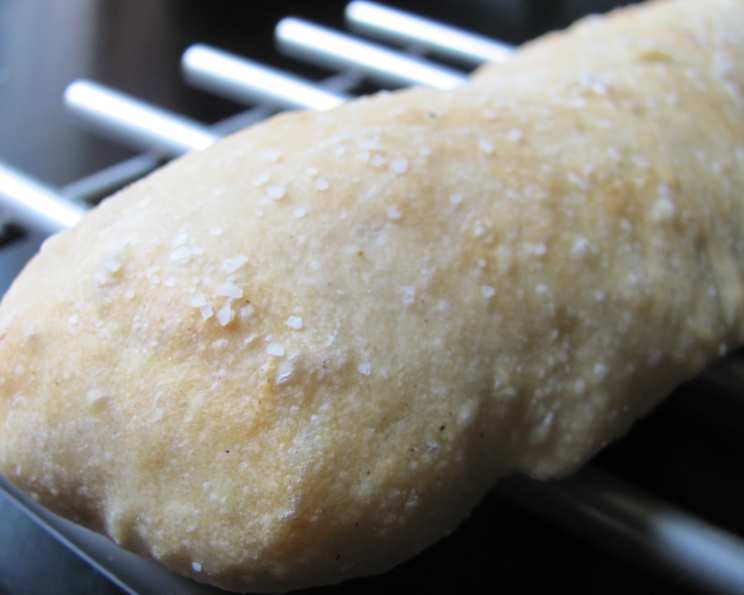
No-Knead Small Baguette (Stecca): A Taste of Italy at Home
I still remember the first time I tasted a truly exceptional baguette. It wasn’t in Paris, as one might expect, but in a small trattoria nestled in the hills of Tuscany. The stecca, as the locals called it, was served alongside a simple platter of olives and cheese. Its rustic charm, the crispness of the crust, and the airy, slightly chewy interior captivated me. Each bite was an explosion of flavor, a testament to the simple beauty of well-made bread. I knew I had to learn the secrets to create this magic at home, and this no-knead recipe brings me right back to that sun-drenched Italian afternoon.
Recipe Overview
- Prep Time: 25 minutes
- Rise Time: 13-20 hours
- Cook Time: 15-25 minutes
- Total Time: 13 hours 40 minutes to 20 hours 50 minutes
- Yields: 4 thin loaves
- Serves: 4
- Dietary Type: Vegetarian
Ingredients
- 3 cups bread flour
- ½ teaspoon table salt
- ¾ teaspoon sugar
- ¼ teaspoon instant yeast or ¼ teaspoon other active dry yeast
- 1 ½ cups cool water (55 – 65 degrees)
- Flour, for dusting
- ¼ cup extra-virgin olive oil
- ¾ teaspoon coarse sea salt
- Optional additions for variations: cherry tomatoes, large pitted olives, or garlic cloves
Equipment Needed
- Medium bowl
- Wooden spoon or your hand
- Bowl scraper or rubber spatula
- Tea towel
- 13-by-18-by-1-inch baking sheet
- Cooling rack
Instructions
-
In a medium bowl, stir together the bread flour, table salt, sugar, and yeast. Make sure the yeast isn’t old; this can impact the rise significantly.
-
Add the cool water and, using a wooden spoon or your hand, mix until you have a wet, sticky dough, about 30 seconds. Don’t overmix; the beauty of no-knead is its simplicity.
-
Cover the bowl and let sit at room temperature until the surface is dotted with bubbles and the dough is more than doubled in size, 12 to 18 hours. This long, slow fermentation is key to developing the complex flavors of the stecca. This can vary based on room temperature; check at 12 hours and allow up to 18 if needed.
-
When the first rise is complete, generously dust a work surface with flour. This prevents sticking and makes handling the dough much easier.
-
Use a bowl scraper or rubber spatula to scrape the dough out of the bowl in one piece. Try to handle it gently to avoid deflating it too much.
-
Fold the dough over itself two or three times and gently shape it into a somewhat flattened ball. This helps develop some structure in the dough.
-
Brush the surface of the dough with some of the olive oil and sprinkle with ¼ teaspoon of the coarse salt (which will gradually dissolve on the surface). The olive oil adds flavor and helps create a beautiful crust.
-
Place a tea towel on your work surface and generously dust it with wheat bran, cornmeal, or flour. The generous dusting is crucial to prevent sticking during the second rise.
-
Gently place the dough on the towel, seam side down. If the dough is tacky, dust the top lightly with wheat bran, cornmeal, or flour.
-
Fold the ends of the tea towel loosely over the dough to cover it and place in a warm, draft-free spot to rise for 1 to 2 hours. A slightly warm oven (turned off!) works well.
-
The dough is ready when it is almost doubled. If you gently poke it with your finger, it should hold the impression. If it springs back, let it rise for another 15 minutes. This is a critical step; don’t rush it.
-
Half an hour before the end of the second rise, preheat the oven to 500°F (260°C), with a rack in the center. A hot oven is essential for a crisp crust.
-
Oil a 13-by-18-by-1-inch baking sheet. This will prevent the stecca from sticking and contribute to a golden-brown bottom.
-
Cut the dough into quarters. Use a bench scraper or a sharp knife.
-
Gently stretch each piece evenly into a stick shape approximately the length of the pan. Handle gently to preserve airiness.
-
Place on the pan, leaving at least 1 inch between the loaves. This allows for proper air circulation and even baking.
-
Brush with olive oil and sprinkle with the remaining ½ teaspoon coarse salt. Don’t be shy with the olive oil; it adds so much flavor.
-
Bake the baguettes for 15 to 25 minutes, until the crust is golden brown. The baking time will vary depending on your oven, so keep a close eye on them.
-
Keep an eye on them during the last few minutes of baking because the tips can get burnt very quickly.
-
Cool on the pan for 5 minutes, then use a spatula to transfer the stecca to a rack to cool thoroughly. Allowing them to cool slightly on the pan prevents them from sticking.
Expert Tips & Tricks
- Adjust oven temperature: If your oven tends to run hot, reduce the temperature by 25°F (15°C).
- Use a pizza stone: Preheat a pizza stone on the bottom rack of your oven for even crispier results. Place the baking sheet directly on the hot stone.
- Hydration matters: The hydration level of this dough is high. Don’t be tempted to add more flour during the initial mixing. Trust the process.
- Dough strength: If you find the dough too slack, you can add a tablespoon or two of vital wheat gluten to the flour mixture. This will add more structure.
- Overnight proofing: For a tangier flavor, let the dough rise in the refrigerator overnight. Bring it to room temperature for about an hour before shaping.
Serving & Storage Suggestions
Serve the stecca warm or at room temperature. It’s delicious on its own, with olive oil and balsamic vinegar, or as an accompaniment to soups and salads. It also makes fantastic sandwiches. Store leftover stecca in a paper bag at room temperature for up to 2 days. To revive slightly stale bread, lightly sprinkle with water and bake in a preheated oven at 350°F (175°C) for 5-10 minutes. You can also freeze the baked stecca for up to 2 months. Thaw completely before reheating. Be mindful that the baguettes may become a bit soggy in just a few hours because of the salt on the surface. If that happens, reheat the loaves in a hot oven until crisp.
Nutritional Information
| Nutrient | Amount per Serving | % Daily Value |
|---|---|---|
| Calories | 464.4 kcal | N/A |
| Calories from Fat | 129 g | 28% |
| Total Fat | 14.4 g | 22% |
| Saturated Fat | 2 g | 10% |
| Cholesterol | 0 mg | 0% |
| Sodium | 731.7 mg | 30% |
| Total Carbohydrate | 72.4 g | 24% |
| Dietary Fiber | 2.6 g | 10% |
| Sugars | 1 g | 4% |
| Protein | 9.8 g | 19% |
Note: Nutritional information is an estimate and may vary based on specific ingredients and portion sizes.
Variations & Substitutions
- Stecca Pomodori, all’Olive, o al’Aglio (Stecca with Tomatoes, Olives, or Garlic): Push 10 cherry tomato halves, cut side up, 10 large pitted olives, or 10 lightly crushed garlic cloves into each formed stecca, taking care to space the additions evenly down the length of the dough.
- Herb-infused oil: Infuse the olive oil with your favorite herbs, such as rosemary, thyme, or oregano, for a more flavorful stecca.
- Whole wheat version: Substitute up to half of the bread flour with whole wheat flour for a nuttier flavor and added fiber.
- Spicy stecca: Add a pinch of red pepper flakes to the dough for a little heat.
- Cheese stecca: Sprinkle grated Parmesan or Asiago cheese on top of the stecca before baking.
FAQs (Frequently Asked Questions)
Q: Can I use all-purpose flour instead of bread flour?
A: Bread flour is recommended for its higher protein content, which creates a chewier texture. However, all-purpose flour can be used in a pinch, but the stecca may be slightly less chewy.
Q: Can I make the dough ahead of time and bake it later?
A: Yes, you can refrigerate the dough after the first rise for up to 24 hours. Let it come to room temperature for about an hour before proceeding with the recipe.
Q: Why is my stecca soggy?
A: The stecca can become soggy if it’s not cooled properly or if it’s stored in an airtight container. Make sure to cool it completely on a wire rack and store it in a paper bag.
Q: My dough didn’t rise. What could be the reason?
A: The most common reason is that the yeast is old or inactive. Make sure to use fresh yeast and check the expiration date. Also, the water temperature should be between 55-65 degrees Fahrenheit.
Q: Can I use a different type of salt?
A: While coarse sea salt is recommended for its flavor and texture, you can substitute it with kosher salt or another type of coarse salt. Just be mindful of the saltiness and adjust accordingly.
Final Thoughts
This no-knead stecca recipe is a testament to the fact that you don’t need fancy equipment or complicated techniques to create incredible bread at home. It’s a forgiving recipe, perfect for both beginner bakers and seasoned pros. I encourage you to give it a try, experiment with different variations, and share your creations with friends and family. Pair it with a simple tomato soup, a glass of crisp white wine, and transport yourself to the Italian countryside with every bite. Let me know how it turns out!