
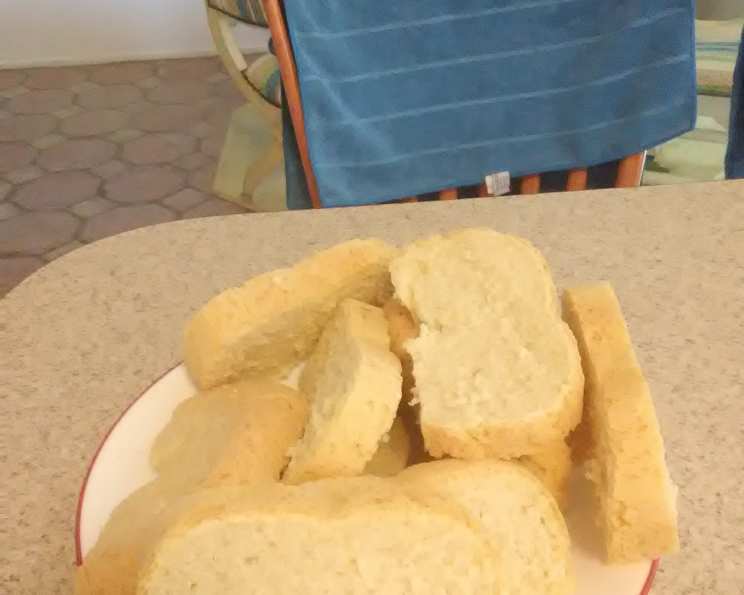
A Simple Pleasure: Mastering No-Salt White Bread
I’ll never forget the aroma that permeated my grandmother’s kitchen every Sunday morning. It wasn’t just coffee brewing or bacon sizzling; it was the unmistakable scent of freshly baked bread. She had a special recipe, passed down through generations, for a simple white bread made without salt. As a child, I didn’t understand the significance of its salt-free nature, but I remember how the soft, slightly sweet crumb paired perfectly with her homemade jams. That memory, a cornerstone of my culinary upbringing, has always drawn me back to the comforting simplicity of this timeless bread.
Recipe Overview
- Prep Time: 15 minutes
- Cook Time: 3 hours
- Total Time: 3 hours 15 minutes
- Servings: 6
- Yield: 12 slices
- Dietary Type: Low Sodium
Ingredients
- 1 cup warm water
- 1 tablespoon olive oil
- 1 1/4 teaspoons sugar
- 1 1/4 teaspoons yeast
- 3 1/4 cups flour
- 1 egg white
Equipment Needed
- Breadmaker
- Measuring cups and spoons
Instructions
- Begin by combining the warm water and sugar in a measuring cup. Stir until the sugar is completely dissolved. This step is crucial for activating the yeast. Make sure your water is warm, not hot, as excessive heat can kill the yeast.
- Add the yeast to the sugar water mixture. Allow it to sit for about 5-10 minutes, or until the yeast becomes foamy. This indicates that the yeast is active and ready to leaven the bread.
- In your breadmaker pan, place the flour, followed by the yeast mixture and olive oil. The order in which you add the ingredients can sometimes affect the final texture of the bread, so follow the instructions for your specific breadmaker if different.
- Start your breadmaker on a plain or French loaf setting. These settings typically have a longer rise time, which is beneficial for developing the flavor and texture of the bread, especially since it lacks salt.
- Monitor the breadmaker during the initial mixing phase. When the ingredients are almost completely combined (approximately 5 minutes in), open the lid and add the egg white. The egg white contributes to a softer crumb and a slightly richer flavor.
- Close the lid of the breadmaker and allow it to complete the baking cycle. The machine will handle the kneading, rising, and baking processes automatically.
- Once the breadmaker signals that the cycle is complete, carefully remove the bread from the pan. Allow it to cool on a wire rack before slicing. Cooling completely prevents a gummy texture.
Expert Tips & Tricks
- Flour Power: The type of flour you use can significantly impact the bread’s texture. Bread flour, with its higher protein content, will result in a chewier loaf. All-purpose flour works well for a softer, more tender crumb.
- Yeast is Key: Ensure your yeast is fresh. Expired yeast won’t rise properly, resulting in a dense, flat loaf. Store yeast in an airtight container in the refrigerator or freezer to prolong its shelf life.
- Liquid Gold: The olive oil adds a subtle richness and helps to create a softer texture. You can experiment with other oils, such as canola or vegetable oil, but olive oil lends a unique flavor.
- Sugar’s Role: While this is a no-salt bread, the small amount of sugar is essential for feeding the yeast and promoting a good rise. It also contributes to a slightly sweeter flavor, which complements the absence of salt.
- Egg White Alternative: If you don’t have an egg white on hand, or want to avoid using it, you can substitute it with a tablespoon of milk or water. While it won’t provide the same level of richness, it will still contribute to a softer crumb.
- Dealing with Humidity: On humid days, you may need to reduce the amount of water slightly, as flour tends to absorb more moisture from the air. Conversely, on dry days, you may need to add a bit more water. Adjust the amount of water by a tablespoon at a time until the dough forms a smooth, elastic ball.
- Kneading by Hand: If you don’t have a breadmaker, you can adapt this recipe for oven baking. Combine all the ingredients in a large bowl and knead for 8-10 minutes until the dough is smooth and elastic. Place in a greased bowl, cover, and let rise in a warm place for 1-1.5 hours, or until doubled in size. Punch down the dough, shape into a loaf, and bake in a preheated oven at 350°F (175°C) for 30-35 minutes, or until golden brown.
Serving & Storage Suggestions
This no-salt white bread is incredibly versatile and can be enjoyed in countless ways. Serve it warm with butter or your favorite spread, use it for sandwiches, or toast it for breakfast. It’s also excellent for making croutons or breadcrumbs.
To store, wrap the bread tightly in plastic wrap or place it in an airtight container. It will keep at room temperature for up to 3 days. For longer storage, freeze the bread. Slice it before freezing for easier use. Frozen bread can be thawed at room temperature or in the microwave. To refresh slightly stale bread, sprinkle it with water and bake it in a preheated oven at 350°F (175°C) for a few minutes.
Nutritional Information
| Nutrient | Amount per Serving | % Daily Value |
|---|---|---|
| Calories | 275.3 kcal | N/A |
| Calories from Fat | 26 g | N/A |
| Total Fat | 3 g | 4% |
| Saturated Fat | 0.4 g | 2% |
| Cholesterol | 0 mg | 0% |
| Sodium | 12.2 mg | 0% |
| Total Carbohydrate | 52.9 g | 17% |
| Dietary Fiber | 2 g | 8% |
| Sugars | 1.1 g | 4% |
| Protein | 7.9 g | 15% |
Variations & Substitutions
- Whole Wheat Delight: For a heartier bread, substitute up to half of the white flour with whole wheat flour. This will add a nutty flavor and increase the fiber content.
- Herb Infusion: Add dried herbs, such as rosemary, thyme, or oregano, to the dough for a savory twist. About 1-2 teaspoons of dried herbs should be sufficient.
- Sweet Treat: For a sweeter bread, increase the amount of sugar slightly or add a touch of honey or maple syrup.
- Garlic Goodness: Add minced garlic to the dough for a flavorful garlic bread.
- Dairy-Free Option: Replace the egg white with a tablespoon of applesauce for a dairy-free alternative.
FAQs (Frequently Asked Questions)
Q: Why is this bread made without salt?
A: This recipe is perfect for individuals on low-sodium diets or those who simply prefer a bread with a milder flavor. It also has historical roots, as some no-salt breads were created out of necessity due to salt taxes.
Q: Can I use a stand mixer instead of a breadmaker?
A: Yes, absolutely. Combine all the ingredients in the bowl of your stand mixer and knead with the dough hook attachment for about 8-10 minutes, until the dough is smooth and elastic. Then, proceed with the rising and baking instructions as you would for a breadmaker.
Q: How do I know if the bread is fully cooked?
A: The bread should be golden brown on top and sound hollow when tapped on the bottom. You can also use a thermometer to check the internal temperature, which should be around 200-210°F (93-99°C).
Q: Can I freeze this bread?
A: Yes, this bread freezes very well. Allow it to cool completely, then wrap it tightly in plastic wrap and place it in a freezer bag. It can be stored in the freezer for up to 3 months.
Q: My bread is dense and didn’t rise properly. What could have gone wrong?
A: Several factors can contribute to a dense loaf. Ensure your yeast is fresh and active. Also, make sure you’re using the correct type of flour and measuring the ingredients accurately. Over-kneading or under-kneading the dough can also affect the rise.
Final Thoughts
This no-salt white bread recipe is a testament to the fact that simplicity can be incredibly satisfying. It’s a blank canvas, ready to be transformed by your favorite toppings, fillings, or accompaniments. I encourage you to try this recipe and experience the comforting pleasure of homemade bread, tailored to your own taste and dietary needs. Don’t hesitate to experiment with variations and share your feedback. Perhaps pair it with a flavorful olive oil and balsamic dip, or use it as a base for some delicious bruschetta. Happy baking!