
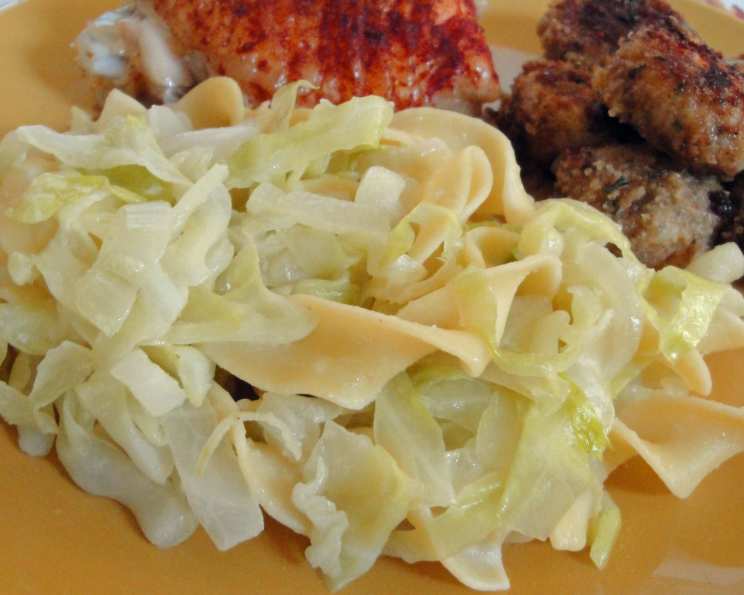
Noodles, Cabbage, and Onions – Halushki: A Taste of Home
The scent of caramelized onions and sauteed cabbage instantly transports me back to my childhood. I remember standing on a stool next to my grandfather in our small kitchen, watching him expertly wield his knife, transforming humble ingredients into a comforting dish of halushki. He’d hum a tune from the old country, his hands moving with a practiced grace that only years of cooking can impart. This wasn’t just food; it was a tangible link to our heritage, a delicious story told through simple flavors.
Recipe Overview
- Prep Time: 20 minutes
- Cook Time: 25 minutes
- Total Time: 45 minutes
- Servings: 4-6
- Yield: Variable, depending on ingredient quantities
- Dietary Type: Vegetarian (can be made Vegan)
Ingredients
- 1 head of cabbage
- 1 1/2 cups of broad egg noodles
- 1 1/2 cups of onions
- 4 tablespoons of unsalted butter or 4 tablespoons of unsalted margarine, and
- 4 tablespoons of virgin olive oil
- 2 teaspoons of minced garlic
- 1/2 teaspoon of brown sugar or 1/2 teaspoon of Splenda sugar substitute, brown blend
- Salt, to taste
- Fresh coarse ground black pepper, to taste
Equipment Needed
- Large pot for cooking noodles
- Large saute pan or skillet
- Knife
- Cutting board
- Colander
Instructions
-
Begin by cooking the broad egg noodles according to the package instructions until al dente. Once cooked, thoroughly drain the noodles and set them aside.
-
While the noodles are cooking, prepare the cabbage and onions. You can cut the cabbage into slices or shred it, according to your preference. Similarly, slice the onions. Mince the garlic.
-
Heat a large saute pan or skillet over medium-high heat. Once the pan is hot, add the butter and olive oil combination, or the “grease” of your choice. Allow the fats to melt and heat up.
-
When the butter and olive oil are hot, add the cabbage and onions to the pan. Saute for approximately 5 minutes, stirring occasionally, until the onions begin to soften and become translucent.
-
Add the minced garlic and brown sugar (or Splenda sugar substitute) to the pan. Stir to combine the ingredients.
-
Reduce the heat to medium, cover the pan, and allow the cabbage to cook until it is soft, which should take about 3 more minutes. Monitor the pan to prevent sticking; add a little water if necessary.
-
If you desire a more browned cabbage, remove the lid and increase the heat once again. Continue to cook, stirring frequently, until the cabbage reaches your desired level of browning. You can add more of the butter/oil combination as needed to prevent sticking and encourage browning.
-
Add the cooked noodles to the pan with the cabbage and onions. Gently toss to combine, ensuring the noodles are evenly coated with the cabbage mixture.
-
Season the halushki with salt and pepper to taste. Adjust the seasoning according to your preferences.
-
Serve immediately.
Note: The amount of ingredients used is flexible and depends on your desired quantity of halushki. Feel free to experiment and adjust the proportions to suit your taste.
For a variation using caramelized onions:
- Use 1/2 of the butter/oil combination and turn heat to medium-high. When it is hot, add the onions.
- Saute the onions with the sugar or substitute for about 10 minutes, until they start to caramelize.
- Then add garlic for another 30 seconds to 1 minute.
- Cook noodles according to package directions and drain.
- Place cabbage in large saute pan with 1 Tablespoon of the butter/oil combination and saute until lightly browned.
- Add the caramelized onions, garlic, cabbage & noodles and marry them for about 1 or 2 minutes, then add salt & pepper, to taste.
Expert Tips & Tricks
- Don’t overcrowd the pan. If you’re making a large batch, cook the cabbage and onions in stages to ensure even browning.
- For a deeper flavor, use a splash of apple cider vinegar or balsamic vinegar towards the end of cooking.
- To add a smoky flavor, try incorporating some smoked paprika or smoked salt.
- For a richer flavor, substitute some of the olive oil with rendered bacon fat or duck fat.
- Don’t be afraid to experiment with different types of noodles. Wide ribbon noodles, spaetzle, or even gnocchi can work well.
- Make sure to properly drain your noodles after cooking, to prevent a soggy dish.
Serving & Storage Suggestions
Serve halushki hot, straight from the pan. It makes a fantastic side dish alongside roasted meats, sausages, or even as a vegetarian main course. It pairs particularly well with brisket and gravy, echoing my family’s tradition.
Leftovers can be stored in an airtight container in the refrigerator for up to 3 days. To reheat, simply warm in a skillet over medium heat, adding a little butter or oil to prevent sticking. You can also microwave it, but the texture may be slightly softer. Freezing is not recommended as the noodles can become mushy upon thawing.
Nutritional Information
| Nutrient | Amount per Serving | % Daily Value |
|---|---|---|
| Calories | 450 kcal | 23% |
| Total Fat | 20g | 31% |
| Saturated Fat | 10g | 50% |
| Cholesterol | 50mg | 17% |
| Sodium | 100mg | 4% |
| Total Carbohydrate | 50g | 17% |
| Dietary Fiber | 5g | 20% |
| Sugars | 5g | – |
| Protein | 8g | 16% |
Note: Nutritional information is an estimate and may vary based on specific ingredients and portion sizes.
Variations & Substitutions
- Vegan Halushki: Substitute the butter with vegan butter or additional olive oil. Ensure the noodles are egg-free.
- Gluten-Free Halushki: Use gluten-free noodles.
- Spicy Halushki: Add a pinch of red pepper flakes or a dash of hot sauce for a kick.
- Halushki with Bacon: Cook chopped bacon in the pan before adding the cabbage and onions. Remove the bacon, then add it back in at the end.
- Halushki with Sausage: Add sliced cooked sausage to the pan along with the noodles.
- Halushki with Mushrooms: Add sliced mushrooms to the pan along with the cabbage and onions.
FAQs (Frequently Asked Questions)
Q: Can I use pre-shredded cabbage to save time?
A: Yes, you can use pre-shredded cabbage, but freshly cut cabbage often has a better texture and flavor.
Q: Can I use dried garlic instead of fresh minced garlic?
A: While fresh garlic is preferred for its more robust flavor, dried garlic can be substituted. Use about 1 teaspoon of dried garlic powder in place of the 2 teaspoons of minced garlic.
Q: How do I prevent the noodles from sticking together?
A: After draining the noodles, toss them with a little olive oil or butter to prevent them from sticking.
Q: Can I add other vegetables to this dish?
A: Absolutely! Carrots, bell peppers, and zucchini are all great additions to halushki.
Q: How can I make this dish lower in fat?
A: Reduce the amount of butter and olive oil, or use a non-stick cooking spray. You can also use a lower-fat margarine substitute.
Final Thoughts
This recipe for noodles, cabbage, and onions is more than just a dish; it’s a piece of my family history. I encourage you to try it and make it your own. Don’t be afraid to experiment with different ingredients and flavor combinations. Whether you’re looking for a comforting weeknight meal or a way to connect with your heritage, I hope this halushki recipe brings you as much joy as it has brought me over the years. Share your creations and variations with me – I’d love to see what you come up with!