
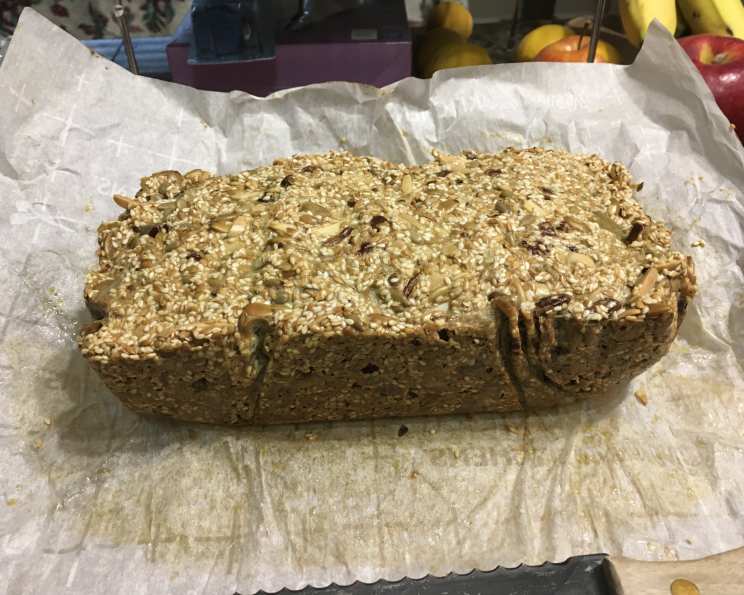
Nordic Stone Age Nut and Seed Bread: A Taste of Ancient Sustenance
I remember the first time I tasted a bread like this. It was at a small farmer’s market in Copenhagen, and the vendor described it as “brød fra stenalderen” – bread from the Stone Age. The dense, nutty aroma drew me in, and the surprisingly satisfying chewiness of the bread kept me coming back for more throughout my trip. It was unlike any bread I’d ever had, a reminder that delicious food can be both incredibly simple and deeply nourishing. This recipe attempts to recreate that experience, bringing the essence of ancient Nordic fare to your modern kitchen.
Recipe Overview
- Prep Time: 5 minutes
- Cook Time: 1 hour
- Total Time: 1 hour 5 minutes
- Yields: 1 loaf
- Dietary Type: Gluten-Free, Grain-Free, Paleo
Ingredients
- 1 cup raw almonds
- 1 cup raw pecans or 1 cup walnuts
- 1 cup flax seed
- 1 cup pumpkin seeds
- 1 cup sunflower seeds
- 1 cup sesame seeds
- 1/3 cup olive oil
- 1 1/2 teaspoons kosher salt
- 5 eggs
Equipment Needed
- Large bowl
- Loaf pan
- Parchment paper
- Spoon or spatula
Instructions
- Preheat your oven to 325°F (160°C).
- In a large bowl, combine all the nuts and seeds: almonds, pecans (or walnuts), flax seed, pumpkin seeds, sunflower seeds, and sesame seeds.
- Add the salt, olive oil, and eggs to the bowl.
- Stir the mixture thoroughly until all ingredients are well combined and evenly coated. It should form a somewhat cohesive, albeit chunky, mass.
- Line a loaf pan with parchment paper, ensuring the paper extends slightly over the edges for easy removal later.
- Spoon the nut and seed mixture into the prepared loaf pan.
- Using the back of a spoon or a spatula, press down firmly on the mixture to flatten the top and create an even surface. This is crucial for a uniformly baked loaf.
- Bake in the preheated oven for one hour.
- After one hour, check the bread. It should be firm to the touch and golden brown. If it’s still too soft, continue baking for another 5-10 minutes, keeping a close eye to prevent burning.
- Remove the loaf pan from the oven and let the bread cool in the pan for at least 15-20 minutes.
- Using the parchment paper overhang, gently lift the bread out of the pan and transfer it to a wire rack to cool completely before slicing and serving.
Expert Tips & Tricks
- Toast the Nuts: For an even deeper, nuttier flavor, lightly toast the almonds, pecans/walnuts, and seeds in a dry skillet over medium heat for a few minutes before adding them to the mixture. Be careful not to burn them!
- Egg Variation: For a slightly lighter texture, separate the eggs and whip the egg whites to stiff peaks before gently folding them into the nut and seed mixture along with the yolks. This will incorporate more air into the bread.
- Pre-Soaking: Soaking the flax seeds in a little water for about 15 minutes before adding them can help improve the binding and texture of the bread.
- Checking for Doneness: To ensure the bread is fully baked, insert a toothpick into the center. It should come out clean or with only a few moist crumbs attached.
- Preventing Sticking: Make sure the parchment paper is well-greased, even if it’s non-stick. This will guarantee easy removal of the bread.
- Adjusting Sweetness: Although this recipe isn’t sweet, you can add a tablespoon or two of honey or maple syrup for a touch of sweetness if desired.
- Slicing: Use a serrated knife for best results when slicing this dense bread.
Serving & Storage Suggestions
This Nordic Stone Age Nut and Seed Bread is incredibly versatile. Serve it sliced with your favorite toppings, such as avocado, smoked salmon, cheese, or nut butter. It’s also a delicious accompaniment to soups and salads.
- Room Temperature: Store the cooled bread in an airtight container at room temperature for up to 3 days.
- Refrigerator: For longer storage, keep it in the refrigerator for up to a week.
- Freezer: This bread freezes well. Slice it before freezing and store in a freezer-safe bag or container for up to 2 months. Thaw at room temperature or in the refrigerator before serving.
- Reheating: If desired, warm the bread slices in a toaster oven or skillet for a few minutes before serving.
Nutritional Information
(Estimated per slice, assuming 12 slices per loaf)
| Nutrient | Amount per Serving | % Daily Value |
|---|---|---|
| Calories | 485.7 | N/A |
| Total Fat | 43.6 g | 67% |
| Saturated Fat | 5.3 g | 27% |
| Cholesterol | 77.5 mg | 26% |
| Sodium | 366.7 mg | 15% |
| Total Carbohydrate | 14.2 g | 5% |
| Dietary Fiber | 9 g | 36% |
| Sugars | 1.7 g | N/A |
| Protein | 16.2 g | 32% |
Variations & Substitutions
- Spice It Up: Add a teaspoon of cinnamon, cardamom, or ginger for a warm, spiced flavor.
- Dried Fruit: Incorporate 1/2 cup of chopped dried cranberries, apricots, or figs for added sweetness and chewiness.
- Herbs: Mix in fresh or dried herbs like rosemary, thyme, or oregano for a savory twist.
- Seed Variations: Experiment with different types of seeds, such as chia seeds, hemp seeds, or black sesame seeds.
- Nut Allergies: If you have nut allergies, replace the nuts with additional seeds.
- Vegan Version: Replace the eggs with a flax egg (1 tablespoon of ground flaxseed mixed with 3 tablespoons of water per egg) for a vegan option, although the texture will be slightly different.
FAQs (Frequently Asked Questions)
Q: Why is this bread called “Stone Age” bread?
A: It’s inspired by the types of foods that were likely consumed during the Paleolithic era, focusing on nuts and seeds rather than grains.
Q: Is this bread suitable for someone on a ketogenic diet?
A: Yes, due to its high fat and low carbohydrate content, it can be a good option for those following a keto diet. However, always check the nutritional information to ensure it fits your specific macros.
Q: Can I use pre-ground flaxseed instead of whole flaxseed?
A: While you can, using whole flaxseed is preferable for better texture and nutritional benefits. If using pre-ground, reduce the amount slightly as it may absorb more moisture.
Q: The bread seems oily. Is that normal?
A: A little oiliness is normal due to the high fat content of the nuts and seeds. Make sure to drain any excess oil after baking if needed.
Q: Can I double the recipe?
A: Yes, you can double the recipe, but you may need to increase the baking time slightly. Keep an eye on it and check for doneness regularly. Using two loaf pans is recommended for even baking.
Final Thoughts
This Nordic Stone Age Nut and Seed Bread is more than just a recipe; it’s an invitation to connect with the simplicity and nourishment of ancient foods. I encourage you to try this recipe and experience the satisfying flavors and textures for yourself. Don’t be afraid to experiment with variations and substitutions to create a loaf that perfectly suits your taste. Share your creations and feedback – I’m always eager to hear how it turns out! Enjoy a slice with a cup of herbal tea or a hearty bowl of soup for a truly comforting and wholesome meal.