
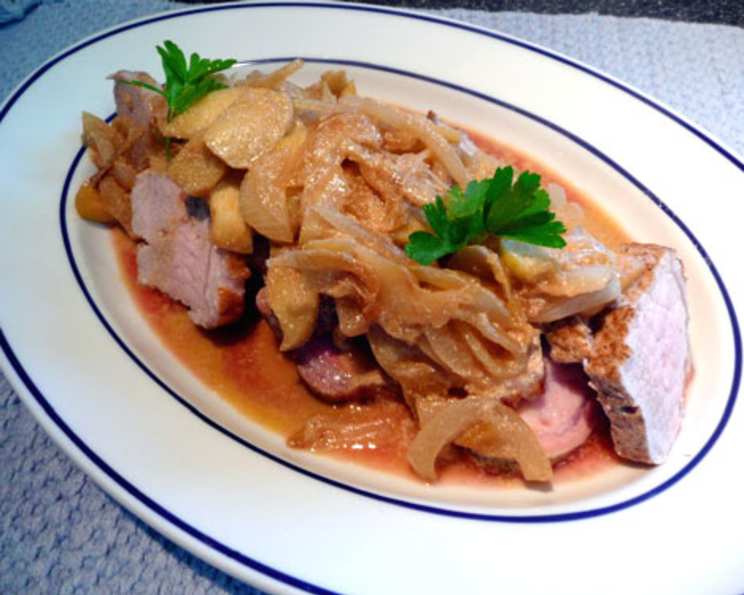
Normandy Pork Tenderloin: A Taste of Autumn
The first time I tasted pork tenderloin prepared in the Normandy style, it was at a small bistro nestled in the heart of Bayeux. The air was crisp with the scent of fallen leaves and wood smoke, and the aroma of apples and Calvados wafted from the kitchen, drawing me in like a moth to a flame. The tenderloin, perfectly seared and sliced, practically melted in my mouth, the rich apple cider sauce clinging to every morsel. It was an experience that transported me to a golden, autumnal landscape, and I’ve been chasing that flavor ever since. This recipe is my homage to that magical moment, a celebration of simple ingredients transformed into something extraordinary.
Recipe Overview
- Prep Time: 15 minutes
- Cook Time: 25 minutes
- Total Time: 40 minutes
- Servings: 4
- Dietary Type: Gluten-Free (naturally)
Ingredients
- 1/2 teaspoon dried sage
- Salt
- Pepper
- 2 pork tenderloins, trimmed of fat and silver skin
- 1 tablespoon olive oil
- 1/2 cup onion, thinly sliced
- 1 tart apple, peeled, cored, and thinly sliced (such as Granny Smith or Honeycrisp)
- 1/2 cup chicken stock
- 1/2 cup apple cider
- 2 tablespoons Calvados (apple brandy) or 2 tablespoons brandy
- 2 teaspoons Dijon mustard
- 1 pinch ground ginger
- 1/4 cup heavy cream
Equipment Needed
- Skillet (oven-safe preferred, or use a separate baking sheet)
- Baking sheet (if skillet is not oven-safe)
- Cutting board
- Chef’s knife
- Measuring cups and spoons
- Meat thermometer
Instructions
- Preheat your oven to 400°F (200°C).
- In a small bowl, combine the dried sage, salt, and pepper. Generously rub this mixture all over the pork tenderloins, ensuring they are evenly coated.
- Heat the olive oil in an oven-safe skillet over high heat. If you don’t have an oven-safe skillet, have a baking sheet ready.
- Sear the pork tenderloins in the hot skillet until they are browned on all sides. This should take about 2-3 minutes per side. The searing creates a delicious crust and seals in the juices.
- If using a separate baking sheet, transfer the seared tenderloins to the baking sheet. Otherwise, leave them in the skillet.
- Bake the tenderloins in the preheated oven for 10 minutes, or until the internal temperature reaches 135°F (57°C). Use a meat thermometer to ensure accuracy. Important Note: The USDA recommends an internal temperature of 145°F (63°C) for pork. We are aiming for 135°F (57°C) because the residual heat will continue to cook the pork as it rests, bringing it to a safe and juicy doneness.
- Remove the pork tenderloins from the oven and let them rest for at least 5 minutes before slicing. This allows the juices to redistribute, resulting in a more tender and flavorful result.
- While the pork is resting, return the skillet (or use a clean skillet) to the stovetop over medium heat. If there isn’t enough rendered fat in the skillet, add a little more olive oil.
- Add the thinly sliced onion to the skillet and sauté until softened and translucent, about 5-7 minutes.
- Add the sliced apple to the skillet with the onions and cook for an additional 2 minutes, until the apples begin to soften slightly.
- Pour in the chicken stock, apple cider, Calvados (or brandy), Dijon mustard, and ground ginger. Use a wooden spoon to deglaze the skillet, scraping up any browned bits from the bottom. These bits are packed with flavor and will add depth to the sauce.
- Bring the liquid to a simmer and let it reduce by about half. This will concentrate the flavors and create a richer sauce. It should take about 5-7 minutes.
- Stir in the heavy cream and simmer over high heat until the sauce thickens slightly and coats the back of a spoon. This should only take a minute or two. Be careful not to overcook the sauce, as the cream can curdle.
- Slice the rested pork tenderloin into medallions.
- Serve the sliced pork tenderloin immediately, spooning the delicious Normandy sauce generously over the top.
Expert Tips & Tricks
- Don’t Overcook the Pork: Pork tenderloin is lean and can become dry if overcooked. Use a meat thermometer and aim for that 135°F (57°C) internal temperature for optimal juiciness. The resting period is crucial for the carryover cooking to bring it to a safe temperature.
- Deglaze Like a Pro: Deglazing the pan is key to building a flavorful sauce. Don’t skip this step! Use a wooden spoon to scrape up all those delicious browned bits from the bottom of the skillet.
- Make Ahead: The sauce can be made ahead of time. Simply cool it completely, store it in an airtight container in the refrigerator for up to 2 days, and reheat gently before serving. Add the cream just before serving.
- Substitute Alcohol (with caution): If you prefer not to use alcohol, you can omit the Calvados or Brandy. However, it does add a distinct flavor. You can replace it with an equal amount of apple juice or additional chicken stock, but the flavor profile will be slightly different. A splash of apple cider vinegar can mimic some of the acidity.
- Achieve a perfect sear: Pat the pork tenderloins dry with paper towels before seasoning. This helps to achieve a better sear. Make sure the pan is screaming hot before adding the pork.
Serving & Storage Suggestions
Serve the Normandy Pork Tenderloin immediately after cooking for the best flavor and texture. It pairs beautifully with roasted root vegetables like carrots and parsnips, mashed potatoes, or a simple green salad. A crisp, dry white wine, such as a Chardonnay or Sauvignon Blanc, would complement the dish perfectly.
Storage: Leftovers can be stored in an airtight container in the refrigerator for up to 3 days.
Reheating: Reheat the pork tenderloin and sauce separately to prevent the pork from drying out. Gently reheat the sauce in a saucepan over low heat. Slice the pork and warm it gently in the sauce or in a separate pan with a little bit of butter. Avoid microwaving, as it can make the pork tough.
Nutritional Information
| Nutrient | Amount per Serving | % Daily Value |
|---|---|---|
| Calories | 320 kcal | 16% |
| Total Fat | 18g | 28% |
| Saturated Fat | 9g | 45% |
| Cholesterol | 90mg | 30% |
| Sodium | 250mg | 11% |
| Total Carbohydrate | 10g | 4% |
| Dietary Fiber | 1g | 4% |
| Sugars | 7g | |
| Protein | 25g | 50% |
Note: Nutritional information is an estimate and may vary depending on specific ingredients and portion sizes.
Variations & Substitutions
- Dairy-Free: Substitute the heavy cream with coconut cream or cashew cream for a dairy-free option. The sauce will have a slightly different flavor, but it will still be delicious.
- Spiced Apple: Add a pinch of cinnamon or nutmeg to the apple mixture for a warmer, more festive flavor.
- Different Fruit: Pears can be used instead of apples for a subtle variation.
- Mustard Variation: Use whole grain Dijon mustard for a more rustic sauce.
- Herb Variation: Try using fresh thyme instead of dried sage for a different herbal note.
FAQs (Frequently Asked Questions)
Q: Can I use pork loin instead of pork tenderloin?
A: While you can, pork tenderloin is much more tender. If you use pork loin, be careful not to overcook it. You might need to adjust the cooking time.
Q: What if I don’t have Calvados or Brandy?
A: You can substitute with more apple cider or apple juice. Add a splash of apple cider vinegar for a bit of acidity.
Q: Can I make this ahead of time?
A: The sauce can be made ahead and reheated. However, it’s best to cook the pork just before serving for optimal tenderness.
Q: My sauce is too thin. How can I thicken it?
A: Simmer the sauce for a longer period to reduce it further. You can also whisk in a small amount of cornstarch slurry (1 teaspoon cornstarch mixed with 1 tablespoon cold water).
Q: How do I know when the pork is done?
A: The most accurate way is to use a meat thermometer. Insert it into the thickest part of the tenderloin. It should read 135°F (57°C) before resting.
Final Thoughts
Normandy Pork Tenderloin is more than just a recipe; it’s an experience. It’s a celebration of fall flavors, a comforting dish that’s perfect for a cozy night in or a special occasion. So gather your ingredients, preheat your oven, and prepare to be transported to a culinary landscape of apples, cider, and perfectly cooked pork. Don’t be afraid to experiment with the variations and make it your own. And most importantly, savor every bite and share it with those you love. Bon appétit!