
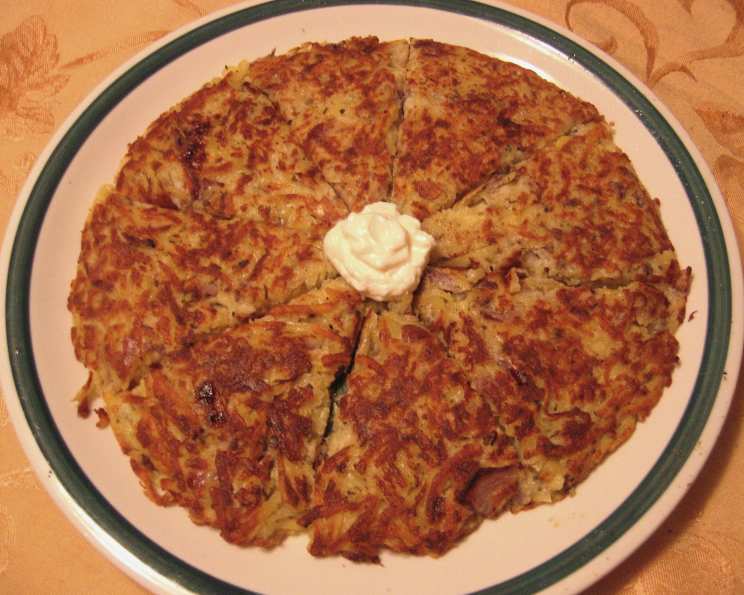
Norm’s Potato Cakes: A Culinary Legacy
The aroma of frying potatoes and onions still transports me back to my childhood kitchen. Saturday mornings meant the comforting sizzle of my grandfather’s potato cakes filling the air. He’d stand at the stove, a weathered apron tied around his waist, carefully flipping each golden disc with a well-worn spatula. Each bite was more than just sustenance; it was a taste of love, tradition, and home.
Recipe Overview
- Prep Time: 15 minutes
- Cook Time: 10 minutes
- Total Time: 25 minutes
- Servings: 2-4
- Yield: 4-6 potato cakes (depending on size)
- Dietary Type: Vegetarian (can be made vegan)
Ingredients
- 3-4 potatoes
- 1 onion
- 1 egg, lightly beaten (can substitute with flax egg for vegan option: 1 tbsp ground flaxseed mixed with 3 tbsp water, let sit for 5 minutes)
- 1 tablespoon plain flour (all-purpose)
- ¼ teaspoon fresh ground black pepper
- ¼ teaspoon salt
- 1 tablespoon olive oil
- 1 tablespoon butter or 1 tablespoon margarine (use vegan butter for a vegan version)
- 1 teaspoon dried herbs (optional)
- 1 pinch nutmeg (optional) or 1 pinch cayenne pepper (optional)
- ½ cup grated cheese (optional, use vegan cheese for a vegan version)
- 1 (125 g) can sweet corn, drained (optional)
Equipment Needed
- Mixing bowl
- Grater or food processor with grating blade
- Medium frying pan
- Spatula
- Dinner plate (for “My Method”)
Instructions
- Begin by peeling and grating the potatoes and onion into a small mixing bowl. I find that a food processor with the grating blade makes quick work of this, but using a hand grater yields equally delicious results.
- Next, stir in the egg and the flour. The mixture should come together to form a cohesive batter.
- If the batter appears too runny, add a little more flour, a tablespoon at a time, until it reaches the desired consistency. Conversely, if the batter seems too dry, add a splash of milk (dairy or non-dairy) to moisten it.
- Now, it’s time to season the mixture generously with pepper and salt. This is also the point where you can incorporate any of the optional ingredients, such as dried herbs, nutmeg or cayenne pepper, grated cheese, or sweet corn.
- In a medium frying pan, melt the olive oil and butter (or margarine) together over medium heat. Allow the mixture to heat until it is sizzling, indicating that it’s ready for the potato cake batter.
- At this stage, you have two cooking methods to choose from, each yielding slightly different results:
- Dad’s Method (Individual Cakes): Carefully add spoonfuls of the batter to the hot pan, forming circles that are approximately 8-10 cm (4 inches) in diameter. Cook for about 5 minutes on each side, or until the potato cakes are golden brown and cooked through. You may need to cook in batches of 2 or 3, depending on the size of your frying pan. To keep the cooked potato cakes warm while you finish the remaining batter, place them on a plate in an oven set to a low temperature (around 200°F or 95°C).
- My Method (Large Cake): Tip all of the batter into the frying pan and use the back of a spoon to flatten it out evenly, so that it fills the entire pan. Cook on one side for approximately 5 minutes, or until it’s golden brown and firm enough to flip. To flip, invert a dinner plate over the top of the pan and carefully tip the potato cake onto the plate. Then, slide the cake back into the pan and cook the other side for another 5 minutes, or until golden brown. Once both sides are cooked, invert the potato cake onto the plate again and cut it into wedges for serving.
- Serve hot and enjoy!
Expert Tips & Tricks
- Don’t overcrowd the pan: If using “Dad’s Method”, ensure there’s enough space between each potato cake for even cooking. Overcrowding can lower the pan temperature and result in soggy cakes.
- Adjust seasoning to taste: Taste the batter before cooking and adjust the salt, pepper, and optional spices to your preference. Remember that the flavors will intensify during cooking.
- Use a non-stick pan: A good non-stick frying pan will make flipping the potato cakes much easier and prevent them from sticking.
- Control the heat: Maintain a medium heat to ensure the potato cakes cook through without burning on the outside.
- Crispy edges: For extra crispy edges, try pressing down lightly on the potato cakes with a spatula as they cook. This will increase contact with the hot pan.
- Flavor boost: Consider adding a clove of minced garlic or a finely chopped chili pepper to the batter for an extra layer of flavor.
Serving & Storage Suggestions
Serve these delightful potato cakes immediately while they are still warm and crispy. They are delicious on their own or can be topped with a dollop of your favorite mayonnaise (soy mayonnaise adds a nutty depth), sour cream, or ranch dressing. A sprinkling of chopped chives or finely sliced green onions, or a generous shake of paprika, provides a lovely finishing touch. These potato cakes also pair beautifully with a crisp green salad for a light lunch or supper.
Leftover potato cakes can be stored in an airtight container in the refrigerator for up to 3 days. To reheat, pan-fry them in a little oil until warmed through and crispy, or microwave them for a quicker (but less crispy) option. I do not recommend freezing the cooked potato cakes as the texture may become soggy upon thawing.
Nutritional Information
| Nutrient | Amount per Serving | % Daily Value |
|---|---|---|
| Calories | 428.7 kcal | N/A |
| Calories from Fat | 137g | N/A |
| Total Fat | 15.3 g | 23% |
| Saturated Fat | 5.5 g | 27% |
| Cholesterol | 108.3 mg | 36% |
| Sodium | 398.5 mg | 16% |
| Total Carbohydrate | 64.2 g | 21% |
| Dietary Fiber | 8.1 g | 32% |
| Sugars | 4.9 g | N/A |
| Protein | 10.7 g | 21% |
Note: Nutritional information is an estimate and may vary based on specific ingredients and portion sizes.
Variations & Substitutions
- Vegan Potato Cakes: Replace the egg with a flax egg (1 tbsp ground flaxseed mixed with 3 tbsp water, let sit for 5 minutes) and use vegan butter or margarine and vegan cheese (if using).
- Gluten-Free Potato Cakes: Substitute the all-purpose flour with a gluten-free all-purpose flour blend.
- Spiced Potato Cakes: Add a pinch of cumin, coriander, or chili powder to the batter for a spicy kick.
- Herbaceous Potato Cakes: Incorporate fresh herbs like dill, parsley, or thyme into the batter for a fresh, aromatic flavor.
- Sweet Potato Cakes: Substitute half of the regular potatoes with sweet potatoes for a naturally sweet and vibrant variation.
FAQs (Frequently Asked Questions)
Q: Can I use different types of potatoes?
A: Absolutely! Russet potatoes work well for a classic potato cake, but Yukon Gold potatoes offer a creamier texture. Experiment and see what you prefer.
Q: How do I prevent the potato cakes from sticking to the pan?
A: Ensure your pan is properly heated and well-greased. Using a non-stick pan is also highly recommended.
Q: Can I make the batter ahead of time?
A: It’s best to cook the potato cakes immediately after mixing the batter, as the grated potatoes can release moisture over time, making the batter too runny.
Q: What if my potato cakes are burning on the outside but still raw on the inside?
A: Lower the heat and cook them for a longer period. You can also cover the pan with a lid to help cook the potatoes through.
Q: Can I add other vegetables to the potato cakes?
A: Certainly! Finely chopped bell peppers, zucchini, or carrots can be added to the batter for extra nutrients and flavor.
Final Thoughts
Norm’s Potato Cakes are more than just a recipe; they are a connection to family, tradition, and the simple joys of home cooking. I encourage you to try this recipe, adapt it to your own tastes, and share it with loved ones. Whether you top them with a dollop of sour cream, a sprinkle of chives, or simply enjoy them on their own, I hope these potato cakes bring you as much comfort and happiness as they have brought me. Happy cooking!