
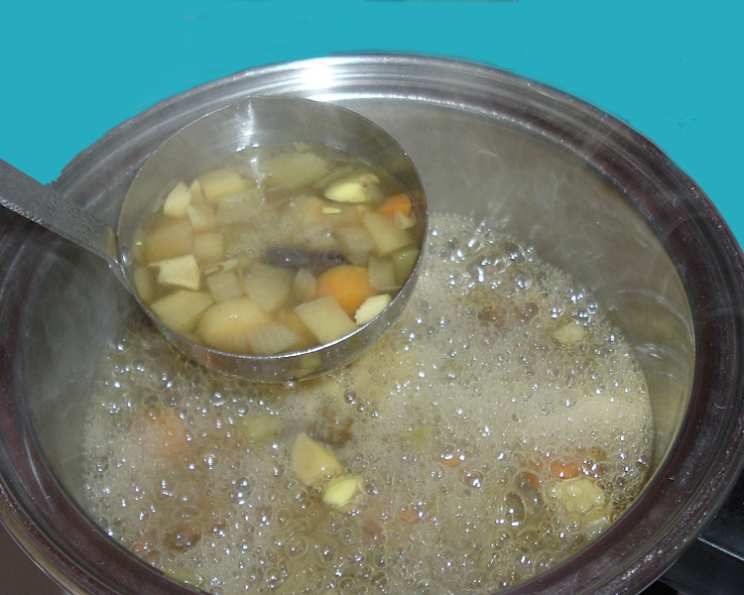
The Comforting Embrace of Not-Chicken Soup
My grandmother, Bubbe Rose, had a cure for everything. A scraped knee? A dab of honey. A broken heart? A warm hug and a slice of her famous apple cake. But for a cold, a sniffle, or just a general feeling of blah, nothing could beat her chicken soup. The aroma alone, a heady mix of simmering vegetables and savory broth, was enough to chase away the blues. This “Not-Chicken” soup isn’t quite Bubbe Rose’s, but it captures the same spirit of warmth, healing, and pure, unadulterated comfort. This recipe is based on a Mollie Katzen recipe, though sometimes I’ll mash the strained vegetables, add eggs, oil, and matzo meal, and bake them into a kugel.
Recipe Overview
- Prep Time: 15 minutes
- Cook Time: 1-2 hours
- Total Time: 1 hour 15 minutes to 2 hours 15 minutes
- Servings: 6
- Dietary Type: Vegetarian, Vegan (optional)
Ingredients
- 8 cups water
- 2 teaspoons salt
- 1 (8-inch) parsnip, cut in chunks
- 2 large carrots, cut in chunks
- 2 medium onions, cut in chunks
- 8-10 cloves garlic, halved
- 2 stalks celery, coarsely chopped
- 1 cup mushrooms
- 1⁄2 teaspoon turmeric
- Black pepper to taste
Equipment Needed
- Large pot
Instructions
- In a large pot, combine all the ingredients: 8 cups of water, 2 teaspoons of salt, 1 (8-inch) parsnip cut into chunks, 2 large carrots cut into chunks, 2 medium onions cut into chunks, 8-10 cloves of garlic halved, 2 stalks of celery coarsely chopped, 1 cup of mushrooms, and 1⁄2 teaspoon of turmeric. Season generously with black pepper.
- Bring the mixture to a boil over high heat. Once boiling, reduce the heat to low, partially cover the pot with a lid, and simmer gently for 1-2 hours. This slow simmering allows the flavors to meld and deepen beautifully.
- After simmering for 1-2 hours, turn off the heat and allow the soup to cool to room temperature. This cooling period further enhances the flavor extraction.
- Once cooled, strain the soup through a fine-mesh sieve or colander, discarding all the cooked vegetables. You’ve now created a clear, flavorful broth.
- Just before serving, gently heat the strained broth. Be careful not to boil it.
- Serve hot. Traditionally, matzoh balls are a wonderful addition to this soup. Cook them separately and add them to the soup as you serve it. If matzoh balls are cooked or reheated in the soup, they will turn a beautiful golden color thanks to the turmeric.
Expert Tips & Tricks
- For an even richer flavor, consider roasting the parsnips, carrots, and onions before adding them to the pot. Roasting caramelizes the vegetables and adds a depth of sweetness that complements the other ingredients.
- Don’t be afraid to experiment with other vegetables! Leeks, sweet potatoes, or even a small piece of ginger can add interesting layers of flavor.
- If you want a more intense garlic flavor, smash the cloves instead of halving them before adding them to the pot.
- For a richer, more comforting broth, use homemade vegetable stock instead of water.
- If you don’t have turmeric on hand, a pinch of saffron will give a similar color and subtle flavor.
- If you are going to discard the vegetables after straining, don’t worry about cutting them uniformly. You can use the vegetable scraps from other meals, saving both time and money.
- If your soup is too salty, add a peeled potato to the pot while it simmers. The potato will absorb some of the excess salt. Remove it before serving.
Serving & Storage Suggestions
Serve this “Not-Chicken” soup hot, garnished with fresh parsley or dill. It’s wonderful on its own or paired with a crusty piece of bread for dipping. As mentioned before, matzoh balls are a classic addition, but you can also add cooked noodles or rice.
Leftover soup can be stored in an airtight container in the refrigerator for up to 3-4 days. For longer storage, freeze the soup in freezer-safe containers for up to 2-3 months. When reheating, thaw the soup overnight in the refrigerator and then gently heat it on the stovetop or in the microwave.
Nutritional Information
(Estimates, will vary based on specific ingredients)
| Nutrient | Amount per Serving | % Daily Value |
|---|---|---|
| Calories | 40 kcal | 2% |
| Total Fat | 0g | 0% |
| Saturated Fat | 0g | 0% |
| Cholesterol | 0mg | 0% |
| Sodium | 350mg | 15% |
| Total Carbohydrate | 8g | 3% |
| Dietary Fiber | 2g | 7% |
| Sugars | 3g | – |
| Protein | 1g | 2% |
Variations & Substitutions
- Vegan “Chicken” Soup: This recipe is naturally vegan if you serve without matzoh balls (some recipes contain eggs).
- Gluten-Free: Ensure any added noodles or matzoh balls are gluten-free.
- Spicy Kick: Add a pinch of red pepper flakes or a chopped jalapeno to the pot for a spicy kick.
- Herby Delight: Experiment with different herbs, such as thyme, rosemary, or oregano, for a unique flavor profile.
- Creamy Soup: For a creamy version, blend a portion of the strained vegetables with a bit of the broth and then stir it back into the soup.
FAQs (Frequently Asked Questions)
Q: Can I use pre-cut vegetables to save time?
A: Absolutely! While fresh, whole vegetables offer the best flavor, using pre-cut vegetables is a great time-saver. Just be sure to check their freshness.
Q: Can I add chicken bouillon to make it taste more like chicken soup?
A: You certainly can, but keep in mind that this will no longer be a vegetarian soup. Use a low-sodium bouillon to control the salt content.
Q: Why do I need to strain the soup?
A: Straining the soup creates a clear broth, which is traditional for chicken soup. However, you can also blend the vegetables back in for a heartier, more rustic soup.
Q: How can I make this soup more filling?
A: Add cooked noodles, rice, quinoa, or lentils to the soup to make it more substantial.
Q: Is it necessary to let the soup cool before straining it?
A: Letting the soup cool slightly before straining it prevents burns and also allows the flavors to meld further. You can strain it while it’s still warm, but be careful.
Final Thoughts
This “Not-Chicken” soup is a testament to the power of simple ingredients and slow cooking. It’s a comforting, flavorful, and nourishing dish that’s perfect for any time of year. Whether you’re feeling under the weather or simply craving a warm and satisfying meal, I encourage you to try this recipe. Feel free to experiment with different vegetables and herbs to create your own unique version. And don’t forget to share your feedback – I’d love to hear how it turns out! Pair it with a side of challah bread or a simple green salad for a complete and satisfying meal.