
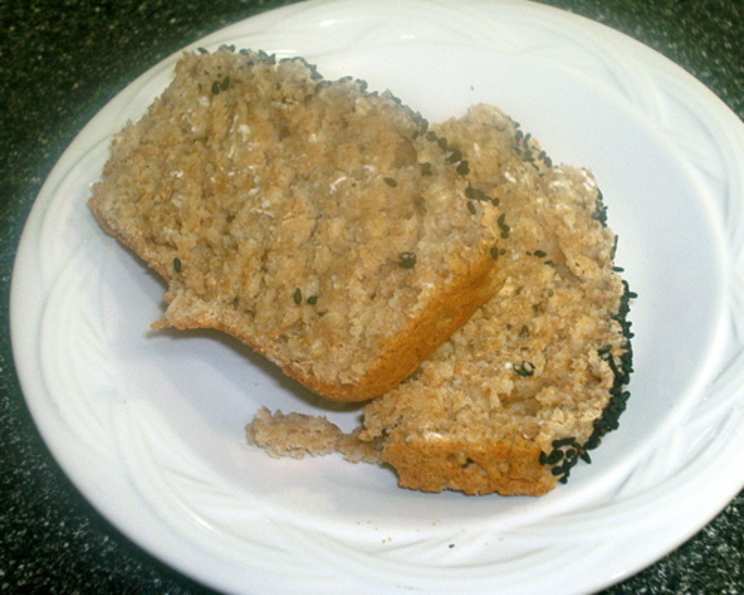
Rustic Oat Bread: A Hearty Slice of Home
The scent of baking bread is a powerful time machine, instantly transporting me back to my grandmother’s cozy kitchen. I can almost feel the warmth of her wood-burning stove, see the flour dusting her apron, and hear the gentle hum of her favorite hymns on the radio. While she baked countless loaves, it was her simple, hearty oat bread that truly captured my heart. It wasn’t fancy, but it was honest, wholesome, and always made with love. This recipe is my humble attempt to recreate that warmth and share a slice of my cherished memories with you.
Recipe Overview
- Prep Time: 15 minutes
- Cook Time: 35 minutes
- Total Time: 50 minutes
- Servings: 14
- Yield: 1 loaf
- Dietary Type: Vegetarian
Ingredients
- 1 cup whole wheat flour
- 1 cup all-purpose flour
- 1 cup oat bran
- 1 cup rolled oats
- 2 teaspoons baking powder
- 1 teaspoon baking soda
- 1/4 teaspoon salt
- 1 tablespoon lemon juice
- 2 cups nonfat milk (or powdered milk mixed with water)
- 1 tablespoon honey
- 1 tablespoon sesame seeds (optional)
Equipment Needed
- Loaf pan
- Non-stick cooking spray
- Large bowl
- Small bowl
- Wire whisk
- Spoon
Instructions
-
Begin by preheating your oven to 375 degrees Fahrenheit (190 degrees Celsius). This will ensure even baking and a beautifully browned crust.
-
Next, prepare your loaf pan. Generously spray a non-stick loaf pan with cooking spray. This will prevent the bread from sticking and make it easy to remove once baked.
-
In a large bowl, combine all the dry ingredients: whole wheat flour, all-purpose flour, oat bran, rolled oats, baking powder, baking soda, and salt. Use a wire whisk to mix the ingredients thoroughly. This ensures that the leavening agents are evenly distributed, resulting in a light and airy texture.
-
In a small bowl, combine the lemon juice and nonfat milk. Let sit for 1 minute. This allows the lemon juice to curdle the milk, creating a “soured milk” effect. The acidity helps to tenderize the gluten in the flour, resulting in a softer bread.
-
Add the honey to the soured milk and mix. This simple sweetener adds a touch of warmth and balances the slightly tangy flavor of the soured milk.
-
Pour the wet ingredients (soured milk mixture) into the dry ingredients.
-
Mix until all the ingredients are just moistened. Be careful not to overmix, as this can develop the gluten too much, resulting in a tough bread. A few lumps are perfectly fine.
-
Pour the batter into the prepared loaf pan.
-
Smooth the top of the batter lightly with the back of a spoon, if desired. This will create a more even surface for baking.
-
If desired, sprinkle the top with sesame seeds. This adds a nutty flavor and a beautiful visual appeal.
-
Bake for 35 minutes, or until the bread is crusty and brown. To check for doneness, insert a wooden skewer or toothpick into the center of the loaf. If it comes out clean, the bread is done. If it comes out with wet batter clinging to it, bake for a few more minutes and check again.
-
Remove the loaf pan from the oven and transfer the bread to a wire rack to cool completely. This prevents the bottom of the bread from becoming soggy.
Expert Tips & Tricks
- For a tangier flavor: Let the soured milk sit for a longer period, up to 5 minutes, before adding it to the dry ingredients.
- Toasting the oats: Toasting the rolled oats in a dry pan for a few minutes before adding them to the recipe will enhance their nutty flavor. Be careful not to burn them.
- Adjusting sweetness: If you prefer a sweeter bread, you can add an extra tablespoon of honey or maple syrup.
- Using different flours: Experiment with different types of flours, such as spelt flour or rye flour, to add complexity and depth of flavor.
- Doneness test: If the top of the bread is browning too quickly, you can tent it with aluminum foil during the last 10-15 minutes of baking.
Serving & Storage Suggestions
This rustic oat bread is incredibly versatile and can be enjoyed in countless ways. It’s delicious lightly toasted and served with a pat of butter or a drizzle of honey. It’s also fantastic as a base for sandwiches, grilled cheese, or avocado toast. As the original recipe suggests, it truly shines when paired with a hearty bowl of soup or stew.
To store, wrap the cooled bread tightly in plastic wrap or place it in an airtight container. It will keep at room temperature for up to 3 days, in the refrigerator for up to 1 week, or in the freezer for up to 2 months. To reheat, simply toast a slice or two, or warm the entire loaf in a low oven (300 degrees Fahrenheit) for about 15-20 minutes.
Nutritional Information
| Nutrient | Amount per Serving | % Daily Value |
|---|---|---|
| Calories | 117.7 kcal | N/A |
| Calories from Fat | 10 g | 9% |
| Total Fat | 1.1 g | 1% |
| Saturated Fat | 0.2 g | 1% |
| Cholesterol | 0.7 mg | 0% |
| Sodium | 202.7 mg | 8% |
| Total Carbohydrate | 24.5 g | 8% |
| Dietary Fiber | 2.9 g | 11% |
| Sugars | 3.3 g | N/A |
| Protein | 5.4 g | 10% |
Variations & Substitutions
- Vegan Oat Bread: Substitute the nonfat milk with your favorite plant-based milk, such as almond milk, soy milk, or oat milk.
- Gluten-Free Oat Bread: Use a gluten-free all-purpose flour blend and ensure the oats are certified gluten-free.
- Seeded Oat Bread: Add a mix of seeds, such as flax seeds, sunflower seeds, and pumpkin seeds, to the batter for added texture and nutrition.
- Spice it up: Add a teaspoon of cinnamon, nutmeg, or cardamom to the dry ingredients for a warm and aromatic flavor.
- Fruity Oat Bread: Incorporate chopped dried fruits, such as raisins, cranberries, or apricots, into the batter for a touch of sweetness and chewiness.
FAQs (Frequently Asked Questions)
Q: Can I use quick oats instead of rolled oats?
A: While you can use quick oats, the texture of the bread will be slightly different. Rolled oats provide a chewier, more substantial texture.
Q: What if I don’t have lemon juice?
A: You can substitute the lemon juice with white vinegar or apple cider vinegar. The acidity is what’s important for souring the milk.
Q: Can I make this recipe in a bread machine?
A: While it’s possible, you may need to adjust the liquid and flour amounts slightly depending on your bread machine. Consult your bread machine’s manual for specific instructions.
Q: How do I prevent the bread from sinking in the middle?
A: Make sure your baking powder and baking soda are fresh, and avoid overmixing the batter. Also, ensure your oven temperature is accurate.
Q: Can I add nuts to this recipe?
A: Absolutely! Chopped walnuts, pecans, or almonds would be a delicious addition to this oat bread.
Final Thoughts
I sincerely hope you’ll give this rustic oat bread recipe a try. It’s a simple, wholesome bread that’s perfect for any occasion. Whether you enjoy it toasted for breakfast, as a side with soup, or as a base for sandwiches, I believe it will quickly become a staple in your kitchen. Don’t be afraid to experiment with different variations and substitutions to make it your own. And most importantly, remember to bake with love and enjoy the process. Share your creations and feedback – I’d love to hear about your experiences!