
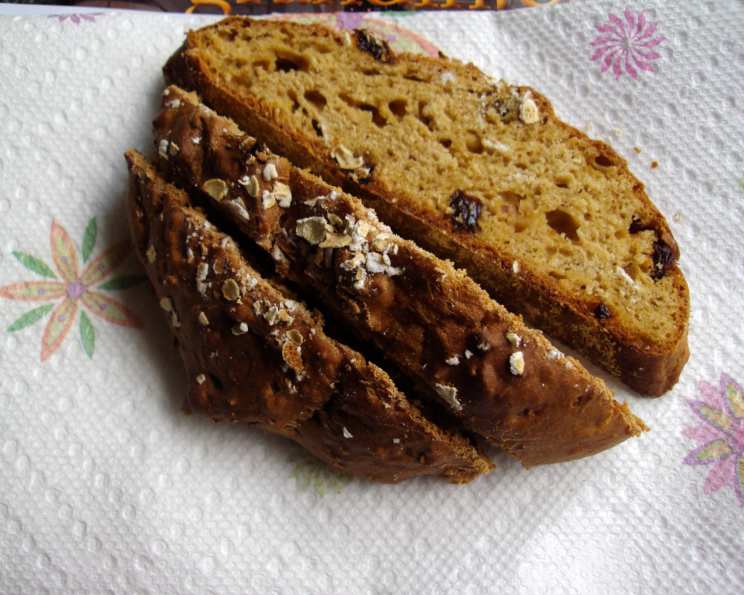
Oatmeal Molasses Bread – No Yeast Quick Bread
The aroma of molasses baking is a powerful memory trigger for me. My grandmother, a formidable woman with a flour-dusted apron and hands that could coax magic from simple ingredients, used to bake a similar dark bread every autumn. The scent, thick and sweet, would fill her cozy kitchen, mingling with the earthy aroma of fallen leaves and woodsmoke. I remember sitting at her worn wooden table, slathering a warm slice with butter, the taste a comforting blend of sweetness and wholesome grains. It was more than just bread; it was a symbol of her love, warmth, and the simple joys of a life well-lived.
Recipe Overview
- Prep Time: 20 minutes
- Cook Time: 35 minutes
- Total Time: 55 minutes
- Servings: 6
- Yield: 2 small loaves
- Dietary Type: Vegetarian
Ingredients
- 2 cups fat-free buttermilk
- 1/2 cup oats
- 1/4 cup unsulphured molasses
- 2 tablespoons vegetable oil
- 2 3/4 cups all-purpose flour
- 1 cup whole wheat flour
- 2 tablespoons sugar
- 1 1/2 teaspoons salt
- 1 teaspoon baking powder
- 1 teaspoon baking soda
- 1 cup raisins or 1 cup currants
- 1 tablespoon yellow cornmeal or 1 tablespoon polenta
Equipment Needed
- Large mixing bowl
- Whisk
- Measuring cups and spoons
- Baking sheet
- Knife or lame
- Wire rack
Instructions
-
Preheat your oven to 400°F (200°C). Make sure the rack is positioned in the center of the oven for even baking.
-
In a large mixing bowl, combine the fat-free buttermilk, oats, unsulphured molasses, and vegetable oil. Whisk these wet ingredients together until they are well incorporated. The oats will begin to soften slightly, which is exactly what you want.
-
In a separate bowl, it’s important to properly measure the dry ingredients. To do this, gently spoon the all-purpose flour and whole wheat flour into your measuring cups, being careful not to pack them down. Then, level off the excess with a knife. This ensures you don’t end up with too much flour, which can result in a dry, dense loaf.
-
Add the sugar, salt, baking powder, and baking soda to the bowl with the flours. Whisk or sift these dry ingredients together until they are thoroughly combined. This helps to evenly distribute the leavening agents, resulting in a lighter, more evenly textured bread.
-
Now, add the wet ingredients to the dry ingredients. Stir everything together just until combined. Be careful not to overmix, as this can develop the gluten in the flour, leading to a tough loaf.
-
Add the raisins or currants to the dough. Stir until the dough pulls together into a shaggy mass. A sturdy wooden spoon or a stiff spatula works well for this step. The dough will be quite sticky at this stage, which is normal.
-
Divide the dough in half. Lightly flour a clean work surface. With each half, turn the dough out onto the floured surface and knead it gently for about 1 minute. Remember, the dough will be sticky, so don’t be tempted to add too much extra flour. Form each half into a 6-inch round loaf and place them on a baking tray that has been sprinkled with cornmeal or polenta. The cornmeal will prevent the loaves from sticking and will add a subtle, pleasant texture to the bottom crust.
-
Using a sharp knife or a lame (a baker’s blade), make three diagonal cuts across the top of each loaf, about 1/4 inch deep. These cuts allow the bread to expand properly during baking, preventing it from cracking unevenly.
-
Bake at 400°F (200°C) for 20 minutes. Then, reduce the oven temperature to 375°F (190°C) and bake for another 15 minutes. These loaves will likely look quite browned on the outside before they are fully cooked, so it’s important to test for doneness.
-
To test for doneness, gently knock on the bottom of one of the loaves. It should sound hollow when finished. If it sounds doughy or heavy, return the loaves to the oven for a few more minutes.
-
Once the loaves are done, remove them from the oven and let them stand on the baking sheet for about 15 minutes before slicing and serving. This allows the internal structure of the bread to set up properly, making it easier to slice.
Expert Tips & Tricks
- Buttermilk substitute: If you don’t have buttermilk on hand, you can make a quick substitute by adding 1 tablespoon of lemon juice or white vinegar to a liquid measuring cup, then filling it to the 1-cup mark with regular milk. Let it stand for 5 minutes before using.
- Sticky dough: Don’t overwork sticky dough. A light touch is key.
- Oven temperature: Ovens can vary, so keep an eye on your bread. If it’s browning too quickly, tent it with foil.
- Freezing: These loaves freeze beautifully. Wrap them tightly in plastic wrap and then in foil before freezing. Thaw at room temperature before slicing and serving.
- Enhance flavor: For a deeper, richer flavor, try using dark molasses instead of regular molasses.
Serving & Storage Suggestions
This Oatmeal Molasses Bread is delicious served warm with a pat of butter, a drizzle of honey, or a dollop of cream cheese. It also pairs well with hearty soups, stews, or chili. For breakfast, try toasting a slice and topping it with your favorite jam or nut butter.
To store, wrap the cooled loaves tightly in plastic wrap or place them in an airtight container. They will keep at room temperature for 2-3 days, in the refrigerator for up to a week, or in the freezer for up to 3 months. To reheat, wrap the loaf in foil and warm it in a 350°F (175°C) oven for about 10-15 minutes.
Nutritional Information
| Nutrient | Amount per Serving | % Daily Value |
|---|---|---|
| Calories | 501 kcal | 25% |
| Total Fat | 7g | 9% |
| Saturated Fat | 1g | 5% |
| Cholesterol | 0mg | 0% |
| Sodium | 862mg | 37% |
| Total Carbohydrate | 102g | 37% |
| Dietary Fiber | 6g | 21% |
| Sugars | 27g | N/A |
| Protein | 12g | 24% |
Note: Nutritional information is an estimate and may vary based on specific ingredients and portion sizes.
Variations & Substitutions
- Spiced bread: Add 1 teaspoon of ground cinnamon, 1/2 teaspoon of ground ginger, and 1/4 teaspoon of ground cloves to the dry ingredients for a warm, spiced version.
- Nutty bread: Add 1/2 cup of chopped walnuts or pecans to the dough along with the raisins or currants.
- Seed bread: Sprinkle the tops of the loaves with sesame seeds, poppy seeds, or sunflower seeds before baking.
- Savory bread: Omit the sugar and add 1/2 cup of grated cheddar cheese and 1/4 cup of chopped fresh chives to the dough.
- Gluten-free: While this recipe is not inherently gluten-free, you can experiment with gluten-free all-purpose flour blends. Be aware that the texture and taste might differ slightly. You may also need to add a binding agent like xanthan gum to help hold the dough together.
FAQs (Frequently Asked Questions)
Q: Why is my bread so sticky?
A: This dough is naturally quite sticky due to the molasses and the high oat content. Resist the urge to add too much extra flour, as this will make the bread dry. A light touch and a well-floured surface are your best friends.
Q: Can I use a different type of flour?
A: You can substitute some of the all-purpose flour with other types of flour, such as spelt flour or rye flour, but be aware that this will affect the texture and flavor of the bread. Start by substituting about 1/2 cup and adjust from there.
Q: How do I know when the bread is done?
A: The best way to check for doneness is to tap on the bottom of the loaf. It should sound hollow. You can also use a toothpick or cake tester inserted into the center of the loaf. If it comes out clean or with just a few moist crumbs attached, the bread is done.
Q: Can I make this bread in a loaf pan?
A: Yes, you can bake this bread in a standard loaf pan. Grease and flour the pan well, then pour in the dough. You may need to adjust the baking time slightly, depending on the size of the pan.
Q: Why isn’t my bread rising very much?
A: This is a quick bread, so it won’t rise as much as a yeast bread. Make sure your baking powder and baking soda are fresh, as these are the leavening agents in this recipe.
Final Thoughts
This Oatmeal Molasses Bread is a wonderfully simple and satisfying recipe, perfect for a cozy weekend bake or a quick weekday bread. The combination of oats, molasses, and buttermilk creates a unique flavor profile that is both wholesome and comforting. Don’t be afraid to experiment with variations and make it your own. I encourage you to give this recipe a try and share your experience with friends and family. Enjoy it warm with a hearty soup or simply slathered with butter – either way, it’s a delicious way to bring a little warmth into your day.