
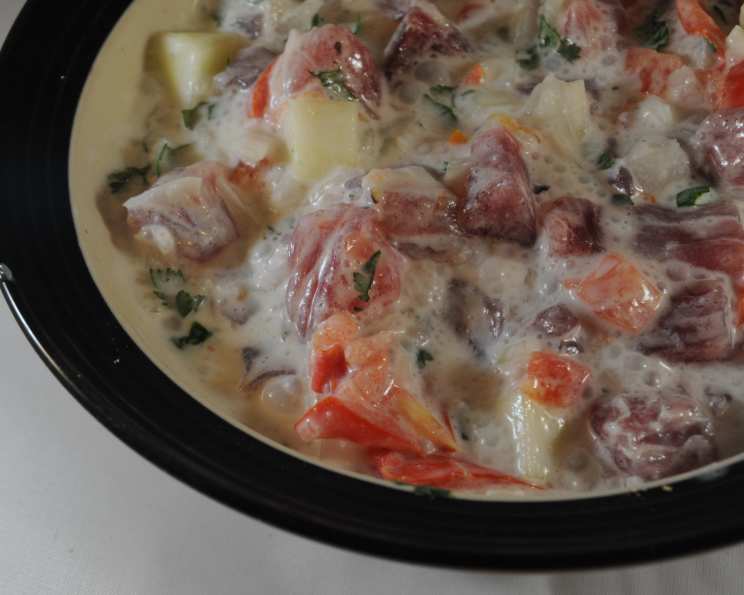
Oka Popo: A Taste of American Samoa’s Raw Fish Stew
The first time I tasted Oka Popo, I was on a tiny, sun-drenched beach in American Samoa. A local family, noticing my bewildered attempts to navigate the vibrant marketplace, invited me to join their picnic. They offered me a bowl of chilled, milky stew studded with colorful vegetables and chunks of what I hesitantly identified as raw fish. One bite, and I was hooked. The creamy coconut milk, the zing of lime, the freshness of the vegetables, and the surprisingly delicate fish – it was a symphony of flavors that danced on my tongue and transported me to a tropical paradise.
Recipe Overview
- Prep Time: 20 minutes
- Cook Time: 45 minutes (brining)
- Total Time: 1 hour 5 minutes
- Servings: 4
- Yield: Approximately 6 cups
- Dietary Type: Dairy-Free
Ingredients
- 2 tablespoons salt
- 2 cups water
- Pepper (to taste)
- 1 lb raw fish, cut into bite-sized pieces (marlin or swordfish is traditional, but you can also use sushi-grade tuna)
- ½ cup cubed cucumber, seeds removed
- 1 tomato, chopped
- ½ onion, finely diced
- 1 cup coconut milk
- 1 tablespoon fresh cilantro, chopped
- Juice of one lime
- Salt and pepper (to taste, for final seasoning)
Equipment Needed
- Large bowl
- Cutting board
- Sharp knife
- Measuring cups and spoons
Instructions
- Prepare the brine: In a large bowl, combine the salt, pepper, and water. Stir until the salt is completely dissolved. This brine is essential for gently “cooking” the fish and adding flavor.
- Brine the fish: Add the bite-sized fish pieces to the brine. Ensure all the fish is submerged. Let it soak for 30 to 45 minutes. This process denatures the proteins in the fish, making it safer and more palatable to consume raw.
- Prepare the vegetables: While the fish is brining, chop the cucumber, tomato, and onion. Finely dice the onion to avoid overpowering the other flavors. Removing the seeds from the cucumber helps prevent the stew from becoming too watery.
- Drain the fish: At the end of the brining time, carefully drain the fish from the brine. Discard the brine. Gently pat the fish dry with a paper towel to remove any excess moisture.
- Combine ingredients: In the bowl with the drained fish, add the coconut milk, chopped cucumber, chopped tomato, diced onion, chopped cilantro, and the juice of one lime.
- Adjust seasoning: Taste the mixture and season with additional salt and pepper as needed. The balance of flavors should be slightly tangy from the lime, creamy from the coconut milk, and savory from the fish and vegetables.
- Chill and serve: Cover the bowl and refrigerate for at least 30 minutes to allow the flavors to meld together. Oka Popo is traditionally served cold.
Expert Tips & Tricks
- Fish Selection: The quality of the fish is paramount when preparing Oka Popo. Always use sushi-grade fish to minimize the risk of foodborne illness. Ask your fishmonger for the freshest, highest-quality tuna, marlin, or swordfish available.
- Coconut Milk: For a richer, creamier Oka Popo, use full-fat coconut milk. Alternatively, you can use light coconut milk for a lighter version.
- Spice Level: For a little heat, add a finely chopped jalapeño pepper along with the other vegetables. Remove the seeds and membranes to control the level of spiciness.
- Vegetable Variations: Feel free to experiment with other vegetables, such as finely diced bell peppers or scallions.
- Brining Time: Don’t exceed the recommended brining time, as the fish can become too salty or tough.
- Lime Juice: Freshly squeezed lime juice is essential for the vibrant flavor of Oka Popo. Avoid using bottled lime juice, which can taste artificial.
- Make Ahead: Oka Popo can be prepared a few hours in advance and stored in the refrigerator. This allows the flavors to meld together even more.
- Thickening: If the Oka Popo is too watery, you can add a small amount of coconut cream or a teaspoon of cornstarch mixed with water to thicken it slightly.
Serving & Storage Suggestions
Serve Oka Popo chilled as an appetizer or light lunch. It pairs perfectly with taro chips, breadfruit, or simply on its own. Garnish with extra cilantro or a wedge of lime.
Leftovers can be stored in an airtight container in the refrigerator for up to 24 hours. Due to the raw fish content, it is best to consume it as soon as possible. Freezing is not recommended, as it can alter the texture of the fish and vegetables. The dish should not be left at room temperature for more than two hours.
Nutritional Information
| Nutrient | Amount per Serving | % Daily Value |
|---|---|---|
| Calories | 320 kcal | 16% |
| Total Fat | 25g | 38% |
| Saturated Fat | 22g | 110% |
| Cholesterol | 45mg | 15% |
| Sodium | 1200mg | 50% |
| Total Carbohydrate | 15g | 5% |
| Dietary Fiber | 2g | 8% |
| Sugars | 10g | – |
| Protein | 10g | 20% |
Note: Nutritional information is an estimate and may vary based on specific ingredients and preparation methods.
Variations & Substitutions
- Vegan Oka Popo: Substitute the raw fish with hearts of palm or firm tofu that has been lightly marinated in soy sauce and lime juice.
- Spicy Oka Popo: Add a finely chopped habanero pepper for an extra kick.
- Citrus Variation: Use a combination of lime, lemon, and orange juice for a more complex citrus flavor.
- Herbal Infusion: Experiment with different herbs, such as mint or basil, in addition to cilantro.
- Regional Adaptations: Adapt the recipe to your local produce by using seasonal vegetables like bell peppers, green beans, or snap peas.
- Creamier Version: Blend a small portion of the coconut milk with avocado for extra creaminess.
FAQs (Frequently Asked Questions)
Q: Is it safe to eat raw fish?
A: Yes, as long as you use sushi-grade fish from a reputable source and follow proper food safety procedures. Brining the fish also helps to minimize the risk of bacteria.
Q: Can I use canned coconut milk?
A: Yes, canned coconut milk works perfectly well. Just make sure to shake the can well before opening.
Q: Can I make this ahead of time?
A: Yes, Oka Popo can be made a few hours in advance and stored in the refrigerator. The flavors will meld together even more over time.
Q: What if I don’t like cilantro?
A: You can substitute cilantro with parsley or omit it altogether.
Q: What should I serve with Oka Popo?
A: Oka Popo is traditionally served with taro chips, breadfruit, or on its own as an appetizer.
Final Thoughts
Oka Popo is more than just a recipe; it’s a taste of paradise, a glimpse into the vibrant culture of American Samoa. Don’t be intimidated by the idea of using raw fish – when prepared properly with fresh ingredients, it’s a truly delightful culinary experience. I encourage you to give this recipe a try, and share your feedback and any creative variations you come up with. Perhaps pair it with a refreshing tropical drink for the full Samoan experience! Fa’afetai tele (thank you very much) for joining me on this culinary adventure.