
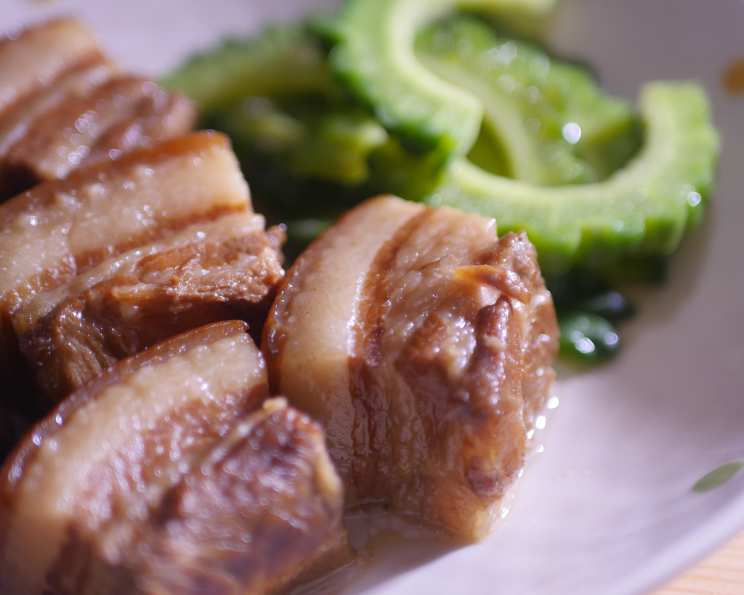
Okinawa Braised Pork Belly (Rafute): A Taste of Paradise
My grandmother, a sprightly woman who moved to Okinawa after the war, always had a pot of rafute simmering on the stove. The sweet, savory aroma, a blend of soy sauce, brown sugar, and that unmistakable hint of awamori, was the soundtrack to my childhood visits. Rafute wasn’t just food; it was a symbol of home, a reminder of simpler times spent laughing around a table, stories swirling as thick as the rich, glistening pork. It’s a taste I’ve chased ever since, and now I’m thrilled to share this piece of my heritage with you.
Recipe Overview
- Prep Time: 30 minutes
- Cook Time: 3 hours 40 minutes
- Total Time: 4 hours 10 minutes
- Servings: 3-4
- Yield: 3-4 servings
- Dietary Type: Not Gluten-Free
Ingredients
- 500 g pork belly
- ½ cup awamori (Okinawan rice liquor)
- 2 cups dashi (Japanese soup stock)
- 4 tablespoons sugar
- 4 tablespoons soy sauce
- 1 inch ginger
- 1 piece bitter melon (goya)
- 1 teaspoon salt
Equipment Needed
- Large pot
- Frying pan
- Small pot
- Knife
- Cutting board
- Spoon
Instructions
-
Take the pork belly out of the refrigerator and allow it to sit at room temperature for about 20 minutes before beginning. This will help it cook more evenly.
-
Heat a frying pan over high heat. Add a small amount of oil – just enough to lightly coat the bottom of the pan – then swirl it around. Once the oil is shimmering, carefully place the pork belly in the pan.
-
Fry the surface of the skin of the pork until it caramelizes and turns a deep brown. Searing the meat in this way is crucial; it dramatically enhances the pork’s flavor by creating a beautiful crust and adding depth to the dish. Watch carefully to avoid burning; you want a rich, dark color, not black.
-
Bring a pot of water to a rolling boil. Gently place the seared pork belly in the boiling water, with the skin side facing up. Boil the pork for about 10 minutes. This step helps to remove excess impurities and fat, resulting in a cleaner, more refined flavor.
-
Remove the pork from the boiling water and immediately rinse it thoroughly under cold, running water. Discard the water used to boil the pork.
-
In a clean pot, place the rinsed pork belly with the skin side up. Add 2 cups of dashi and ½ cup of awamori. If the liquid isn’t enough to fully cover the pork belly, add more dashi until it is submerged.
-
Turn on the heat and bring the liquid in the pot to a boil. As soon as it reaches a boil, immediately reduce the heat to a gentle simmer. Cover the pot and allow the pork belly to simmer for at least 1 hour, or until the pork becomes noticeably tender. The longer it simmers, the more melt-in-your-mouth the texture will become.
-
Carefully remove the pork belly from the pot and set it aside to cool slightly. Once it’s cool enough to handle, slice the pork into approximately 5-centimeter cubes. These bite-sized pieces will absorb even more of the flavorful braising liquid.
-
Now, let’s work with the broth. Allow the broth to cool completely, then transfer it to the refrigerator and chill for about 2 hours, or until the fat solidifies on the surface.
-
Once the fat has solidified, carefully skim it off the top of the broth and discard it. This step is optional, but it helps to remove excess fat and create a lighter, more balanced final dish.
-
Return the pork belly slices to the pot with the reserved, defatted broth. Add enough additional dashi to just cover the pork belly slices.
-
Add some sliced ginger to the pot. This fragrant spice adds a warm, subtle kick that complements the richness of the pork. Bring the liquid back to a boil over medium heat.
-
Add the sugar and soy sauce to the pot. Reduce the heat to the lowest setting, allowing the pork to gently simmer in the sweet and savory sauce.
-
Continue simmering the pork for about 1 hour, or until the pork becomes exceptionally soft and tender, and the fatty part of the pork takes on a beautiful, glossy sheen. Stir occasionally to prevent sticking and ensure even cooking.
-
While the rafute is simmering, you can prepare the bitter melon (goya), a traditional accompaniment to this dish. Cut the bitter melon in half lengthwise, then use a spoon to scoop out the white, pithy center, which contains the seeds.
-
Slice the bitter melon crosswise into pieces about 2-centimeters thick. Place the sliced bitter melon in a bowl and cover it with about 2-3 cups of water. Add 1 teaspoon of salt and allow the bitter melon to soak for 30 minutes. This soaking process helps to draw out some of the bitterness.
-
Drain the bitter melon and discard the salty water.
-
Bring fresh water to a boil in a small pot. Add the drained bitter melon and boil for 2-3 minutes, or until it is slightly softened.
-
Remove the bitter melon from the boiling water and drain well.
-
To serve, arrange the rafute in a bowl or on a plate, with the bitter melon alongside. Spoon a little of the rich, flavorful broth over the pork.
Expert Tips & Tricks
- Don’t skimp on the searing: That initial browning of the pork belly is key to developing deep, complex flavors.
- Adjust sweetness to your taste: If you prefer a less sweet dish, reduce the amount of sugar slightly. Conversely, add a little more if you have a sweet tooth.
- Use a pressure cooker: To significantly reduce cooking time, you can adapt this recipe for a pressure cooker. Follow steps 1-7, then pressure cook on high for 30-40 minutes, followed by a natural pressure release. Then continue with the remaining steps.
Serving & Storage Suggestions
Serve rafute hot, garnished with chopped scallions or a sprinkle of sesame seeds. It’s delicious with steamed rice and the prepared bitter melon.
Leftover rafute can be stored in an airtight container in the refrigerator for up to 5 days. Reheat gently in a saucepan over low heat or in the microwave.
Rafute also freezes well. Allow it to cool completely, then transfer it to a freezer-safe container. It can be frozen for up to 3 months. Thaw overnight in the refrigerator before reheating.
Nutritional Information
| Nutrient | Amount per Serving | % Daily Value |
|---|---|---|
| Calories | 944.3 kcal | N/A |
| Calories from Fat | 796 g | 84% |
| Total Fat | 88.5 g | 136% |
| Saturated Fat | 32.3 g | 161% |
| Cholesterol | 120.2 mg | 40% |
| Sodium | 2169.4 mg | 90% |
| Total Carbohydrate | 18.1 g | 6% |
| Dietary Fiber | 0.2 g | 0% |
| Sugars | 17.2 g | 68% |
| Protein | 18.1 g | 36% |
Note: Nutritional information is an estimate and may vary depending on specific ingredients and preparation methods.
Variations & Substitutions
- Gluten-Free: Use tamari instead of soy sauce to make this dish gluten-free.
- Spice it Up: Add a pinch of red pepper flakes or a small piece of dried chili pepper to the braising liquid for a touch of heat.
- Vegetable Boost: Add other vegetables to the braising liquid, such as daikon radish or shiitake mushrooms, for added flavor and nutrition.
- Sweetness Alternative: Replace white sugar with brown sugar or Okinawan kokuto (black sugar) for a richer, more complex sweetness.
FAQs (Frequently Asked Questions)
Q: Can I use sake instead of awamori?
A: While awamori is traditional, sake can be used as a substitute, though it will slightly alter the flavor profile.
Q: Is the bitter melon necessary?
A: No, the bitter melon is optional. However, its slightly bitter flavor provides a nice counterpoint to the richness of the pork.
Q: How do I know when the pork belly is cooked enough?
A: The pork is ready when it is fork-tender and easily pulls apart. The fat should be translucent and glossy.
Q: Can I make this in a slow cooker?
A: Yes, you can. Sear the pork as instructed, then place all ingredients in a slow cooker and cook on low for 6-8 hours, or until the pork is very tender.
Q: What can I serve with rafute besides bitter melon?
A: Rafute pairs well with steamed rice, pickled vegetables, and a side of miso soup.
Final Thoughts
I hope this recipe allows you to experience a little piece of Okinawa in your own kitchen. The slow simmering process may take time, but the reward is well worth the effort – a deeply flavorful, incredibly tender pork belly that will transport your taste buds. Don’t be afraid to experiment with the variations and substitutions to make it your own. Share your creations and feedback, and enjoy this taste of paradise!