
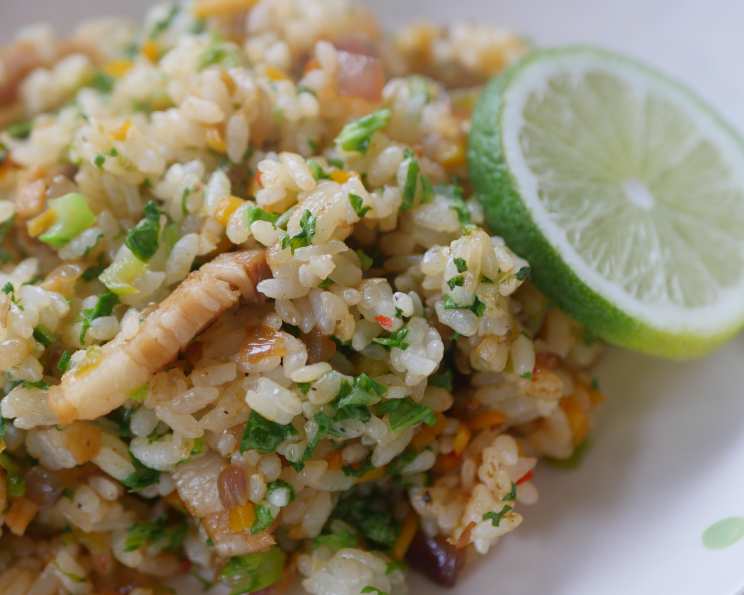
Okinawa Fried Rice With Mustard Green (Karashina Yakimeshi)
The first time I tasted karashina yakimeshi, I was wandering through a bustling market in Naha, Okinawa. The savory aroma, a blend of salty pork and earthy mustard greens, drew me to a small stall overflowing with steaming bowls. One bite, and I was hooked. The subtle bitterness of the mustard greens, perfectly balanced by the rich pork and umami-packed rice, was an explosion of flavors that transported me straight to the heart of Okinawan cuisine. It’s a dish that speaks of resourcefulness and simple pleasures, a taste of home for many islanders.
Recipe Overview
- Prep Time: 20 minutes
- Cook Time: 45 minutes
- Total Time: 1 hour 5 minutes
- Servings: 2
- Yield: 2 servings
- Dietary Type: Varies (can be modified to be gluten-free)
Ingredients
- 1 cup Japanese rice
- 1 cup water
- 75 g mustard green (karashina)
- 2 garlic cloves
- 1/4 piece onion
- 50 g carrots
- 75 g Okinawa salt pork
- 1/2 tablespoon vegetable oil
- 1 1/2 teaspoons broad chili bean paste (doubanjiang)
- 1 tablespoon soy sauce
- 1 pinch pepper
- 1 pinch salt
Equipment Needed
- Pot with lid
- Strainer
- Cutting board
- Knife
- Frying pan or wok
Instructions
-
Begin by preparing the rice. Wash the Japanese rice 1-2 times, until the water runs relatively clear. This step removes excess starch, which helps prevent the rice from becoming sticky. After washing, soak the rice in the water for about 30 minutes. This allows the rice to absorb moisture, resulting in a fluffier texture after cooking.
-
After soaking, use a strainer to thoroughly drain the water from the rice. Transfer the drained rice to a pot and add 1 cup of fresh water. Cover the pot with a lid.
-
Place the pot over medium-high heat and bring the rice to a boil. Once boiling, immediately reduce the heat to low and continue to cook until most of the water has been absorbed. This usually takes around 10 minutes. You should see small holes forming on the surface of the rice as the water evaporates.
-
Once the water is nearly gone, turn off the heat, but keep the pot covered for an additional 10 minutes. The residual heat and steam will continue to cook the rice, ensuring it’s perfectly fluffy. Resist the urge to lift the lid during this final steaming phase to preserve the heat and moisture inside.
-
While the rice is cooking, prepare the karashina. Wash the mustard green thoroughly, paying special attention to the root area where soil might be trapped. Remove the root end. Then, cut and separate the stem from the main leaf of the karashina. Because the stem takes longer to cook than the leaves, keeping them separate ensures even cooking. Finely chop the stem and the main leaf portions separately.
-
Next, prepare the remaining vegetables. Finely mince the garlic and onion. Finely mince the carrots as well.
-
Slice the Okinawa salt pork into thin strips.
-
Now it’s time to cook the fried rice. Heat a frying pan or wok over medium heat. Add the vegetable oil. Once the oil is hot, add the minced garlic and onion. Sauté the garlic and onion until the onion becomes soft and translucent.
-
Add the sliced salt pork to the pan and stir-fry until the pork has turned brown and is cooked through. This will release delicious rendered pork fat that adds to the overall flavor of the dish.
-
Create a small space in the center of the pan. Add the doubanjiang to this space. Cook the doubanjiang for about a minute before mixing it with the other ingredients. This helps to bloom the flavors of the chili bean paste, intensifying its umami and spicy notes.
-
Stir the doubanjiang into the rest of the ingredients in the pan, ensuring everything is well combined. Add the soy sauce and stir to distribute it evenly.
-
Add the minced stem part of the karashina and the minced carrots to the pan. Continue stirring to incorporate them into the mixture. Season with a pinch of salt and a pinch of pepper.
-
Add the cooked steamed rice to the pan. When mixing the rice, use a gentle folding motion to avoid crushing the grains. This will help maintain the fluffy texture of the rice.
-
Add the minced leaf part of the karashina to the pan. Continue stirring until all the ingredients are thoroughly combined and heated through. The karashina leaves will wilt slightly, releasing their characteristic slightly bitter flavor.
-
Serve the Okinawa fried rice with mustard green hot and enjoy!
Expert Tips & Tricks
- For a deeper flavor, consider marinating the salt pork in a mixture of soy sauce, sake, and ginger before cooking.
- If you can’t find Okinawa salt pork, you can substitute with bacon or pancetta.
- Adjust the amount of doubanjiang according to your spice preference.
- To prevent the rice from sticking to the pan, make sure the pan is well-heated before adding the oil and rice.
- If you prefer a slightly sweeter flavor, add a touch of sugar or mirin to the fried rice.
Serving & Storage Suggestions
Serve Okinawa Fried Rice with Mustard Green immediately while it’s hot. Garnish with extra chopped karashina for a fresh, vibrant touch. You can also serve it with a side of miso soup or pickled vegetables.
Leftovers can be stored in an airtight container in the refrigerator for up to 2 days. To reheat, simply microwave until warmed through, or stir-fry in a pan with a little oil. While it’s best enjoyed fresh, reheating won’t significantly impact the flavor.
Nutritional Information
| Nutrient | Amount per Serving | % Daily Value |
|---|---|---|
| Calories | 707.6 kcal | N/A |
| Calories from Fat | 321 g | 45% |
| Total Fat | 35.7 g | 54% |
| Saturated Fat | 11.7 g | 58% |
| Cholesterol | 32.2 mg | 10% |
| Sodium | 1562.2 mg | 65% |
| Total Carbohydrate | 83.4 g | 27% |
| Dietary Fiber | 3.5 g | 13% |
| Sugars | 1.8 g | 7% |
| Protein | 11.4 g | 22% |
Note: Nutritional information is an estimate and may vary based on specific ingredients and preparation methods.
Variations & Substitutions
- Gluten-Free: Use tamari instead of soy sauce for a gluten-free version.
- Vegetarian: Omit the salt pork and use mushrooms or tofu for added protein and umami. You can also add a dash of sesame oil for extra flavor.
- Spicy: Add more doubanjiang or a pinch of chili flakes for a spicier kick.
- Other Vegetables: Feel free to add other vegetables like bell peppers, edamame, or bean sprouts for added texture and nutrition.
FAQs (Frequently Asked Questions)
Q: What is doubanjiang?
A: Doubanjiang is a spicy, savory paste made from fermented broad beans, chili peppers, and salt. It’s a key ingredient in many Sichuan dishes and adds a unique umami flavor to this fried rice.
Q: Can I use regular mustard greens if I can’t find karashina?
A: Yes, you can substitute with other types of mustard greens, but be aware that the flavor may be slightly different. Karashina has a distinct peppery and slightly bitter taste that sets it apart.
Q: How can I make this recipe vegan?
A: To make this recipe vegan, simply omit the salt pork and use a plant-based alternative like tofu or mushrooms. Ensure your doubanjiang is also vegan, as some varieties may contain animal products.
Q: Can I prepare the rice in advance?
A: Yes, you can cook the rice ahead of time and store it in the refrigerator for up to 2 days. This can save you time when you’re ready to make the fried rice.
Q: How do I prevent the rice from becoming mushy?
A: The key to preventing mushy rice is to wash it thoroughly before cooking and to avoid overcooking it. Also, use a gentle folding motion when mixing the rice in the pan.
Final Thoughts
Okinawa Fried Rice with Mustard Green is more than just a recipe; it’s a culinary journey to the beautiful islands of Japan. The unique combination of flavors and textures creates a truly unforgettable dish that is both comforting and exciting. I encourage you to try this recipe and experience the taste of Okinawa for yourself. Don’t be afraid to experiment with different variations and make it your own. And be sure to share your creations with friends and family! Itadakimasu!