
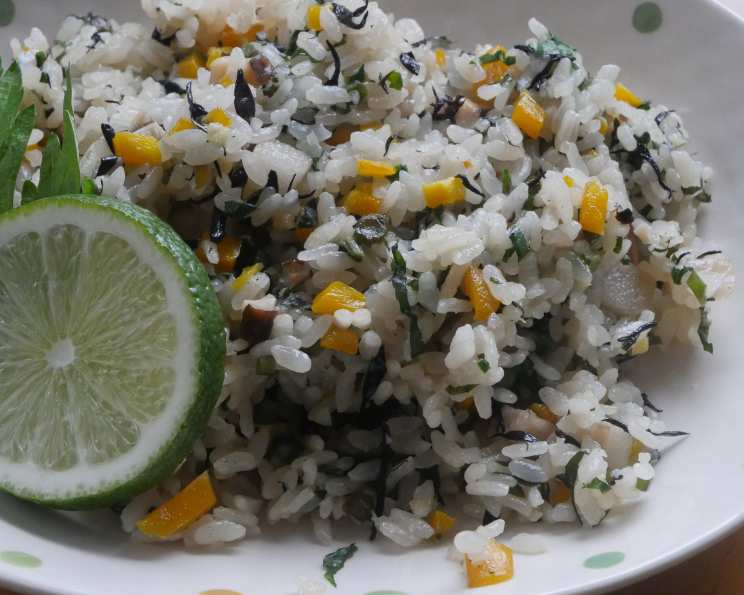
Okinawa Mixed Rice With Japanese Mugwort: A Taste of Island Comfort
The aroma always takes me back. As a child, my grandmother would gather yomogi from the fields surrounding her Okinawan home. Its earthy, slightly bitter fragrance would fill the kitchen as she prepared Okinawa Mixed Rice, a dish that seemed to capture the very essence of the island itself. The vibrant green of the mugwort, the savory depth of the pork and shiitake – it was more than just a meal; it was a taste of home, a memory woven into every grain of rice. This is her recipe, as close as I can recreate it, and I hope it brings you as much comfort and joy as it has brought me.
Recipe Overview
- Prep Time: 30 minutes
- Cook Time: 20 minutes
- Total Time: 50 minutes
- Servings: 2-3
- Dietary Type: Gluten-Free (if using gluten-free soy sauce)
Ingredients
- 2 cups Japanese rice
- 2 pieces dried shiitake mushrooms, soaked in water for 20 minutes
- 2 tablespoons hijiki seaweed, hydrated
- 75 g salt pork
- 50 g Okinawa carrots (or regular carrots)
- 2 teaspoons ginger
- ½ tablespoon sake
- ½ tablespoon soy sauce
- ¼ teaspoon salt
- 1 cup shiitake water (reserved from soaking mushrooms)
- 1 cup dashi stock
- ½ cup Japanese mugwort (yomogi), finely chopped
Equipment Needed
- Medium-sized pot with a lid
- Knife
- Cutting board
- Measuring cups and spoons
- Strainer
Instructions
-
Begin by preparing the rice. Wash the Japanese rice gently 1-2 times to remove excess starch. This will prevent the rice from becoming too sticky. After washing, soak the rice in water for approximately 30 minutes. Soaking allows the rice to absorb moisture evenly, resulting in a more tender and fluffy texture after cooking.
-
While the rice is soaking, prepare the yomogi. Wash the Japanese mugwort thoroughly to remove any dirt or debris. Then, using a sharp knife, finely chop the yomogi. Set the chopped yomogi aside. It will be added after the rice is cooked to preserve its vibrant green color and fresh flavor.
-
Next, focus on the shiitake mushrooms. Soak the dried shiitake mushrooms in water for about 20 minutes. This rehydrates the mushrooms and releases their umami-rich flavor into the water. After soaking, squeeze out any excess water from the shiitake mushrooms, being careful to reserve the water used for soaking. This shiitake water will be used later to add depth of flavor to the rice. Remove the hard stem part of the mushrooms and discard. Mince the head part of the mushrooms into small pieces.
-
Prepare the carrots. Peel the Okinawa carrots (or regular carrots) and cut them into thin slices. Then, finely chop the sliced carrots into small pieces, ensuring they will cook evenly with the rice.
-
Mince the ginger. Peel the ginger and finely mince it using a sharp knife or a ginger grater. Mincing the ginger releases its aromatic oils and provides a warm, spicy note to the dish.
-
Prepare the salt pork. Chop the salt pork into small, bite-sized pieces. The salt pork will render its fat during cooking, adding richness and savory flavor to the rice.
-
Hydrate the hijiki seaweed. If using dried hijiki, soak it in water to rehydrate for approximately 20 minutes. After rehydrating, drain the hijiki thoroughly before using. If using canned hijiki, it can be used immediately after draining.
-
Prepare the flavorful liquid mixture. In a separate bowl, combine the sake, soy sauce, salt, shiitake water, and dashi stock. Mix well to ensure the salt is fully dissolved. This liquid mixture will be absorbed by the rice during cooking, infusing it with savory and umami flavors.
-
Combine all ingredients in a pot. Use a strainer to thoroughly drain the soaked rice. Transfer the drained rice to a medium-sized pot. Add the chopped salt pork, minced shiitake mushrooms, hydrated hijiki seaweed, chopped carrots, and minced ginger to the pot. Pour the prepared liquid mixture over the rice and other ingredients. Mix everything well to ensure the flavors are evenly distributed. Put the lid on the pot.
-
Cook the rice. Turn the heat to medium-high and bring the rice to a boil. Once the rice starts to boil, reduce the heat to low. Simmer the rice until all the liquid is absorbed. This usually takes about 10 minutes, but the cooking time may vary depending on your stove. Keep the pot covered during this process to trap the steam and ensure the rice cooks evenly.
-
Steam the rice. Once the liquid has evaporated, turn off the heat. It’s crucial to keep the pot covered for an additional 10 minutes without lifting the lid. This steaming process allows the rice to fully cook and develop a tender, fluffy texture.
-
Incorporate the yomogi. After the 10-minute steaming period, remove the lid from the pot. Add the finely chopped Japanese mugwort (yomogi) to the cooked rice. Gently mix the yomogi into the rice, ensuring it is evenly distributed throughout. The residual heat from the rice will slightly wilt the yomogi, releasing its unique aroma and flavor.
-
Serve. Transfer the Okinawa Mixed Rice with Japanese Mugwort to a serving plate or bowl. Serve immediately and enjoy!
Expert Tips & Tricks
- For a richer flavor: Try using a higher quality dashi stock, or even making your own from scratch.
- Adjusting the saltiness: Taste the liquid mixture before adding it to the rice. If it seems too salty, reduce the amount of soy sauce or salt.
- Don’t have yomogi? While it’s the star of the dish, you can use other greens like spinach (though the flavor profile will be different). Add spinach in the last 5 minutes of cooking.
- Preventing sticking: Make sure you use a pot with a heavy bottom to prevent the rice from sticking and burning.
- Rice Consistency: If your rice ends up too dry, add a tablespoon or two of water and steam for another 5 minutes. If it’s too wet, cook uncovered on low heat for a few minutes to evaporate the excess moisture.
Serving & Storage Suggestions
Serve this Okinawa Mixed Rice with Japanese Mugwort hot, as a main course or a side dish. It pairs well with grilled fish, tofu, or a simple miso soup.
Leftovers can be stored in an airtight container in the refrigerator for up to 3 days. To reheat, microwave until heated through, or steam gently on the stovetop with a tablespoon of water to prevent drying out. Freezing is not recommended as the rice texture may change.
Nutritional Information
| Nutrient | Amount per Serving | % Daily Value (Approximate) |
|---|---|---|
| Calories | 450 kcal | 23% |
| Total Fat | 15 g | 19% |
| Saturated Fat | 5 g | 25% |
| Cholesterol | 20 mg | 7% |
| Sodium | 800 mg | 35% |
| Total Carbohydrate | 60 g | 22% |
| Dietary Fiber | 3 g | 11% |
| Sugars | 2 g | – |
| Protein | 12 g | 24% |
Nutritional information is an estimate and may vary based on specific ingredients and portion sizes.
Variations & Substitutions
- Vegan version: Substitute the salt pork with diced firm tofu or more shiitake mushrooms. Ensure the dashi stock is vegan (kombu dashi).
- Gluten-free: Use gluten-free soy sauce to ensure the dish is entirely gluten-free.
- Spicy kick: Add a pinch of red pepper flakes or a small amount of gochujang to the liquid mixture for a spicy twist.
- Seasonal vegetables: Incorporate other seasonal vegetables like bamboo shoots in spring or kabocha squash in autumn.
FAQs (Frequently Asked Questions)
Q: Can I use regular carrots instead of Okinawa carrots?
A: Yes, regular carrots are a perfectly acceptable substitute. Okinawa carrots are slightly sweeter, but the difference is minimal.
Q: Where can I find Japanese mugwort (yomogi)?
A: You can find yomogi at some Asian markets, especially those specializing in Japanese ingredients. If you can’t find it fresh, you might be able to find it dried or frozen. As mentioned, spinach can be used with a caveat on the flavor profile.
Q: Can I make this recipe in a rice cooker?
A: Yes, you can adapt this recipe for a rice cooker. Follow the same steps for preparing the ingredients, then add everything to the rice cooker. Use the “mixed rice” or “brown rice” setting if available.
Q: How do I know when all the liquid has been absorbed?
A: You’ll see small steam holes forming on the surface of the rice, and when you tilt the pot slightly, you shouldn’t see any liquid pooling at the bottom.
Q: Is it important to let the rice steam after cooking?
A: Yes, the steaming process is crucial for achieving the perfect texture. It allows the rice to fully cook and become fluffy.
Final Thoughts
This Okinawa Mixed Rice with Japanese Mugwort is more than just a recipe; it’s a connection to a culture, a memory, and a taste of home. The unique flavor of the yomogi combined with the savory ingredients creates a truly unforgettable dish. I encourage you to try this recipe and experience the warmth and comfort it brings. Experiment with variations, share it with loved ones, and don’t be afraid to make it your own. Let me know in the comments how it turned out! Kuumaami! (Enjoy!)