
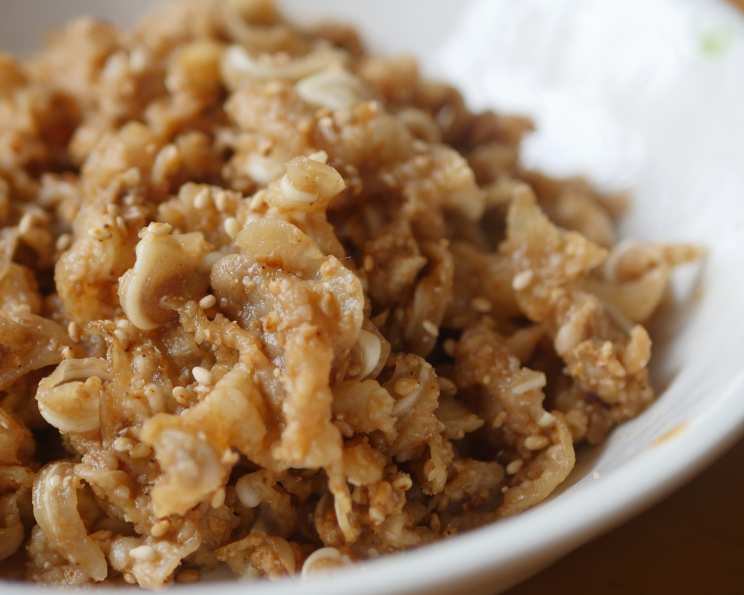
Okinawa Pork Ears in Sesame Sauce (Mimigar Gomaae)
The first time I tried Mimigar Gomaae, I was wandering through the bustling Makishi Public Market in Naha, Okinawa. The air hummed with the energy of vendors hawking their wares – vibrant sea grapes, pungent awamori, and colorful sweets. Tucked away in a corner stall, a woman offered me a small sample of something unfamiliar. The slightly chewy texture, balanced by the nutty sesame and tangy sauce, was an explosion of flavor. It was unlike anything I’d ever tasted, and I was instantly hooked, not only by the dish itself but by the spirit of Okinawan cuisine that it represented.
Recipe Overview
- Prep Time: 5 minutes
- Cook Time: 1 minute
- Total Time: 6 minutes
- Servings: 3-4
- Dietary Type: Not specified (Contains Pork)
Ingredients
- 100 g pork ears, pre-boiled and shredded
- 3 tablespoons toasted sesame seeds
- 1 tablespoon sugar
- 1 tablespoon soy sauce
- 1 tablespoon vinegar
Equipment Needed
- Pot
- Strainer
- Mortar and pestle
- Small bowl
- Large bowl
- Serving plate
Instructions
- Bring water in a pot to a boil.
- Boil the pork ears for about a minute to ensure they are heated through and to remove any excess oil or impurities.
- Take the pork ears from the boiling water, set aside, and use a strainer to drain thoroughly. Getting rid of excess water will ensure the sauce coats the ears properly.
- Grind the toasted sesame seeds with a mortar and pestle. For added texture, you can leave some sesame seeds unground. This creates a deeper, more complex sesame flavor. Don’t overgrind; a slightly coarse texture is perfect.
- In a small bowl, combine the ground sesame seeds, sugar, soy sauce, and vinegar. Mix well until the sugar is dissolved and the sauce is emulsified. This ensures an even distribution of flavor throughout the dish.
- In a larger bowl, combine the drained pork ears and the sesame sauce.
- Mix well until the ingredients are thoroughly combined and the pork ears are evenly coated in the sauce.
- Put the Mimigar Gomaae on a serving plate.
- Top with some more toasted sesame seeds before serving for an extra nutty flavor and visual appeal.
Expert Tips & Tricks
- Toasting Sesame Seeds: Toasting sesame seeds enhances their nutty flavor. You can toast them in a dry pan over medium heat for a few minutes, stirring constantly until golden brown and fragrant. Be careful not to burn them.
- Pork Ear Preparation: Look for pre-boiled and shredded pork ears at Asian markets or online to save time. If you can only find whole pork ears, you’ll need to boil them yourself until tender, then slice them thinly.
- Adjusting the Sauce: Taste the sauce before adding it to the pork ears and adjust the sugar, soy sauce, or vinegar to your liking. The perfect balance is a harmonious blend of sweet, salty, and tangy.
- Infusing Flavors: For a more intense flavor, let the pork ears marinate in the sesame sauce for at least 30 minutes before serving. This allows the flavors to meld together beautifully.
- Serving Temperature: While typically served cold or at room temperature, you can lightly warm the dish in the microwave if preferred. Just be careful not to overheat it, as it can make the pork ears rubbery.
Serving & Storage Suggestions
Mimigar Gomaae is best served as a cold appetizer or side dish. Garnish it with extra toasted sesame seeds and perhaps a sprig of green onion for added visual appeal. It pairs wonderfully with other Okinawan specialties like Goya Champuru (bitter melon stir-fry) or Rafute (braised pork belly).
Store leftover Mimigar Gomaae in an airtight container in the refrigerator. It will keep for up to 2-3 days. Be aware that the texture of the pork ears may change slightly upon refrigeration, becoming a bit firmer. Reheating is not generally recommended, as it can affect the texture negatively. It’s best enjoyed cold or at room temperature.
Nutritional Information
| Nutrient | Amount per Serving | % Daily Value |
|---|---|---|
| Calories | 168 kcal | N/A |
| Fat | 9.9 g | N/A |
| Saturated Fat | 2 g | N/A |
| Cholesterol | 28 mg | N/A |
| Sodium | 355.2 mg | N/A |
| Carbohydrate | 8.2 g | N/A |
| Fiber | 2 g | N/A |
| Sugars | 4.3 g | N/A |
| Protein | 12.2 g | N/A |
Note: Nutritional information is an estimate and may vary based on specific ingredients and portion sizes.
Variations & Substitutions
- Vegetarian/Vegan Option: While the core ingredient of this dish is pork ears, you could potentially substitute with something like shredded king oyster mushrooms for a similar texture, though the flavor will be different.
- Spice it Up: Add a pinch of red pepper flakes or a dash of chili oil to the sesame sauce for a spicy kick.
- Add Garlic: Mince a clove of garlic and add it to the sesame sauce for a more pungent flavor.
- Use Different Vinegar: Rice vinegar is traditional, but you can experiment with other types of vinegar, such as apple cider vinegar or white wine vinegar, to see what you prefer.
- Nut Butter Variation: For a richer, creamier sauce, try adding a small amount of peanut butter or almond butter to the sesame sauce.
- Citrus Zest: Adding a little bit of citrus zest (lemon, lime, or orange) can brighten up the flavor of the dish.
FAQs (Frequently Asked Questions)
Q: Can I use pre-ground sesame seeds instead of grinding them myself?
A: While you can use pre-ground sesame seeds, grinding them fresh just before use releases more of their aromatic oils and results in a more flavorful dish.
Q: Where can I find pre-boiled and shredded pork ears?
A: Check Asian supermarkets, particularly those specializing in Japanese or Okinawan ingredients. You may also be able to find them online.
Q: Can I make this dish ahead of time?
A: Yes, you can make Mimigar Gomaae a few hours in advance. Store it in an airtight container in the refrigerator until ready to serve. The flavors will meld together even more over time.
Q: What if I can’t find rice vinegar?
A: You can substitute with white wine vinegar or apple cider vinegar, but the flavor will be slightly different. Rice vinegar has a milder, slightly sweeter taste.
Q: Is it necessary to boil the pork ears again if they are already pre-boiled?
A: Boiling them briefly ensures they are heated through and removes any excess oil or impurities. It also helps to freshen them up.
Final Thoughts
Mimigar Gomaae is more than just a dish; it’s a taste of Okinawa. The interplay of textures and flavors—the chewiness of the pork ears, the nutty aroma of sesame, the tang of vinegar, and the subtle sweetness of sugar—is a testament to the island’s unique culinary heritage. I encourage you to try this recipe and experience the vibrant flavors of Okinawa for yourself. Don’t be afraid to experiment with the sauce to find your perfect balance, and feel free to share your creations and feedback. Pair it with a cold Orion beer for an authentic Okinawan experience!