
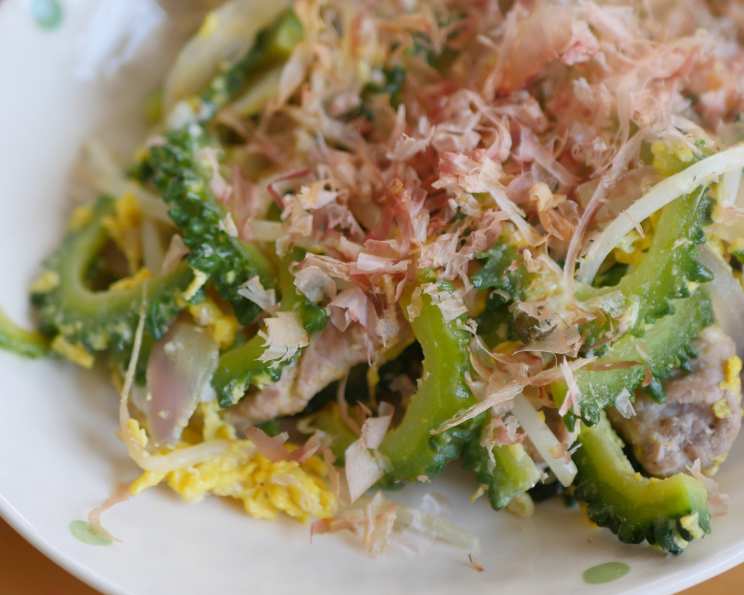
Okinawa Stir-Fried Bitter Melon (Goya Chanpuru)
The first time I tried Goya Chanpuru, I was a culinary student backpacking through Japan. A tiny, family-run Izakaya in Naha, Okinawa, served it. The bitterness of the goya, tempered by the savory pork and perfectly cooked egg, was a revelation. It was unlike anything I’d ever tasted – a symphony of flavors that both challenged and comforted. That single bite sparked a lifelong fascination with Okinawan cuisine and the resourcefulness of island cooking.
Recipe Overview:
- Prep Time: 35 minutes
- Cook Time: 10 minutes
- Total Time: 45 minutes
- Servings: 2
- Dietary Type: Gluten-Free (depending on bonito flakes), Dairy-Free
Ingredients:
- 1 large piece bitter melon (goya)
- 2 teaspoons salt
- 150 g thinly sliced pork
- 100 g bean sprouts
- ½ onion
- 2 eggs
- 1 tablespoon sesame oil
- ¼ teaspoon salt
- ¼ teaspoon pepper
- 5 g dried bonito flakes (katsuoboshi)
Equipment Needed:
- Cutting board
- Sharp knife
- Large bowl
- Wok or large frying pan
- Spatula
Instructions:
- Begin by preparing the bitter melon. Cut the goya lengthwise, then use a spoon to remove the white pith and seeds from the center. These are the most bitter parts of the melon, so removing them is essential.
- Thinly slice the bitter melon crosswise. The thinner the slices, the less intense the bitterness will be.
- Place the sliced bitter melon in a bowl and add 2 teaspoons of salt. Add just enough water to cover the melon. Soak for about 30 minutes. This process helps to draw out some of the bitterness. After 30 minutes, drain the goya thoroughly.
- While the bitter melon is soaking, prepare the other ingredients. Thinly slice the onion. Wash the bean sprouts and drain them well.
- In a separate bowl, whisk the two eggs together. Set aside.
- Heat a wok or large frying pan over medium-high heat. Add 1 tablespoon of sesame oil.
- Add the sliced onion to the hot pan and stir-fry until softened, about 2-3 minutes.
- Add the thinly sliced pork to the pan and continue to stir-fry until the pork is browned and cooked through. For best results, ensure the pork is at room temperature for about 20 minutes before cooking. This promotes even cooking.
- Once the pork is cooked, add the drained bitter melon to the pan and continue to stir-fry until the bitter melon has softened slightly, about 3-4 minutes.
- Add the bean sprouts to the pan. Season with ¼ teaspoon of salt and ¼ teaspoon of pepper. Stir-fry for about a minute, until the bean sprouts are slightly tender but still crisp.
- Pour the whisked eggs over the mixture in the pan. Cook while stirring occasionally until the egg is slightly firm, about 1-2 minutes. Be careful not to overcook the eggs. They should be slightly soft and creamy.
- Remove from heat and serve immediately. Garnish with dried bonito flakes (katsuoboshi) on top.
Expert Tips & Tricks:
- Reducing Bitterness: The key to enjoying Goya Chanpuru is managing the bitterness of the goya. Aside from salting and soaking, you can also briefly blanch the sliced goya in boiling water before adding it to the pan. However, be careful not to overcook it, as it will lose its texture.
- Pork Preparation: Using thinly sliced pork belly (or even Spam, for a more authentic Okinawan experience) works best. Marinating the pork in a little soy sauce and ginger beforehand can also enhance the flavor.
- Egg Consistency: For a creamier egg texture, try adding a tablespoon of dashi (Japanese soup stock) to the whisked eggs.
- Make-Ahead Tip: You can slice the goya and soak it in salt water in advance. Store it in the refrigerator until ready to use.
Serving & Storage Suggestions:
Goya Chanpuru is best served immediately while it’s hot and the flavors are fresh. It’s a complete meal on its own, but it also pairs well with a bowl of steamed rice and a side of miso soup.
Leftovers can be stored in an airtight container in the refrigerator for up to 2 days. Reheat gently in a pan over medium heat, adding a splash of water if needed to prevent drying out. Microwaving is also an option, but the texture may suffer slightly. Freezing is not recommended as the texture of the goya and eggs will change significantly.
Nutritional Information:
| Nutrient | Amount per Serving | % Daily Value |
|---|---|---|
| Calories | 309.4 kcal | N/A |
| Calories from Fat | 167 g | 54% |
| Total Fat | 18.6 g | 28% |
| Saturated Fat | 4.9 g | 24% |
| Cholesterol | 249 mg | 83% |
| Sodium | 2732.6 mg | 113% |
| Total Carbohydrate | 6.1 g | 2% |
| Dietary Fiber | 1.5 g | 5% |
| Sugars | 3.5 g | 13% |
| Protein | 28.8 g | 57% |
Note: Nutritional information is an estimate and may vary based on specific ingredients and cooking methods.
Variations & Substitutions:
- Tofu Chanpuru: Substitute the pork with firm tofu, crumbled and pan-fried until golden brown. This makes a great vegetarian option.
- Spam Chanpuru: For a truly Okinawan experience, use Spam instead of pork.
- Vegetable Variations: Add other vegetables such as carrots, bell peppers, or shiitake mushrooms.
- Vegan Option: Omit the pork and eggs. Substitute the eggs with a tofu scramble seasoned with turmeric for color and black salt (kala namak) for an eggy flavor. Ensure the bonito flakes are replaced with a vegan alternative for umami, such as dried shiitake mushroom powder.
FAQs (Frequently Asked Questions):
Q: What if I can’t find bitter melon (goya)?
A: While Goya Chanpuru is best with goya, you can substitute it with other slightly bitter vegetables like broccoli rabe or even zucchini. The flavor profile will be different, but you’ll still have a delicious stir-fry.
Q: How do I know when the pork is cooked through?
A: The pork is cooked through when it’s browned and no longer pink inside. Use a meat thermometer to ensure it reaches an internal temperature of 145°F (63°C).
Q: Can I use frozen bean sprouts?
A: Fresh bean sprouts are preferred for their crisp texture, but frozen bean sprouts can be used in a pinch. Thaw them completely and drain well before adding them to the pan.
Q: What can I use if I don’t have sesame oil?
A: Vegetable oil or peanut oil can be used as a substitute, but sesame oil adds a distinctive nutty flavor that complements the other ingredients.
Q: Is there a way to make it less salty?
A: Be mindful of the amount of salt you add. Since the bonito flakes and pork may already contain some sodium, taste as you go. You can also reduce the soaking time of the goya in the salt water.
Final Thoughts:
Goya Chanpuru is more than just a dish; it’s a taste of Okinawa’s soul. The unique blend of bitter, savory, and umami flavors is an invitation to explore the rich culinary heritage of this beautiful island. Don’t be intimidated by the bitter melon – embrace its distinctive taste and let it transport you to the sunny shores of Okinawa. Try this recipe, experiment with variations, and share your feedback. Pair it with a cold Orion beer for the full Okinawan experience!